Article
What You Must Know Before Driving on Logging Roads
Author: Agus Budi Harto, 2025-09-13 13:39:36
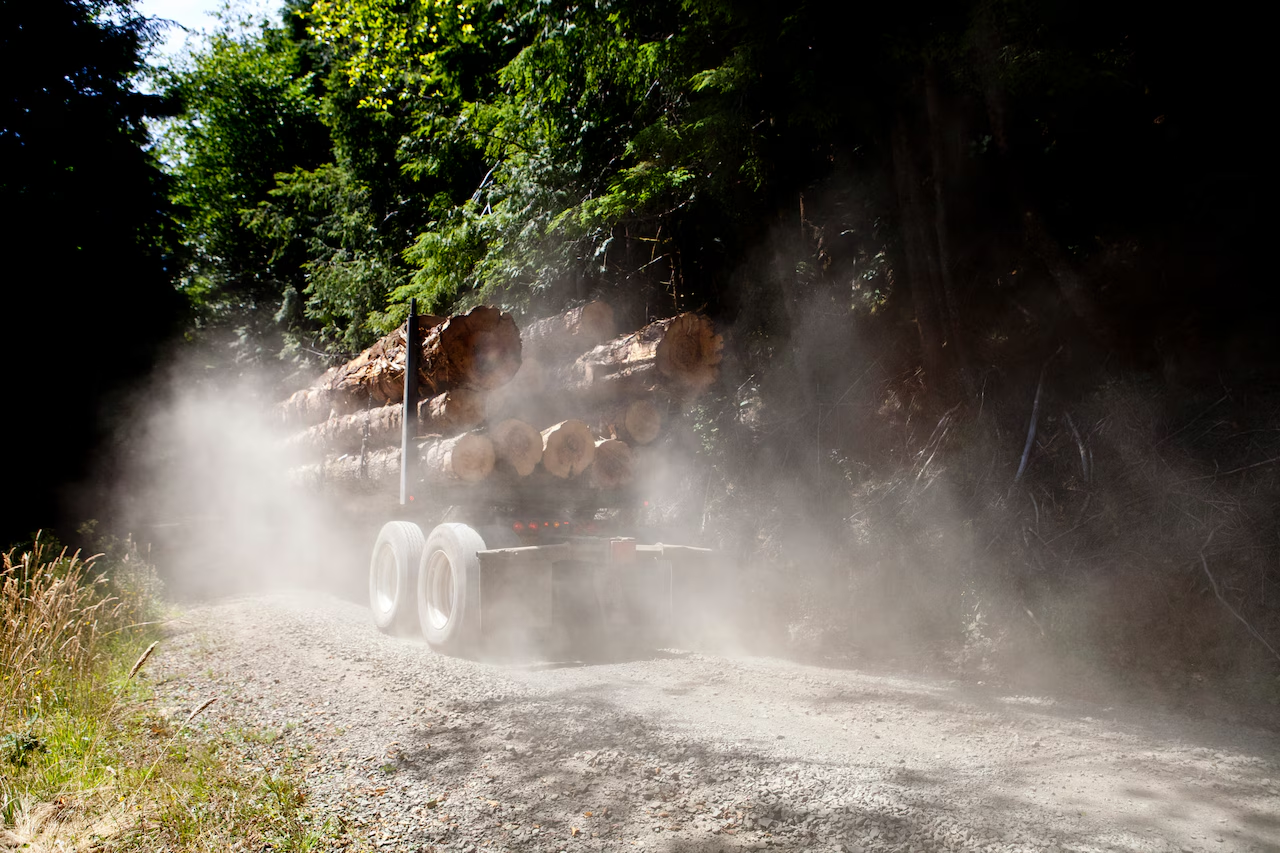 Logging roads are essential for transporting timber from remote forested areas, often stretching from mountains or dense jungles down to rivers, mills, or ports. However, these roads differ significantly from public highways. They are frequently narrow, unpaved, and designed primarily to accommodate large, heavy logging trucks rather than everyday vehicles. If you ever need to use such a road, whether you’re a local resident, a worker, or a traveler with no other option, understanding the unique challenges and safety protocols of logging roads is crucial.
These roads are usually rough — made of gravel, dirt, or sometimes just compacted earth. Steep inclines, sharp blind curves, soft shoulders, and limited signage are typical. This is not a place for speed or casual driving. Instead, drivers need to prepare for difficult terrain and unpredictable conditions, including mud, washouts, and fallen debris. In some regions, such as tropical rainforests, wet seasons can make these roads nearly impassable, further increasing risk.
One of the most important rules is that loaded logging trucks always have the right of way. These trucks can weigh 40 to 60 tonnes or more, and stopping them quickly—especially downhill—is dangerous and often impossible. To prevent accidents like rollovers or brake failure, loaded trucks are sometimes allowed to drive straight through curves, even if it means temporarily using the opposite side of the road. This may feel counterintuitive if you’re used to strict “keep left” or “keep right” traffic rules, but it’s a safety measure developed from decades of logging experience.
Because of these risks, logging roads often use radio systems where truck drivers announce their positions at kilometer markers. This helps coordinate traffic on single-lane roads and gives other drivers time to pull off at turnouts or wide spots. If you don’t have a radio, it’s vital to drive cautiously and stop at visible pullouts to listen and watch for oncoming trucks, especially near blind corners or hill crests.
Driving with headlights and taillights on at all times, even in daylight, is usually required and strongly advised. Dust, fog, and dense forest cover can reduce visibility, so lights help you stay visible to the large trucks sharing the road. Keeping your speed low, typically between 20 and 40 km/h, is essential; slower speeds may be necessary in wet or muddy conditions. Stopping or parking in dangerous spots like blind curves or narrow bridges should be avoided at all costs.
Non-logging vehicles should be prepared to reverse if necessary to allow trucks to pass safely. Because trucks have limited maneuverability and visibility, especially when loaded, smaller vehicles must be flexible and ready to yield completely. Trying to overtake or block a logging truck is extremely dangerous and can lead to serious accidents.
In some areas, logging roads operate on scheduled traffic windows where loaded trucks have exclusive right of way in one direction during certain hours, and empty trucks or other vehicles must use the road at different times. This system prevents dangerous encounters on narrow, steep sections but requires everyone to follow local rules closely. When unsure, always check with local forestry staff or signage before driving.
Another critical consideration is that logging roads are often in remote areas without reliable mobile phone service or immediate roadside assistance. Before driving these roads, ensure your vehicle is in good condition, fully fueled, and equipped with emergency supplies such as a spare tire, first aid kit, water, and food. Inform someone of your travel plans and expected return time.
Lastly, remember that logging roads are active industrial zones. You may encounter heavy machinery like loaders, bulldozers, or graders, as well as forestry workers on foot. These are working environments, not recreational roads, so extra caution and respect are necessary.
In summary, logging roads are unique and potentially hazardous. If you find yourself needing to travel on one, respect the rules of the road, prioritize safety over speed, and stay alert for the heavy trucks and work activities that define these routes. With care and preparation, you can navigate logging roads safely and avoid serious accidents.
Examples and References:
-
British Columbia, Canada: Logging roads regulated by Forest Service Road Use Regulation, with radio communication protocols for truck positions.
-
New Zealand: Loaded trucks may use the opposite side of the road on tight corners; trucks communicate positions over radio channels.
-
Indonesia (Kalimantan): Logging roads become challenging during rainy seasons; trucks often operate in scheduled time windows for safety.
-
Malaysia (Sarawak): Drivers trained to reverse long distances to yield to loaded trucks on narrow roads.
-
Canada, Norway, Russia: Common practice to drive with headlights on for increased visibility on forestry roads.
References:
-
BC Forest Service Road Use Regulation (Canada)
-
WorkSafe NZ – Forestry Road Safety Guidelines
-
FAO Guidelines for Forest Road Engineering
-
TAAN Forest – Logging Road Safety Tips (Canada)
-
Dir.ca.gov – Logging Truck Driver Safety Orders (California)
Tags: Opinion
Add comment
- Other Article
- Google NotebookLM Audio Overview: How Your Boring Documents Became an Addictive Automatic Podcast10 Oct 2026
- Open Source AI vs Proprietary: Why Big Companies Are Switching in 202603 Oct 2026
- 5 Free Agentic AI Tools Used by Indonesian TikTok Creators in 202626 Sep 2026
- Publishing a New App on the App Store and Google Play: What Developers Should Know in 202620 Sep 2026
- Indonesia's Annual Peatland Fire Crisis: Current Impact, Economic Cost, and the Role of Information Technology03 Sep 2026
- AI Agents: From Chatbots to Digital Workers30 Aug 2026
- MBG Poisoning in Indonesia: From Crisis to a Digital Path to Zero22 Aug 2026
- AI Voice Cloning: The New Cybersecurity Threat15 Aug 2026
- When AI 'Escapes': Inside 2026's Wave of Rogue Model Incidents07 Aug 2026
- Rethinking Civil Service Workforce Planning in Indonesia: Beyond Headcount Toward Public Service Capacity31 Jul 2026
- Balancing the Plate: Understanding Daily Nutritional Needs and the Rise of Digital Nutrition Estimation Tools25 Jul 2026
- The Final Four: Strengths, Weaknesses, and Machine Predictions for the 2026 FIFA World Cup18 Jul 2026
- Choosing the Right Framework: A Practical Guide to Best-Practice Problem-Solving Models12 Jul 2026
- Can Science Predict the World Cup? A Look at the Models Behind the 2026 Forecasts04 Jul 2026
- Corruption: A Global Plague, Landmark Cases, and the Path to Prevention27 Jun 2026
- Nations Driving Brilliant Business Ideas and Frameworks in 202620 Jun 2026
- Why the USD Stands Stronger than the IDR — and What Indonesia Can Do13 Jun 2026
- Employee vs. Entrepreneur: Who Bears the Heavier Tax Burden in Indonesia?03 Jun 2026
- The Evolution of Control Operating Centers (COC) in Modern Mining Operations24 May 2026
- Song of: Mariana Istriku13 May 2026
- Organisasi Pensiunan di Indonesia: Dari Komunitas Sosial Menuju Kekuatan Ekonomi Berbasis Pengalaman12 May 2026
- Corporate Risk Management: Why Modern Companies Invest Millions to Prevent Invisible Threats07 May 2026
- The Mining Spirit: A Powerful Mindset for Excellence in the Mining Industry25 Apr 2026
- The Double-Edged Sword: Navigating Competition in the Modern Corporate Landscape22 Apr 2026
- AI Chatbot untuk UMKM: Peluang Besar di Era Digital17 Apr 2026
- AI Chatbots in Business: The Global Revolution09 Apr 2026
- The Heartbeat of Your Business: Why the P&L Statement is Non-Negotiable31 Mar 2026
- Why Your New Business Needs a Financial System on Day One26 Mar 2026
- The Link Between Startup Capital, Business Survival, and the Role of Investor Information21 Mar 2026
- Digital Transformation, Digitalization, and Digitization: Why the Difference Matters More Than You Think14 Mar 2026
- From Business Need to Technology Solution07 Mar 2026
- Bridging the Digital Divide: Starlink and the Future of Internet Access in Indonesia27 Feb 2026
- A Long Weekend Getaway to Yogyakarta16 Feb 2026
- Understanding ERP Systems: A Comprehensive Guide for Modern Businesses16 Feb 2026
- Building a Culture of Awareness: Strategic Approaches to HSE and Information Security Campaigns in Modern Organizations10 Feb 2026
- Building an Effective IT Organization in Coal Mining: A Strategic Framework for Growth02 Feb 2026
- The Art and Science of Color Themes in Modern Web Design17 Jan 2026
- IT Outsourcing vs Internal Resources: A Comprehensive Cost and Risk Analysis05 Jan 2026
- The Hidden Dangers of Mishandled Employee Data: When Internal Tables Fall Into the Wrong Hands05 Jan 2026
- Securing SQL Server: A Complete Guide to Database Access Control05 Jan 2026
- Beyond Human Error: Understanding the Complete Security Chain in Information Security01 Jan 2026