Article
The Double-Edged Sword: Navigating Competition in the Modern Corporate Landscape
Author: Agus Budi Harto, 2026-04-22 10:40:32
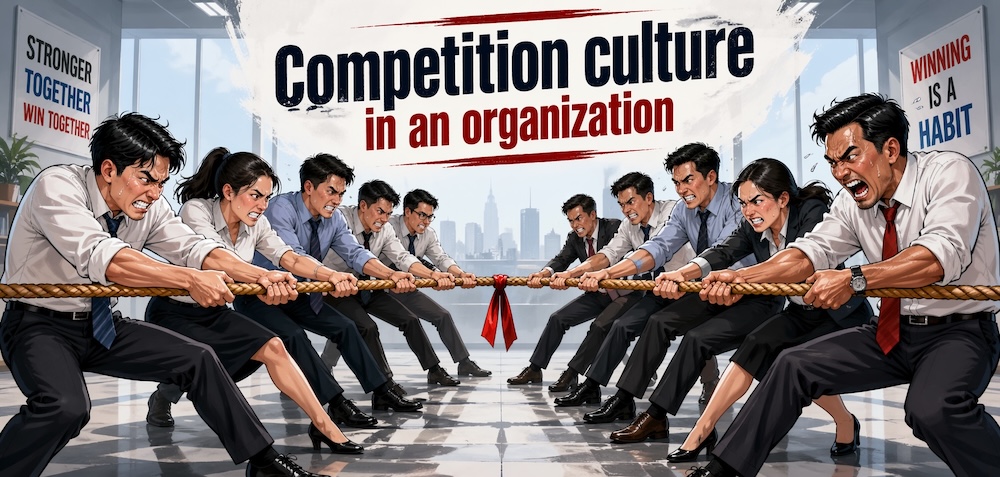
In the hyper-accelerated economy of the 2020s, the word "competition" has evolved from a mere market condition into a fundamental organizational philosophy. For many modern enterprises, embedding competitiveness into their core values is seen as a prerequisite for survival. This strategic choice is often driven by the need for agility and a relentless pursuit of excellence. When a workforce is aligned under a competitive banner, the collective energy often translates into rapid innovation cycles and a heightened sensitivity to customer needs, ensuring the organization remains a formidable player in its industry.
However, the internal application of competition is rarely a straightforward path to success. While it can act as a powerful catalyst for high performance, it also carries the potential to erode the very social fabric that holds a company together. If the definition of competition is left ambiguous, it can inadvertently foster a "zero-sum" mentality where employees view their colleagues as obstacles rather than allies. This shift often leads to the hoarding of information and a decline in psychological safety, which are critical components for long-term organizational health and complex problem-solving.
To harness the benefits of a competitive culture without falling victim to its pitfalls, leadership must pivot toward "Coopetition"—a hybrid model that balances the drive for individual achievement with the necessity of collective goals. By framing competition as a tool for personal growth or as a unified front against external market challenges, companies can maintain high standards while preserving a collaborative spirit. The goal is not to eliminate the urge to win, but to ensure that winning is a shared experience that elevates the entire organization.
Ultimately, the impact of competition as a core value depends on the clarity of its execution. Organizations that successfully navigate this tension are those that treat competition not as a race to the bottom, but as a collective climb toward a higher standard of service and innovation. By grounding competitive energy in ethical frameworks and clear communication, leaders can build resilient cultures that are as compassionate as they are ambitious.
References
- Cameron, K. S., & Quinn, R. E. (2011). Diagnosing and Changing Organizational Culture: Based on the Competing Values Framework. Jossey-Bass.
- Collins, J. (2001). Good to Great: Why Some Companies Make the Leap... and Others Don't. HarperBusiness.
- Deutsch, M. (2011). The Resolution of Conflict: Constructive and Destructive Processes. Yale University Press.
- Lencioni, P. (2002). The Five Dysfunctions of a Team: A Leadership Fable. Jossey-Bass.
- Porter, M. E. (1985). Competitive Advantage: Creating and Sustaining Superior Performance. Free Press.
- Sinek, S. (2019). The Infinite Game. Portfolio.

Tags: Expression Mining Opinion
Add comment
- Other Article
- Passkeys Replacing Passwords: The Future of Secure Digital Authentication23 Oct 2026
- Counterfeit Money in Indonesia: A Persistent Threat to Public Trust and How to Fight It14 Oct 2026
- Google NotebookLM Audio Overview: How Your Boring Documents Became an Addictive Automatic Podcast10 Oct 2026
- Open Source AI vs Proprietary: Why Big Companies Are Switching in 202603 Oct 2026
- 5 Free Agentic AI Tools Used by Indonesian TikTok Creators in 202626 Sep 2026
- Publishing a New App on the App Store and Google Play: What Developers Should Know in 202620 Sep 2026
- Indonesia's Annual Peatland Fire Crisis: Current Impact, Economic Cost, and the Role of Information Technology03 Sep 2026
- AI Agents: From Chatbots to Digital Workers30 Aug 2026
- MBG Poisoning in Indonesia: From Crisis to a Digital Path to Zero22 Aug 2026
- AI Voice Cloning: The New Cybersecurity Threat15 Aug 2026
- When AI 'Escapes': Inside 2026's Wave of Rogue Model Incidents07 Aug 2026
- Rethinking Civil Service Workforce Planning in Indonesia: Beyond Headcount Toward Public Service Capacity31 Jul 2026
- Balancing the Plate: Understanding Daily Nutritional Needs and the Rise of Digital Nutrition Estimation Tools25 Jul 2026
- The Final Four: Strengths, Weaknesses, and Machine Predictions for the 2026 FIFA World Cup18 Jul 2026
- Choosing the Right Framework: A Practical Guide to Best-Practice Problem-Solving Models12 Jul 2026
- Can Science Predict the World Cup? A Look at the Models Behind the 2026 Forecasts04 Jul 2026
- Corruption: A Global Plague, Landmark Cases, and the Path to Prevention27 Jun 2026
- Nations Driving Brilliant Business Ideas and Frameworks in 202620 Jun 2026
- Why the USD Stands Stronger than the IDR — and What Indonesia Can Do13 Jun 2026
- Employee vs. Entrepreneur: Who Bears the Heavier Tax Burden in Indonesia?03 Jun 2026
- The Evolution of Control Operating Centers (COC) in Modern Mining Operations24 May 2026
- Song of: Mariana Istriku13 May 2026
- Organisasi Pensiunan di Indonesia: Dari Komunitas Sosial Menuju Kekuatan Ekonomi Berbasis Pengalaman12 May 2026
- Corporate Risk Management: Why Modern Companies Invest Millions to Prevent Invisible Threats07 May 2026
- The Mining Spirit: A Powerful Mindset for Excellence in the Mining Industry25 Apr 2026
- The Double-Edged Sword: Navigating Competition in the Modern Corporate Landscape22 Apr 2026
- AI Chatbot untuk UMKM: Peluang Besar di Era Digital17 Apr 2026
- AI Chatbots in Business: The Global Revolution09 Apr 2026
- The Heartbeat of Your Business: Why the P&L Statement is Non-Negotiable31 Mar 2026
- Why Your New Business Needs a Financial System on Day One26 Mar 2026
- The Link Between Startup Capital, Business Survival, and the Role of Investor Information21 Mar 2026
- Digital Transformation, Digitalization, and Digitization: Why the Difference Matters More Than You Think14 Mar 2026
- From Business Need to Technology Solution07 Mar 2026
- Bridging the Digital Divide: Starlink and the Future of Internet Access in Indonesia27 Feb 2026
- A Long Weekend Getaway to Yogyakarta16 Feb 2026
- Understanding ERP Systems: A Comprehensive Guide for Modern Businesses16 Feb 2026
- Building a Culture of Awareness: Strategic Approaches to HSE and Information Security Campaigns in Modern Organizations10 Feb 2026
- Building an Effective IT Organization in Coal Mining: A Strategic Framework for Growth02 Feb 2026
- The Art and Science of Color Themes in Modern Web Design17 Jan 2026
- IT Outsourcing vs Internal Resources: A Comprehensive Cost and Risk Analysis05 Jan 2026
- The Hidden Dangers of Mishandled Employee Data: When Internal Tables Fall Into the Wrong Hands05 Jan 2026
- Securing SQL Server: A Complete Guide to Database Access Control05 Jan 2026
- Beyond Human Error: Understanding the Complete Security Chain in Information Security01 Jan 2026