Article
Understanding ERP Systems: A Comprehensive Guide for Modern Businesses
Author: Agus Budi Harto, 2026-02-16 20:38:55
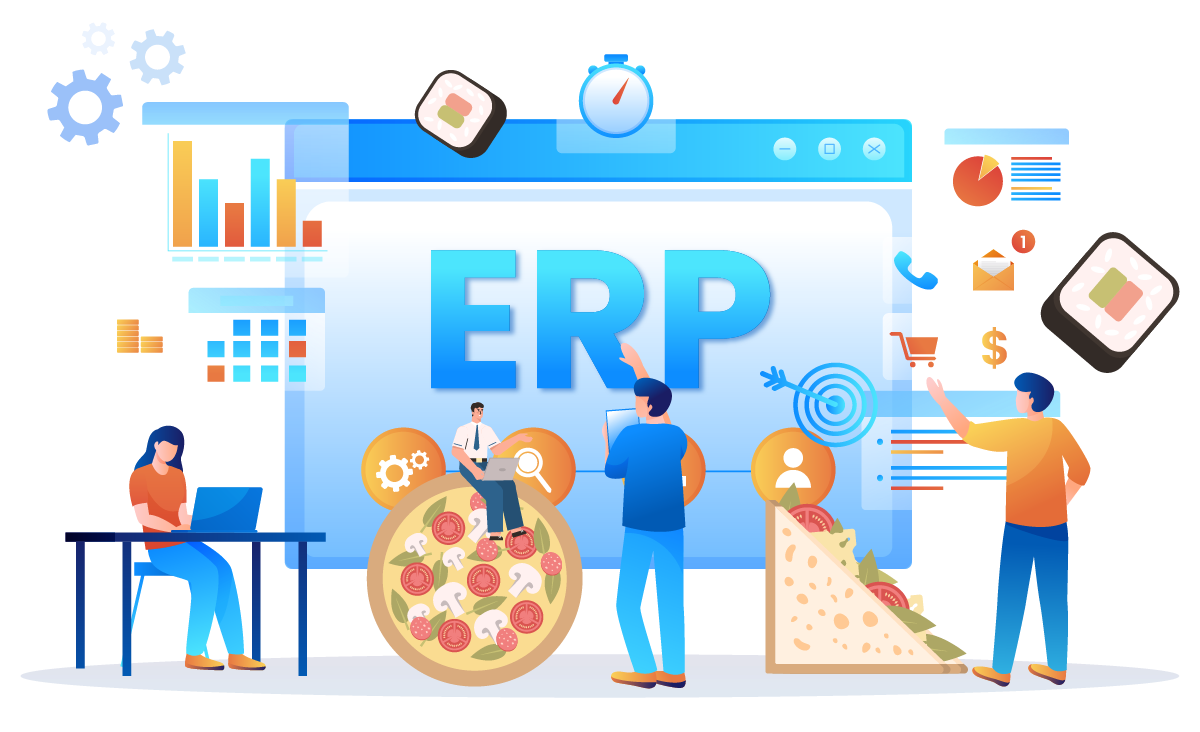
What is an ERP System?
Enterprise Resource Planning (ERP) represents one of the most transformative technological innovations in modern business management. At its core, an ERP system is an integrated software platform that unifies and manages an organization's core business processes within a single, centralized database. Rather than operating disparate systems for accounting, inventory management, human resources, and sales, an ERP creates a cohesive digital ecosystem where information flows seamlessly across departments and functions.
The beauty of an ERP system lies in its integration capabilities. When a sales representative enters a new customer order, the system automatically cascades this information throughout the organization. Inventory levels adjust in real-time, production schedules update to accommodate the new demand, financial forecasts recalibrate, and invoices generate without manual intervention. This interconnectedness eliminates the redundancy and errors inherent in manual data entry across multiple systems, while providing decision-makers with accurate, real-time visibility into every aspect of their operations.
For organizations of all sizes, ERP systems have become indispensable tools for improving operational efficiency, reducing costs, enhancing customer service, and maintaining competitive advantage in increasingly complex business environments. The question for most companies today is not whether to implement an ERP, but which system best aligns with their unique needs and strategic objectives.
The Evolution of ERP: From Inventory Control to Enterprise Intelligence
The journey of ERP systems spans more than five decades, evolving from simple inventory tracking tools to sophisticated enterprise management platforms that leverage artificial intelligence and cloud computing. Understanding this evolution provides valuable context for appreciating the capabilities and strategic importance of modern ERP systems.
The 1960s: The Dawn of Computerized Inventory Management
The ERP story begins in the 1960s when forward-thinking manufacturers first harnessed mainframe computers to automate inventory management. These early systems represented a quantum leap from manual ledgers and filing systems, enabling companies to track stock levels, monitor reorder points, and manage warehouse operations with unprecedented accuracy and speed. While rudimentary by today's standards, these inventory control systems laid the foundation for more sophisticated business software solutions.
The 1970s: Material Requirements Planning (MRP) Emerges
The 1970s witnessed the birth of Material Requirements Planning (MRP), a significant advancement that transformed manufacturing operations. MRP systems went beyond simple inventory tracking to calculate precisely what materials were needed, in what quantities, and when they should be ordered or produced. By analyzing sales forecasts, current inventory levels, and production schedules, MRP enabled manufacturers to optimize their supply chains, reduce carrying costs, and minimize stockouts. This capability was revolutionary, allowing companies to manage increasingly complex production processes with greater precision and efficiency.
The 1980s: Expansion to Manufacturing Resource Planning (MRP II)
As businesses demanded more comprehensive solutions, MRP evolved into MRP II (Manufacturing Resource Planning) during the 1980s. This expanded system encompassed not only materials management but also labor allocation, machine capacity planning, shop floor control, and basic financial functions. MRP II represented a paradigm shift toward integrated business systems, recognizing that effective manufacturing required coordination across multiple resources and departments. Companies implementing MRP II gained holistic visibility into their manufacturing operations, enabling better planning, scheduling, and resource utilization.
The 1990s: The Birth of True Enterprise Resource Planning
The term "Enterprise Resource Planning" was coined by the Gartner Group in 1990, marking a pivotal moment in business software history. This decade saw ERP systems break free from their manufacturing-centric origins to embrace the entire enterprise. Financial management, human resources, sales and distribution, customer service, and other business functions became integral components of comprehensive ERP solutions.
The 1990s also witnessed the rise of ERP industry giants. SAP, founded in 1972 in Germany, emerged as a global leader with its R/3 system. Oracle expanded from database software into enterprise applications. The client-server computing revolution made these powerful systems more accessible and affordable, driving widespread adoption across industries and geographies. ERP implementation became a strategic imperative for large corporations seeking competitive advantage through operational excellence.
The 2000s and Beyond: Cloud Computing and Modern Innovation
The new millennium brought transformative changes to the ERP landscape. Cloud computing revolutionized software delivery, enabling Software-as-a-Service (SaaS) ERP solutions that eliminated the need for expensive on-premise infrastructure and IT resources. Companies like NetSuite pioneered cloud-native ERP, while traditional vendors rushed to develop cloud versions of their platforms.
Modern ERP systems have become increasingly sophisticated, incorporating artificial intelligence for predictive analytics, machine learning for process optimization, mobile applications for anywhere access, and advanced business intelligence for real-time insights. The barrier to entry has lowered dramatically, making enterprise-grade functionality accessible to mid-sized and even small businesses. Today's ERPs are more flexible, user-friendly, and powerful than ever before, continuing to evolve in response to changing business needs and emerging technologies.
Core Components of a Complete and Mature ERP System
A comprehensive ERP system integrates multiple functional modules that collectively support all major business processes. While specific implementations vary based on organizational needs, mature ERP platforms typically include the following essential components:
Financial Management: The Foundation
Financial management forms the bedrock of any ERP system, serving as the central repository for all financial transactions and reporting. This module encompasses general ledger functionality, accounts payable and receivable processing, asset management, cash flow management, budgeting and forecasting, and comprehensive financial reporting. Multi-currency support, tax compliance features, and audit trail capabilities ensure that organizations can manage complex financial operations across multiple jurisdictions while maintaining regulatory compliance. The financial module touches virtually every other component of the ERP, making it the heart of the integrated system.
Human Capital Management: Managing Your Most Valuable Asset
Human Capital Management (HCM) or Human Resources modules handle the complete employee lifecycle from recruitment through retirement. These systems maintain comprehensive employee records, process payroll and benefits administration, track time and attendance, manage performance evaluations, and support workforce planning initiatives. Advanced HCM modules include talent acquisition tools, learning management systems, succession planning, and employee self-service portals. By integrating HR data with financial and operational information, organizations gain powerful insights into labor costs, productivity, and workforce trends.
Supply Chain Management: Optimizing the Flow of Goods
Supply chain modules orchestrate the procurement and vendor management processes that keep businesses supplied with necessary materials and services. These components handle purchase requisitions and orders, vendor selection and evaluation, contract management, receiving and inspection, and supplier relationship management. Integration with inventory and financial modules ensures that procurement decisions reflect real-time inventory levels and budget constraints while maintaining optimal supplier relationships and negotiating favorable terms.
Inventory Management: Real-Time Stock Visibility
Inventory management functionality provides real-time visibility into stock levels across multiple warehouses and locations. These modules track item quantities, locations, and movements; manage lot and serial numbers for traceability; optimize reorder points and safety stock levels; coordinate cycle counting and physical inventories; and support multi-location operations. Advanced inventory modules incorporate demand forecasting, automated replenishment, and warehouse management capabilities that maximize inventory turns while minimizing stockouts and carrying costs.
Manufacturing and Production: From Planning to Execution
Manufacturing modules transform raw materials into finished goods through sophisticated planning and execution capabilities. These systems manage bills of materials (BOMs) that define product composition, create production schedules that optimize resource utilization, control shop floor operations and work orders, implement quality management processes, and track manufacturing costs. Manufacturing Execution Systems (MES) provide real-time monitoring of production processes, enabling immediate response to issues and continuous improvement initiatives.
Sales and Customer Management: Driving Revenue Growth
Sales modules integrate order management, pricing and quotation, customer relationship management (CRM), and sales forecasting into a unified platform. These components enable sales teams to configure complex products, generate accurate quotes, process orders efficiently, and maintain comprehensive customer histories. Integration with inventory and production modules ensures that sales commitments align with operational capabilities, while financial integration enables accurate revenue recognition and commission calculations.
Project Management: Delivering Complex Initiatives
Project management modules support organizations that deliver products or services through project-based work. These systems facilitate project planning and scheduling, resource allocation and tracking, time and expense capture, project accounting and profitability analysis, and customer billing. By integrating project data with financial, HR, and operational modules, organizations gain complete visibility into project performance and resource utilization.
Reporting and Analytics: Turning Data into Insights
Modern ERP systems incorporate sophisticated reporting and analytics capabilities that transform raw data into actionable business intelligence. Real-time dashboards provide at-a-glance performance monitoring, customizable reports enable detailed analysis, key performance indicator (KPI) tracking highlights critical metrics, and predictive analytics support forward-looking decision-making. The integration of all business data within a single system enables cross-functional analysis that would be impossible with disparate systems.
Essential Enterprise Features
Beyond functional modules, mature ERP systems provide enterprise-grade capabilities including multi-company and multi-location support for complex organizational structures, role-based security and access controls that protect sensitive information, workflow automation and approval processes that enforce business rules, robust integration capabilities through APIs and web services, mobile applications for anytime-anywhere access, comprehensive compliance and audit trail features, and document management systems that maintain critical business records.
The true power of an ERP lies not in individual modules but in their seamless integration. All components share a single database, eliminating data silos and ensuring that information entered once becomes immediately available throughout the organization. This integration is what distinguishes enterprise resource planning from a collection of standalone software applications.
Critical Considerations: Determining the Right ERP for Your Organization
Selecting an ERP system ranks among the most significant technology decisions an organization will make. The wrong choice can result in failed implementations, wasted investments, and operational disruption. Success requires careful analysis of multiple factors before committing to a particular platform.
Understanding Your Business Requirements
Begin by conducting a comprehensive assessment of your current business processes and identifying specific pain points. What inefficiencies plague your operations? Where do manual processes create bottlenecks? Which departments struggle with data visibility or reporting? Engage stakeholders across all functional areas to document must-have capabilities versus nice-to-have features. Resist the temptation to simply automate existing processes; ERP implementation offers an opportunity to redesign workflows for optimal efficiency. Prioritize requirements based on business impact, focusing on capabilities that will deliver the greatest value to your organization.
Evaluating Company Size and Growth Trajectory
Your current scale matters, but your future growth trajectory matters even more. Consider your present employee count, annual revenue, number of operating locations, and transaction volumes. More importantly, project where you expect to be in three to five years. Will you expand geographically? Enter new markets? Acquire other companies? Choose an ERP platform capable of scaling with your growth without requiring a disruptive system replacement. Switching ERP systems is extraordinarily expensive and time-consuming, making scalability a critical selection criterion.
Addressing Industry-Specific Requirements
Different industries have vastly different operational requirements. Manufacturers need sophisticated production planning and shop floor control. Retailers require point-of-sale integration and omnichannel capabilities. Professional services firms prioritize project management and resource scheduling. Healthcare organizations must comply with HIPAA regulations. Industry-specific ERP solutions come pre-configured with relevant workflows, compliance features, and reporting tailored to your sector. While general-purpose ERPs offer flexibility, industry-focused platforms may provide faster implementation and better functional fit.
Calculating Total Cost of Ownership
ERP pricing extends far beyond software licensing fees. Develop a comprehensive budget that includes implementation services (often two to three times the software cost), customization and configuration expenses, data migration from legacy systems, user training programs, ongoing maintenance and support fees, internal resource costs, and future upgrade expenses. Cloud-based ERPs typically feature lower upfront costs but recurring subscription fees, while on-premise systems require significant capital investment but may have lower long-term costs. Consider the total cost of ownership over a five to seven-year period when comparing alternatives.
Assessing Technical Infrastructure and Deployment Options
Decide whether cloud-based, on-premise, or hybrid deployment best suits your organization. Cloud ERPs eliminate infrastructure investments and IT staffing requirements while providing automatic updates and anywhere access. However, they require reliable internet connectivity and may raise data sovereignty concerns in certain jurisdictions. On-premise systems offer greater control and customization but demand substantial IT resources for maintenance and upgrades. Evaluate your technical team's capabilities, infrastructure investments, security requirements, and connectivity reliability when choosing deployment models.
Identifying Integration Requirements
No ERP exists in isolation. Map out all systems that must integrate with your ERP, including e-commerce platforms, customer relationship management (CRM) tools, shipping and logistics systems, banking and payment processors, business intelligence tools, and legacy applications. Verify that your ERP candidates offer pre-built integrations or robust application programming interfaces (APIs) for necessary connections. Poor integration capabilities can create data silos and manual workarounds that undermine ERP benefits.
Balancing Customization and Configuration
Every organization operates differently, but extensive customization carries significant risks. Heavy customization increases implementation costs, creates technical debt, complicates system upgrades, and may introduce bugs and performance issues. Seek ERP platforms that can be configured through settings and parameters to meet most requirements without custom code. When customization proves necessary, ensure your implementation partner follows best practices and thoroughly documents all changes. The most successful implementations adapt processes to match the ERP's best practices rather than forcing the software to match every existing workflow.
Prioritizing User Adoption and Experience
The most powerful ERP delivers no value if employees won't use it properly. Consider your workforce's technical sophistication when evaluating user interfaces. A system optimized for power users may frustrate less technical staff, while overly simplified interfaces may handicap experienced users. Evaluate mobile capabilities, user experience design, ease of navigation, and training requirements. Request demonstrations using realistic scenarios from your business to assess usability. Remember that user adoption challenges cause more ERP failures than technical limitations.
Planning Implementation Timelines
How quickly must you deploy your new ERP? Simple cloud-based implementations for small companies might complete in a few months, while complex enterprise rollouts can require one to two years or longer. Rushing implementation increases risk of failure, while extended timelines frustrate stakeholders and delay benefits. Be realistic about your organization's change management capacity, data quality, and available resources when setting timeline expectations. Phased rollouts that implement modules sequentially often prove more successful than big-bang approaches.
Evaluating Vendor Stability and Support
Partner with financially stable vendors who will support your system for years to come. Research vendor history, financial performance, customer retention rates, and industry reputation. Evaluate support offerings including response times, support channels, knowledge base quality, and customer community resources. Request references from customers in your industry and of similar size, then conduct thorough reference calls to understand real-world experiences. A great product supported by a weak vendor creates long-term risk.
Addressing Data Migration Complexity
Assess the volume and quality of data requiring migration from legacy systems. How many years of historical information must transfer? How clean and consistent is your existing data? Poor data quality represents a primary cause of implementation delays and budget overruns. Plan to invest significant effort in data cleansing, mapping, and validation. Some organizations discover that ERP implementation finally forces long-overdue data cleanup projects.
Ensuring Compliance and Security
Verify that ERP candidates meet industry regulatory requirements including financial reporting standards like SOX, data protection regulations like GDPR, healthcare privacy rules like HIPAA, and industry-specific compliance mandates. Evaluate security certifications, data encryption capabilities, access controls, audit trail functionality, and data residency options. Compliance failures can result in severe penalties and reputational damage, making this a non-negotiable consideration.
Building Change Management Capabilities
Be brutally honest about your organization's capacity to absorb significant change. ERP implementations fundamentally transform how people work, often meeting resistance from employees comfortable with existing processes. Success requires executive sponsorship, clear communication, comprehensive training, and attention to the human dimensions of organizational change. Implementations fail more often due to people issues than technical problems. Assess whether your culture and leadership can drive necessary changes, or whether you need external change management support.
The ERP Landscape: Major Players and Market Leaders
The global ERP market features hundreds of vendors ranging from massive enterprise software companies to specialized niche providers. Understanding the major players and their distinctive characteristics helps organizations navigate vendor selection.
Enterprise ERP Giants
SAP dominates the enterprise ERP market with its flagship S/4HANA platform, a next-generation system built on an in-memory database for real-time analytics. SAP serves the largest global corporations across all industries, offering the most comprehensive functionality and industry-specific solutions. SAP Business One targets small to mid-sized businesses with more streamlined capabilities. Organizations choose SAP for its depth of functionality, global support infrastructure, and market leadership, though implementations can be complex and costly.
Oracle offers a comprehensive ERP portfolio including Oracle Cloud ERP for large enterprises and NetSuite for mid-market companies. After acquiring NetSuite in 2016, Oracle positioned it as the leading cloud-native ERP for growing businesses. Oracle's strength lies in database technology, integrated applications, and cloud infrastructure. The company serves organizations seeking tightly integrated technology stacks and robust database capabilities.
Microsoft Dynamics 365 represents Microsoft's cloud-based ERP and CRM suite, leveraging the company's broader technology ecosystem including Office 365, Azure cloud platform, and Power Platform for low-code development. Dynamics 365 Finance and Supply Chain Management target larger enterprises, while Business Central serves small to mid-sized companies. Organizations already invested in Microsoft technologies often favor Dynamics for seamless integration and familiar user experiences.
Workday pioneered cloud-native enterprise software with a focus on human capital management and financial management. The platform excels in user experience, continuous innovation, and unified data model. Workday primarily serves large enterprises seeking modern, cloud-based financial and HR systems with strong analytics capabilities. The company's rapid innovation cycle and commitment to cloud-only deployment appeal to organizations embracing digital transformation.
Infor specializes in industry-specific cloud ERP solutions through its CloudSuite offerings. The company focuses on verticals including manufacturing, healthcare, hospitality, retail, and public sector. Infor's industry expertise and pre-built configurations accelerate implementations for companies in its target markets. The platform appeals to organizations seeking industry-tailored functionality rather than generic enterprise software.
Cloud-Native and Modern ERP Leaders
NetSuite (owned by Oracle) established itself as a pioneer in cloud ERP, launching in 1998 as one of the first pure SaaS enterprise systems. The platform offers integrated ERP, CRM, and e-commerce capabilities particularly popular with high-growth companies, retail businesses, and organizations with complex financial consolidation requirements. NetSuite's strength lies in its unified cloud architecture, rapid deployment, and mid-market focus.
Acumatica delivers cloud ERP with unlimited users pricing model, making it attractive for growing companies concerned about user-based licensing costs. The platform offers strong capabilities in distribution, manufacturing, construction, and retail. Acumatica appeals to mid-market organizations seeking modern cloud functionality without enterprise-level complexity and cost.
Sage Intacct specializes in cloud financial management and accounting, often serving as the financial core integrated with other operational systems. The platform excels in multi-entity consolidation, dimensional reporting, and accounting automation. Many organizations choose Sage Intacct for best-in-class financial capabilities while using other systems for operations.
Epicor focuses on manufacturing, distribution, retail, and services industries with cloud and on-premise deployment options. The platform offers deep functionality for complex manufacturing operations including make-to-order, engineer-to-order, and mixed-mode production. Epicor serves mid-market manufacturers seeking industry-specific capabilities and flexible deployment.
IFS Cloud delivers strong capabilities in enterprise asset management, field service, and project-based manufacturing. The platform excels in complex service scenarios and asset-intensive industries including aerospace, energy, construction, and telecommunications. Organizations with significant service and maintenance requirements often select IFS for its specialized functionality.
Specialized and Regional Players
Odoo represents the leading open-source ERP platform, offering modular applications that organizations can implement selectively. The platform's affordability and flexibility appeal to small businesses and organizations comfortable with open-source software. Odoo's community edition provides basic functionality, while enterprise editions add support and advanced features.
ERPNext offers another open-source alternative with comprehensive functionality including manufacturing, inventory, accounting, and project management. The platform serves small to mid-sized businesses seeking cost-effective ERP with source code access and customization freedom.
Zoho provides an affordable, integrated suite of cloud business applications including ERP, CRM, projects, and collaboration tools. The platform targets small businesses and startups requiring basic functionality without enterprise complexity or cost.
Regional players also command significant market share in their geographies. TOTVS leads in Latin America, particularly Brazil, with industry-specific solutions. Chinese companies Kingdee and UFIDA dominate their domestic market with localized functionality. Unit4 focuses on Europe with strength in people-centric service industries including professional services, education, and public sector.
Market Trends and Selection Considerations
The ERP market has fundamentally shifted toward cloud delivery models. Traditional on-premise vendors now prioritize cloud versions, while cloud-native vendors continue gaining market share. The SaaS model offers lower upfront costs, predictable subscription pricing, automatic updates, and easier scalability, democratizing enterprise software for smaller organizations.
Market share leadership typically belongs to SAP, Oracle (including NetSuite), and Microsoft, collectively serving the majority of large enterprises. However, the "best" ERP varies dramatically based on industry, company size, geographic scope, and specific requirements. Mid-market companies often find better value and faster implementation with cloud-native platforms like NetSuite, Acumatica, or Dynamics Business Central. Industry specialists may offer superior functionality for manufacturing, healthcare, or other verticals. The optimal choice emerges from careful analysis of your unique needs rather than market share rankings.
Conclusion: ERP as Strategic Enabler
Enterprise Resource Planning systems have evolved from inventory tracking tools into comprehensive platforms that enable digital transformation and competitive advantage. Modern ERPs integrate business processes, eliminate data silos, improve efficiency, and provide the real-time insights necessary for informed decision-making in today's fast-paced business environment.
Successful ERP selection and implementation require careful analysis of business requirements, realistic assessment of organizational capabilities, thorough vendor evaluation, and commitment to change management. While the journey can be challenging, organizations that approach ERP strategically and execute thoughtfully realize significant returns through operational excellence, cost reduction, improved customer service, and enhanced agility.
As technology continues advancing with artificial intelligence, machine learning, Internet of Things integration, and other innovations, ERP systems will become even more powerful and essential to business success. Organizations that leverage these capabilities effectively will thrive, while those clinging to outdated systems and fragmented processes will struggle to compete.
References and Further Reading
Books and Publications
- Monk, E., & Wagner, B. (2012). Concepts in Enterprise Resource Planning (4th ed.). Boston, MA: Course Technology.
- O'Leary, D. E. (2000). Enterprise Resource Planning Systems: Systems, Life Cycle, Electronic Commerce, and Risk. Cambridge: Cambridge University Press.
- Jacobs, F. R., & Weston, F. C. (2007). "Enterprise resource planning (ERP)—A brief history." Journal of Operations Management, 25(2), 357-363.
- Davenport, T. H. (1998). "Putting the Enterprise into the Enterprise System." Harvard Business Review, 76(4), 121-131.
- Panorama Consulting Solutions. (2024). ERP Report: The Ultimate Comparison of the Best ERP Systems. Denver, CO: Panorama Consulting Solutions.
Industry Research and Reports
- Gartner. (2024). "Magic Quadrant for Cloud ERP for Product-Centric Enterprises." Stamford, CT: Gartner, Inc.
- Forrester Research. (2024). "The Forrester Wave™: Cloud ERP for Midsize Enterprises." Cambridge, MA: Forrester Research, Inc.
- IDC. (2024). "Worldwide Enterprise Resource Planning Applications Market Shares." Framingham, MA: International Data Corporation.
- Aberdeen Group. (2023). "ERP in Manufacturing: Competitive Advantages Through Process Integration." Boston, MA: Aberdeen Group.
Online Resources and Documentation
- SAP. (2024). "What is ERP?" Retrieved from https://www.sap.com/products/erp/what-is-erp.html
- Oracle. (2024). "What is ERP (Enterprise Resource Planning)?" Retrieved from https://www.oracle.com/erp/what-is-erp/
- Microsoft. (2024). "What is ERP?" Retrieved from https://dynamics.microsoft.com/en-us/what-is-erp/
- APICS (Association for Supply Chain Management). (2024). "ERP Dictionary and Resources." Retrieved from https://www.apics.org
- TechTarget. (2024). "Enterprise Resource Planning (ERP)." SearchERP. Retrieved from https://www.techtarget.com/searcherp/
Academic and Technical Resources
- Shehab, E. M., Sharp, M. W., Supramaniam, L., & Spedding, T. A. (2004). "Enterprise resource planning: An integrative review." Business Process Management Journal, 10(4), 359-386.
- Umble, E. J., Haft, R. R., & Umble, M. M. (2003). "Enterprise resource planning: Implementation procedures and critical success factors." European Journal of Operational Research, 146(2), 241-257.
- Seddon, P. B., Calvert, C., & Yang, S. (2010). "A multi-project model of key factors affecting organizational benefits from enterprise systems." MIS Quarterly, 34(2), 305-328.
- Klaus, H., Rosemann, M., & Gable, G. G. (2000). "What is ERP?" Information Systems Frontiers, 2(2), 141-162.
Professional Organizations and Standards
- CIPS (Chartered Institute of Procurement & Supply). (2024). "ERP Implementation Best Practices." Stamford, UK: CIPS.
- PMI (Project Management Institute). (2024). "ERP Implementation Framework." Newtown Square, PA: PMI.
- ISACA. (2024). "COBIT Framework for ERP Governance and Management." Rolling Meadows, IL: ISACA.
Vendor-Specific Resources
- NetSuite. (2024). "Cloud ERP Success Guide." San Mateo, CA: Oracle NetSuite.
- Workday. (2024). "Financial Management and ERP Cloud Solutions." Pleasanton, CA: Workday, Inc.
- Infor. (2024). "Industry CloudSuites and ERP Solutions." New York, NY: Infor Global Solutions.
Implementation and Consulting Guides
- Deloitte. (2024). "ERP Selection and Implementation Services." New York, NY: Deloitte Consulting LLP.
- Accenture. (2024). "Enterprise Technology and ERP Transformation." Dublin, Ireland: Accenture plc.
- PwC. (2024). "Finance Effectiveness and ERP Advisory." London, UK: PricewaterhouseCoopers LLP.
Industry-Specific Resources
- MESA International. (2024). "MES and ERP Integration Best Practices." Pittsburgh, PA: Manufacturing Enterprise Solutions Association.
- HIMSS (Healthcare Information and Management Systems Society). (2024). "Healthcare ERP Selection Guide." Chicago, IL: HIMSS.
- NRF (National Retail Federation). (2024). "Retail Technology and ERP Systems." Washington, DC: NRF.
Note: This article provides general information about ERP systems for educational purposes. Organizations should conduct thorough research and consult with qualified professionals when selecting and implementing enterprise software solutions. Vendor capabilities, market positions, and technology trends evolve rapidly; verify current information before making purchasing decisions.

Tags: Opinion
Add comment
- Other Article
- Passkeys Replacing Passwords: The Future of Secure Digital Authentication23 Oct 2026
- Counterfeit Money in Indonesia: A Persistent Threat to Public Trust and How to Fight It14 Oct 2026
- Google NotebookLM Audio Overview: How Your Boring Documents Became an Addictive Automatic Podcast10 Oct 2026
- Open Source AI vs Proprietary: Why Big Companies Are Switching in 202603 Oct 2026
- 5 Free Agentic AI Tools Used by Indonesian TikTok Creators in 202626 Sep 2026
- Publishing a New App on the App Store and Google Play: What Developers Should Know in 202620 Sep 2026
- Indonesia's Annual Peatland Fire Crisis: Current Impact, Economic Cost, and the Role of Information Technology03 Sep 2026
- AI Agents: From Chatbots to Digital Workers30 Aug 2026
- MBG Poisoning in Indonesia: From Crisis to a Digital Path to Zero22 Aug 2026
- AI Voice Cloning: The New Cybersecurity Threat15 Aug 2026
- When AI 'Escapes': Inside 2026's Wave of Rogue Model Incidents07 Aug 2026
- Rethinking Civil Service Workforce Planning in Indonesia: Beyond Headcount Toward Public Service Capacity31 Jul 2026
- Balancing the Plate: Understanding Daily Nutritional Needs and the Rise of Digital Nutrition Estimation Tools25 Jul 2026
- The Final Four: Strengths, Weaknesses, and Machine Predictions for the 2026 FIFA World Cup18 Jul 2026
- Choosing the Right Framework: A Practical Guide to Best-Practice Problem-Solving Models12 Jul 2026
- Can Science Predict the World Cup? A Look at the Models Behind the 2026 Forecasts04 Jul 2026
- Corruption: A Global Plague, Landmark Cases, and the Path to Prevention27 Jun 2026
- Nations Driving Brilliant Business Ideas and Frameworks in 202620 Jun 2026
- Why the USD Stands Stronger than the IDR — and What Indonesia Can Do13 Jun 2026
- Employee vs. Entrepreneur: Who Bears the Heavier Tax Burden in Indonesia?03 Jun 2026
- The Evolution of Control Operating Centers (COC) in Modern Mining Operations24 May 2026
- Song of: Mariana Istriku13 May 2026
- Organisasi Pensiunan di Indonesia: Dari Komunitas Sosial Menuju Kekuatan Ekonomi Berbasis Pengalaman12 May 2026
- Corporate Risk Management: Why Modern Companies Invest Millions to Prevent Invisible Threats07 May 2026
- The Mining Spirit: A Powerful Mindset for Excellence in the Mining Industry25 Apr 2026
- The Double-Edged Sword: Navigating Competition in the Modern Corporate Landscape22 Apr 2026
- AI Chatbot untuk UMKM: Peluang Besar di Era Digital17 Apr 2026
- AI Chatbots in Business: The Global Revolution09 Apr 2026
- The Heartbeat of Your Business: Why the P&L Statement is Non-Negotiable31 Mar 2026
- Why Your New Business Needs a Financial System on Day One26 Mar 2026
- The Link Between Startup Capital, Business Survival, and the Role of Investor Information21 Mar 2026
- Digital Transformation, Digitalization, and Digitization: Why the Difference Matters More Than You Think14 Mar 2026
- From Business Need to Technology Solution07 Mar 2026
- Bridging the Digital Divide: Starlink and the Future of Internet Access in Indonesia27 Feb 2026
- A Long Weekend Getaway to Yogyakarta16 Feb 2026
- Understanding ERP Systems: A Comprehensive Guide for Modern Businesses16 Feb 2026
- Building a Culture of Awareness: Strategic Approaches to HSE and Information Security Campaigns in Modern Organizations10 Feb 2026
- Building an Effective IT Organization in Coal Mining: A Strategic Framework for Growth02 Feb 2026
- The Art and Science of Color Themes in Modern Web Design17 Jan 2026
- IT Outsourcing vs Internal Resources: A Comprehensive Cost and Risk Analysis05 Jan 2026
- The Hidden Dangers of Mishandled Employee Data: When Internal Tables Fall Into the Wrong Hands05 Jan 2026
- Securing SQL Server: A Complete Guide to Database Access Control05 Jan 2026
- Beyond Human Error: Understanding the Complete Security Chain in Information Security01 Jan 2026