Article
Bridging the Digital Divide: Starlink and the Future of Internet Access in Indonesia
Author: Agus Budi Harto, 2026-02-27 19:17:38
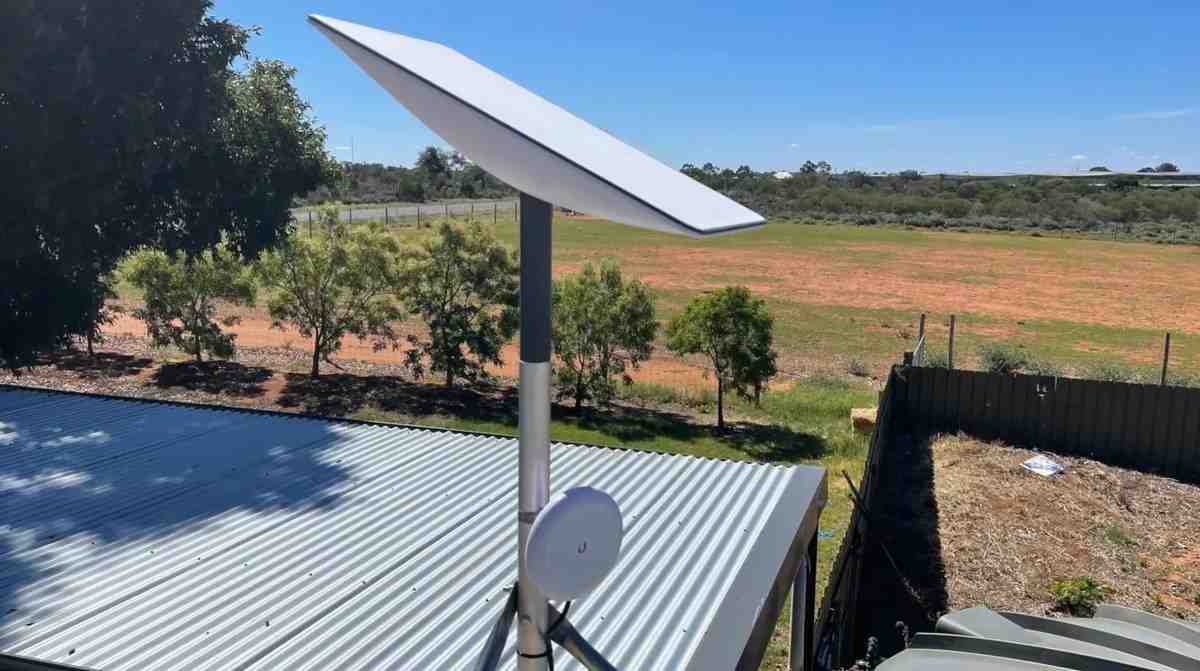
From satellite constellations to rural puskesmas — a deep dive into what Starlink means for the world's largest archipelago.

The Global Internet Gap
The internet is often described as the great equalizer — a boundless space where geography, class, and circumstance dissolve into pure connectivity. The reality, however, is far more uneven. As of 2024, approximately 68% of the world's population has access to the internet, leaving a staggering 2.6 billion people offline. While technically more than 85% of the Earth's land surface can be reached by some form of wireless signal, coverage and actual usability are vastly different things.
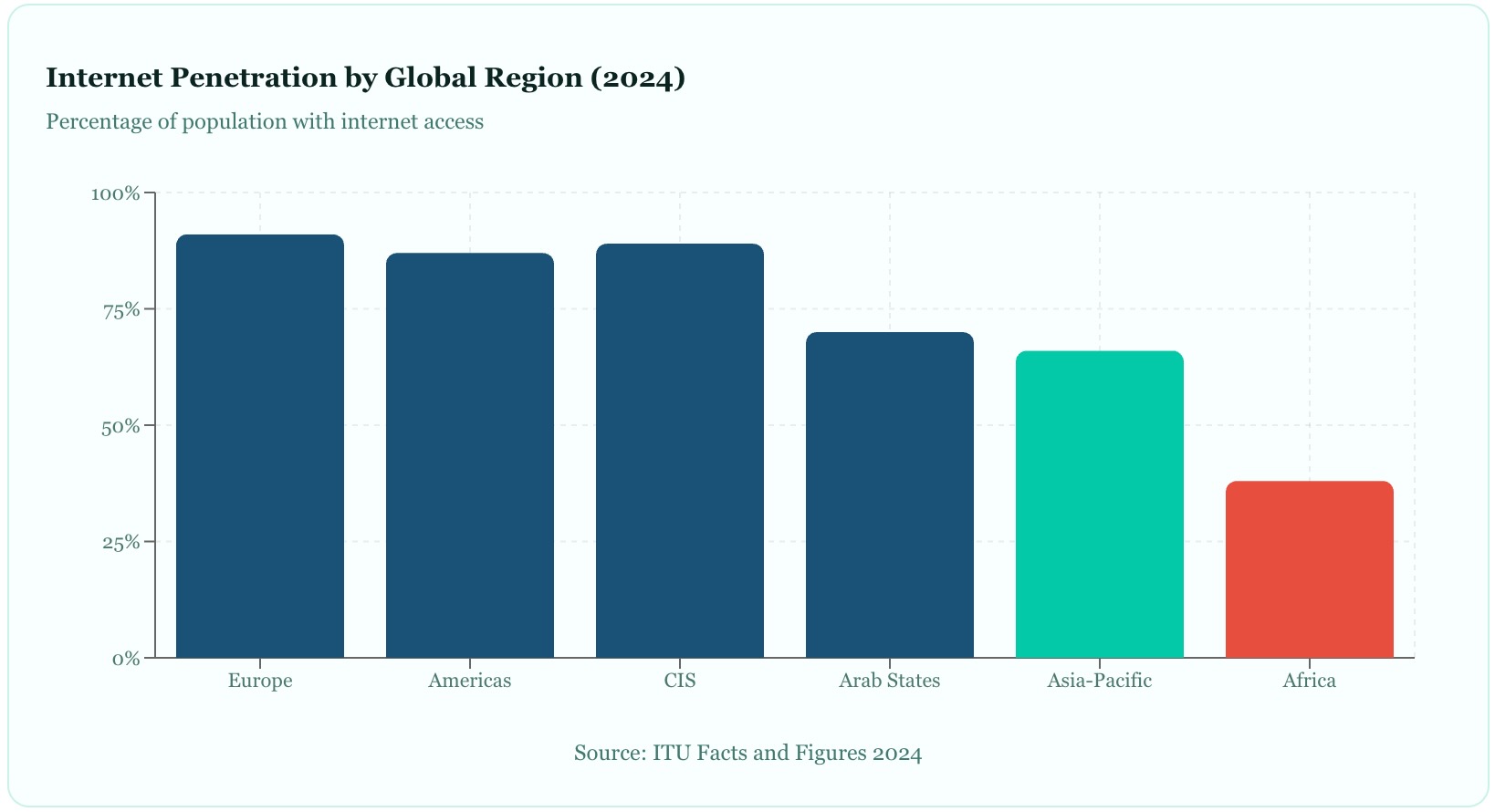
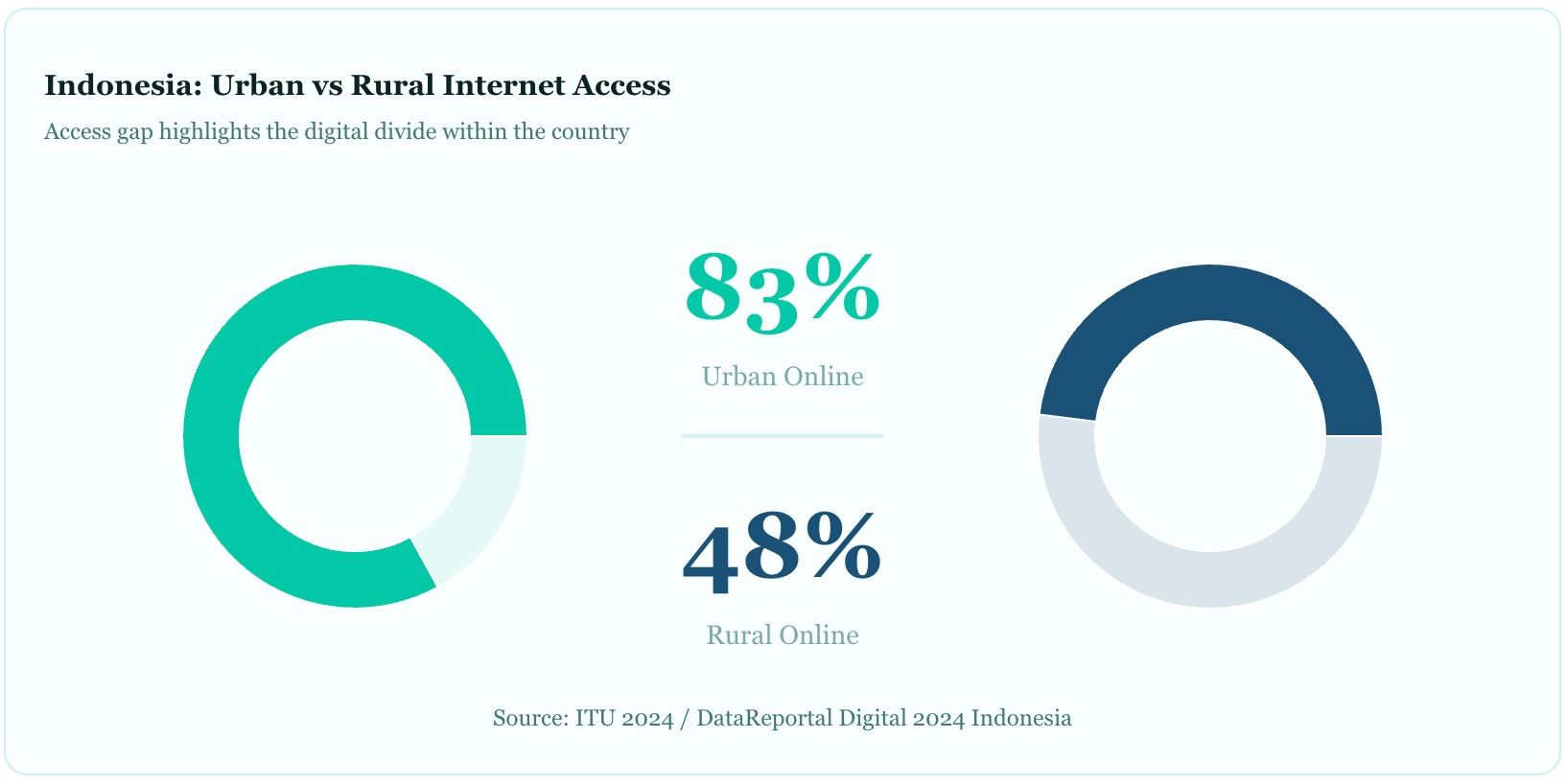
The disparity becomes stark when broken down by region. Europe and the Americas boast internet penetration rates above 87%, while Sub-Saharan Africa trails at just 38%. The urban-rural divide compounds this further: 83% of city dwellers are online globally, compared to only 48% in rural areas. These numbers are not merely statistics — they represent millions of people locked out of education, commerce, healthcare, and civic participation.
Why the Disconnect? Understanding the Barriers
The reasons why billions remain unconnected are layered and mutually reinforcing. At their core, these barriers fall into seven broad categories.
Infrastructure deficits remain the most fundamental obstacle. Building cell towers, laying fiber optic cables, or establishing relay stations across remote mountains, deep forests, or scattered islands requires enormous capital investment — capital that private telecom companies are reluctant to spend in areas with sparse populations. This is especially acute in archipelago nations like Indonesia, with over 17,000 islands and terrain that ranges from dense tropical jungle to volcanic peaks.
Closely tied to infrastructure is energy access. Approximately 750 million people globally still lack electricity, predominantly in Sub-Saharan Africa and rural Asia. Without reliable power, internet infrastructure simply cannot function. Affordability is another critical barrier: in many developing nations, 1 GB of mobile data can cost upward of 5–20% of the average monthly income, making internet access a luxury rather than a utility.
Beyond the physical and economic, there are digital literacy gaps, language barriers (most online content is in English or a handful of major languages), weak regulatory frameworks, and in some cases, deliberate government restrictions on connectivity. The problem is never just about satellites or cables — it is always also about people, policy, and economics.
Enter Starlink: A Constellation of Ambition
Against this backdrop of persistent connectivity gaps, SpaceX's Starlink arrives as one of the most audacious technological bets of the 21st century. Unlike traditional geostationary satellites orbiting at 35,000 kilometers above Earth — which suffer from high latency (600+ milliseconds) that makes real-time applications nearly unusable — Starlink deploys its satellites in Low Earth Orbit (LEO) at just 550 kilometers altitude.
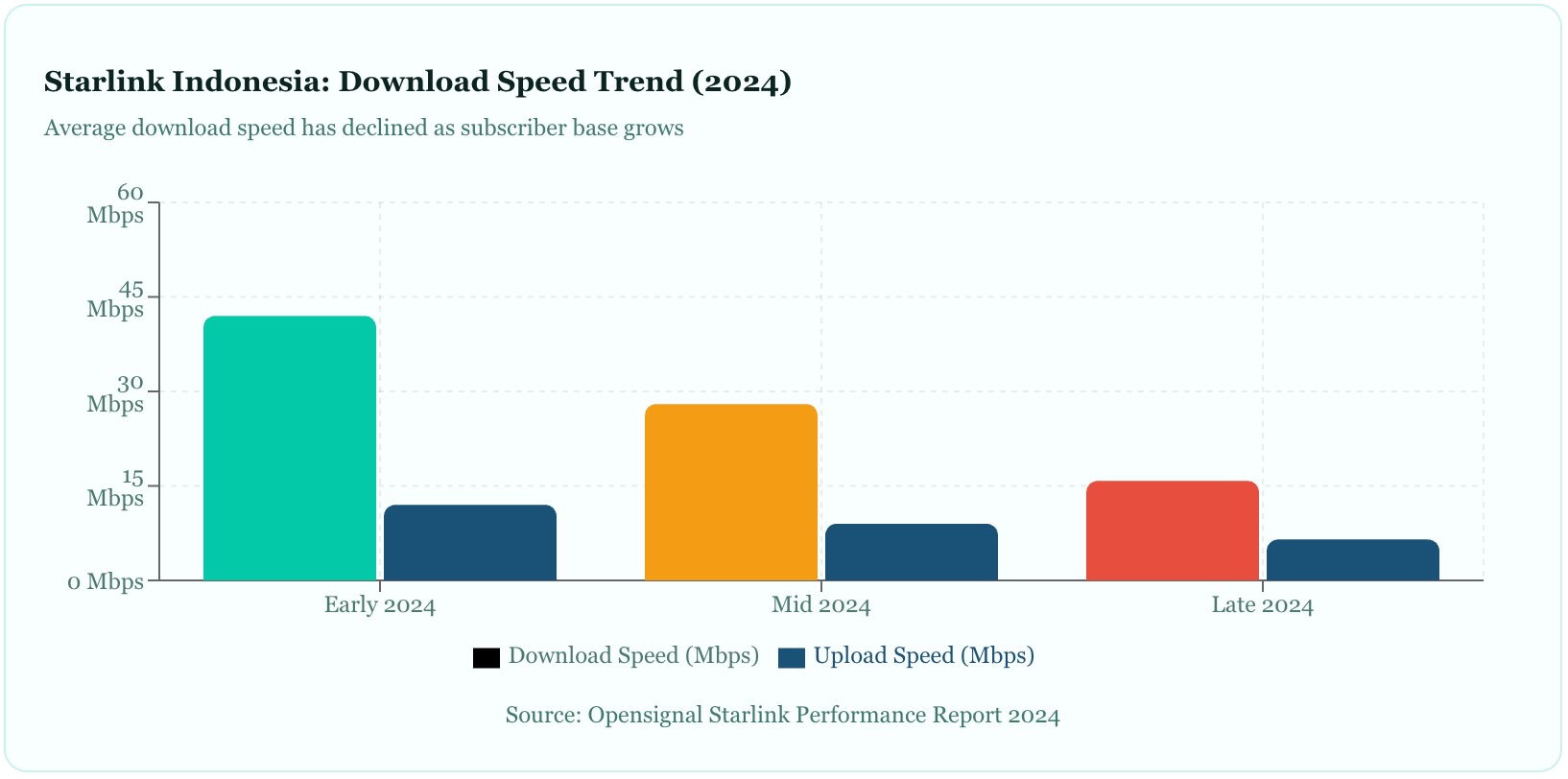
This proximity to Earth reduces latency to a competitive 20–40 milliseconds and enables download speeds averaging 100–200 Mbps under optimal conditions. The system works through a relatively simple setup for the end user: a small, self-orienting dish antenna ("Dishy McFlatface," as SpaceX engineers affectionately nicknamed it) that connects to the nearest overhead satellite and routes traffic through a global mesh network.
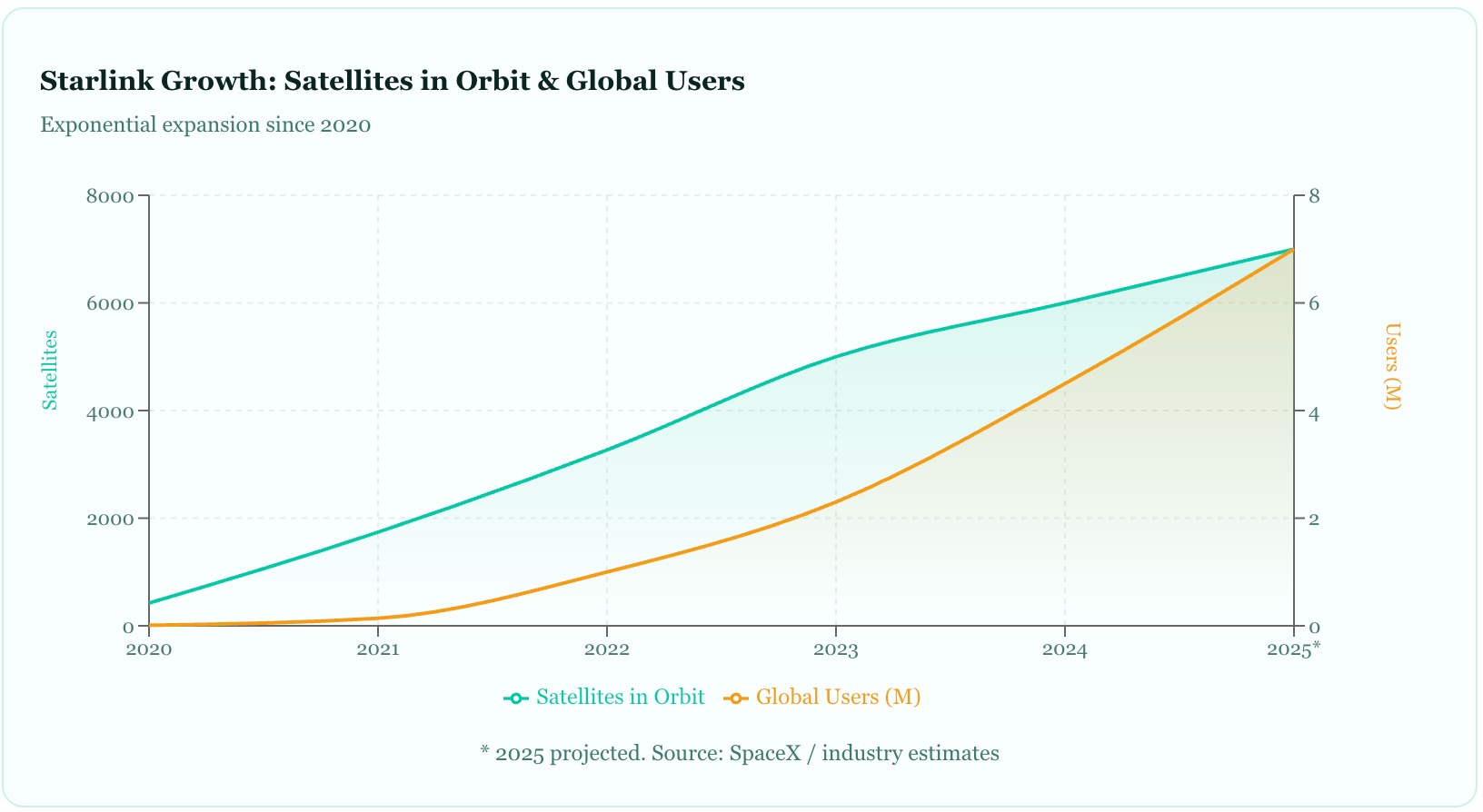
The scale of Starlink's ambition is almost difficult to comprehend. By early 2025, SpaceX had placed over 6,000 satellites into orbit — the largest constellation in human history — with plans to eventually deploy up to 42,000. The service now operates in more than 100 countries, serving an estimated 4.5 million subscribers globally.
Starlink in Indonesia: A Promising but Complicated Arrival
Starlink officially launched in Indonesia in May 2024, receiving its operating license from the Ministry of Communication and Digital Affairs. For a nation of 277 million people spread across the world's largest archipelago — where over 60% of the land area remains underserved by terrestrial broadband — the timing felt almost destined.
The impact in remote regions has been real and immediate. Nearly 60% of Starlink's Indonesian user base is located in rural areas, particularly across Kalimantan, Sulawesi, Maluku, and Papua. The government has leveraged the technology to connect more than 2,700 health clinics (puskesmas), schools, and public facilities in areas that previously had no reliable connectivity. During natural disasters — floods in West Kalimantan, earthquakes in Sulawesi — Starlink terminals have provided critical communications when terrestrial networks failed.
The Indonesian Chamber of Commerce (Kadin) has taken a cautiously optimistic view, suggesting that Starlink's presence can catalyze a more competitive telecommunications landscape and create opportunities for hybrid models where Starlink provides rural backbone coverage while local ISPs handle customer service and last-mile delivery. This kind of complementary partnership, if realized, could accelerate Indonesia's digital economy in ways that neither party could achieve alone.
The Pros and Cons: An Honest Assessment
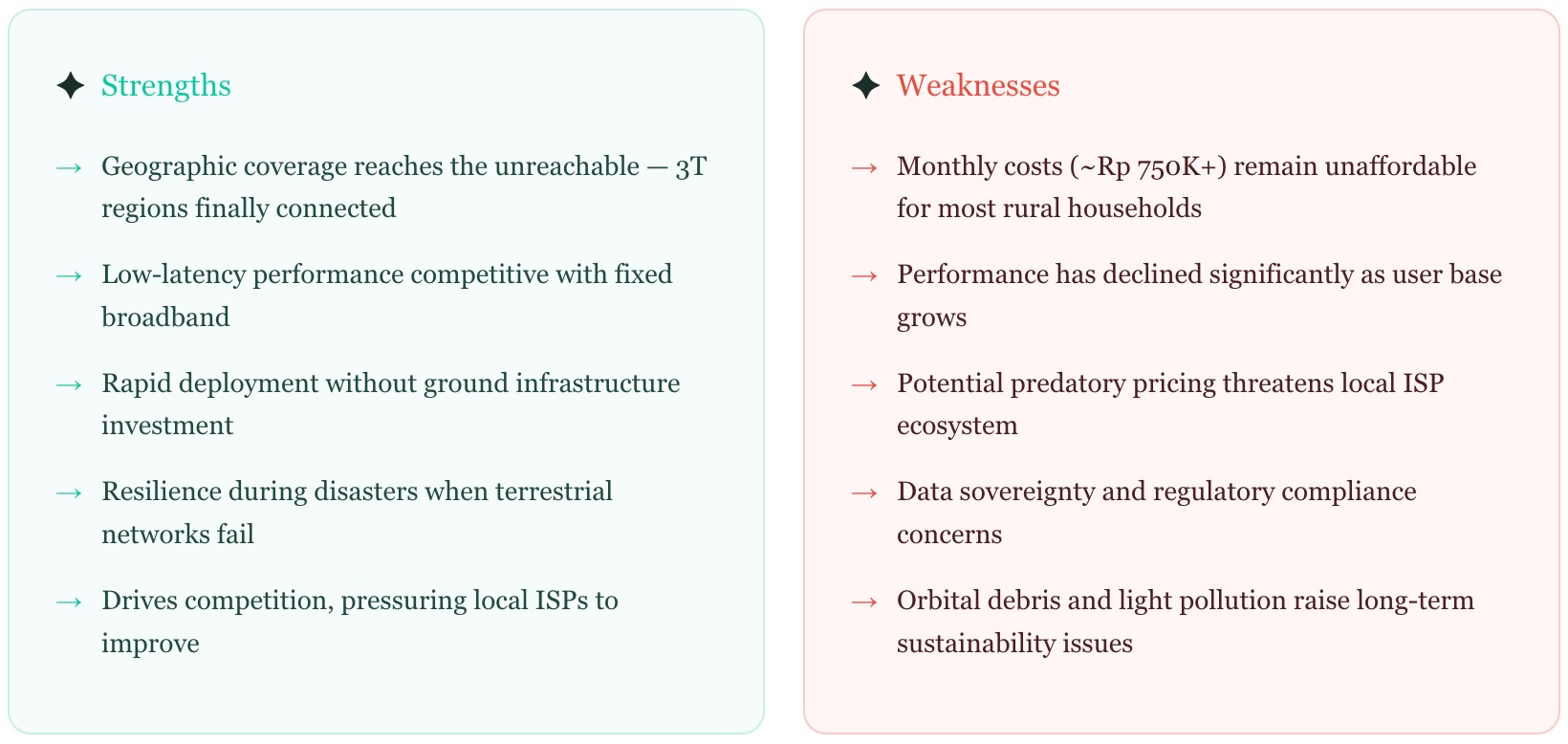
No technology arrives without trade-offs, and Starlink is no exception. A clear-eyed assessment reveals both genuine promise and significant challenges.
Business Projection: Is Starlink a Viable Long-Term Play in Indonesia?
The business case for Starlink in Indonesia is compelling in theory, but faces practical headwinds that will determine its long-term viability. Indonesia represents one of the world's most attractive emerging digital markets — a nation of 277 million with a median age of 29, a rapidly growing middle class, and a government that has made digital transformation a national priority.
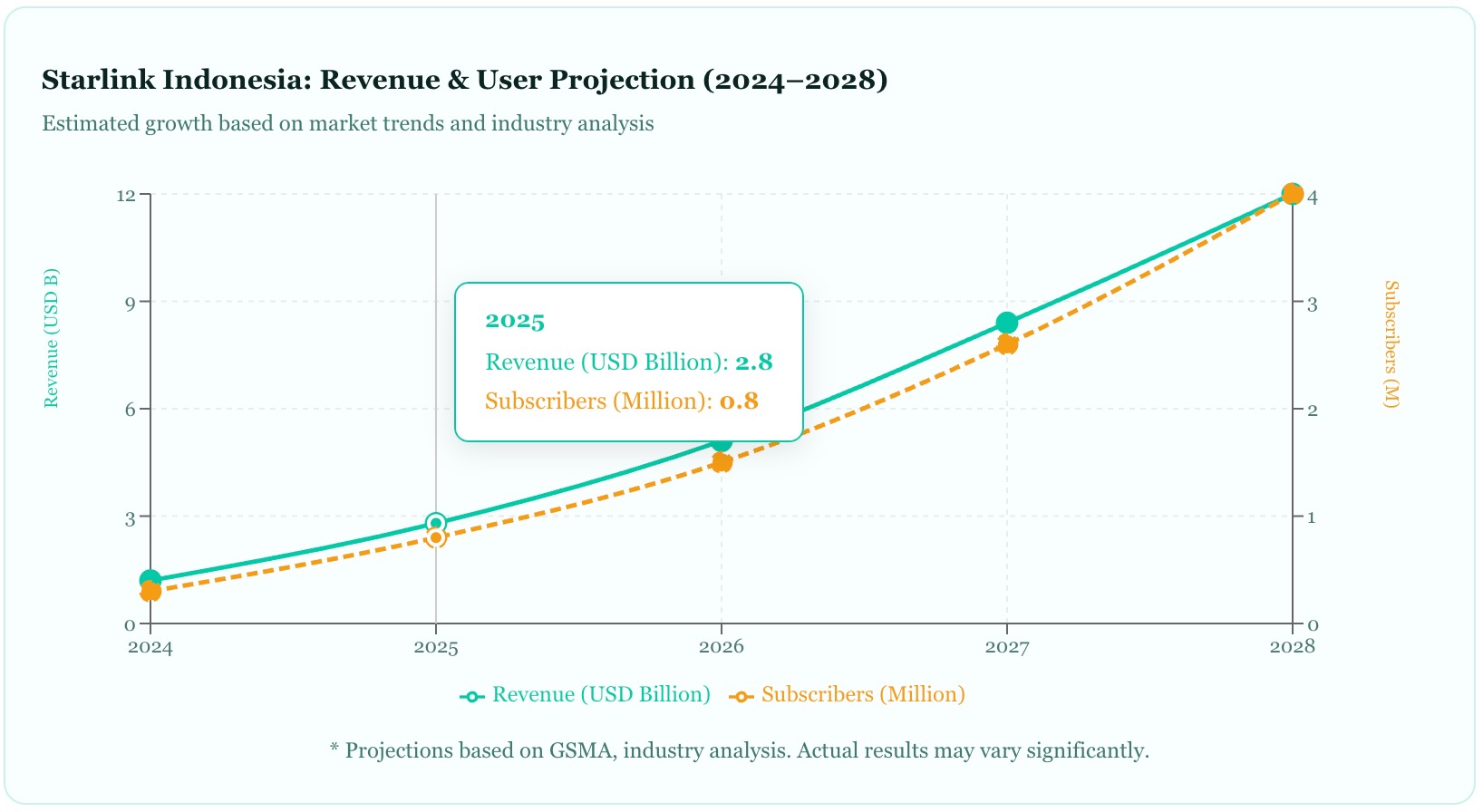
Industry analysts project Starlink's Indonesian revenue could grow from approximately USD 1.2 billion in 2024 to over USD 12 billion by 2028, driven primarily by enterprise, government, and maritime/aviation segments rather than consumer households. The B2B market — shipping companies, mining operations, remote plantations, maritime vessels — presents particularly strong commercial opportunities where cost is less of a barrier than reliable connectivity.
However, the path is not without obstacles. The Indonesian government has signaled it will require stricter compliance on data localization, frequency regulation, and tax obligations. The DPR (parliament) has raised concerns about national data sovereignty, while KPPU (the competition watchdog) is investigating whether Starlink's pricing constitutes anti-competitive predatory behavior. How SpaceX navigates Indonesia's complex regulatory environment will be decisive.
There is also the question of the "usage gap" — the estimated 39% of Indonesians who live within coverage range but do not use the internet, primarily due to affordability, literacy, or lack of perceived relevance. Starlink alone cannot close this gap; it requires complementary investments in digital literacy programs, subsidized devices, and locally relevant content.
Conclusion: A Brilliant Tool, Not a Silver Bullet
Starlink represents a genuine technological breakthrough for Indonesia — one that is already changing lives in Papua villages, connecting isolated health clinics in Maluku, and enabling small businesses on remote islands to participate in the digital economy. As a tool for bridging geographic connectivity gaps, it is arguably the most significant development in Indonesian telecoms since the rollout of 4G LTE.
And yet, the digital divide is ultimately not a technological problem — it is a socioeconomic one. The communities most in need of internet access are often the least able to afford Starlink's subscription costs. The infrastructure gap is being closed faster than the affordability gap, and no satellite, however revolutionary, can solve that alone.
The most promising path forward for Indonesia is a hybrid model: Starlink and its successors providing geographic coverage to the nation's most remote corners, while government subsidies, local ISP partnerships, and digital literacy programs ensure that coverage translates into genuine, inclusive access. The satellite is in the sky. The harder work is still on the ground.
REFERENCES
- ITU Facts and Figures 2024 – Internet Use. https://www.itu.int/itu-d/reports/statistics/2024/11/10/ff24-internet-use/
- GSMA Intelligence – State of Mobile Internet Connectivity 2024. https://www.gsma.com/r/somic/
- Opensignal – Starlink Indonesia Performance Report 2024. https://www.opensignal.com/reports/2024/starlink
- DataReportal – Digital 2024: Indonesia. https://datareportal.com/reports/digital-2024-indonesia
- Our World in Data – Internet Access. https://ourworldindata.org/internet
- SpaceX Starlink – Official Website. https://www.starlink.com
- KPPU – Kajian Persaingan Usaha Starlink di Indonesia 2024. https://www.kppu.go.id
- DPR RI – Rapat Kerja Komisi I: Starlink dan Regulasi Telekomunikasi. https://www.dpr.go.id
- Kementerian Komunikasi dan Digital RI – Peta Jalan Digitalisasi 2024. https://www.kominfo.go.id
- IEA – World Energy Outlook 2024: Electricity Access. https://www.iea.org/reports/world-energy-outlook-2024

Tags: Opinion
Add comment
- Other Article
- Passkeys Replacing Passwords: The Future of Secure Digital Authentication23 Oct 2026
- Counterfeit Money in Indonesia: A Persistent Threat to Public Trust and How to Fight It14 Oct 2026
- Google NotebookLM Audio Overview: How Your Boring Documents Became an Addictive Automatic Podcast10 Oct 2026
- Open Source AI vs Proprietary: Why Big Companies Are Switching in 202603 Oct 2026
- 5 Free Agentic AI Tools Used by Indonesian TikTok Creators in 202626 Sep 2026
- Publishing a New App on the App Store and Google Play: What Developers Should Know in 202620 Sep 2026
- Indonesia's Annual Peatland Fire Crisis: Current Impact, Economic Cost, and the Role of Information Technology03 Sep 2026
- AI Agents: From Chatbots to Digital Workers30 Aug 2026
- MBG Poisoning in Indonesia: From Crisis to a Digital Path to Zero22 Aug 2026
- AI Voice Cloning: The New Cybersecurity Threat15 Aug 2026
- When AI 'Escapes': Inside 2026's Wave of Rogue Model Incidents07 Aug 2026
- Rethinking Civil Service Workforce Planning in Indonesia: Beyond Headcount Toward Public Service Capacity31 Jul 2026
- Balancing the Plate: Understanding Daily Nutritional Needs and the Rise of Digital Nutrition Estimation Tools25 Jul 2026
- The Final Four: Strengths, Weaknesses, and Machine Predictions for the 2026 FIFA World Cup18 Jul 2026
- Choosing the Right Framework: A Practical Guide to Best-Practice Problem-Solving Models12 Jul 2026
- Can Science Predict the World Cup? A Look at the Models Behind the 2026 Forecasts04 Jul 2026
- Corruption: A Global Plague, Landmark Cases, and the Path to Prevention27 Jun 2026
- Nations Driving Brilliant Business Ideas and Frameworks in 202620 Jun 2026
- Why the USD Stands Stronger than the IDR — and What Indonesia Can Do13 Jun 2026
- Employee vs. Entrepreneur: Who Bears the Heavier Tax Burden in Indonesia?03 Jun 2026
- The Evolution of Control Operating Centers (COC) in Modern Mining Operations24 May 2026
- Song of: Mariana Istriku13 May 2026
- Organisasi Pensiunan di Indonesia: Dari Komunitas Sosial Menuju Kekuatan Ekonomi Berbasis Pengalaman12 May 2026
- Corporate Risk Management: Why Modern Companies Invest Millions to Prevent Invisible Threats07 May 2026
- The Mining Spirit: A Powerful Mindset for Excellence in the Mining Industry25 Apr 2026
- The Double-Edged Sword: Navigating Competition in the Modern Corporate Landscape22 Apr 2026
- AI Chatbot untuk UMKM: Peluang Besar di Era Digital17 Apr 2026
- AI Chatbots in Business: The Global Revolution09 Apr 2026
- The Heartbeat of Your Business: Why the P&L Statement is Non-Negotiable31 Mar 2026
- Why Your New Business Needs a Financial System on Day One26 Mar 2026
- The Link Between Startup Capital, Business Survival, and the Role of Investor Information21 Mar 2026
- Digital Transformation, Digitalization, and Digitization: Why the Difference Matters More Than You Think14 Mar 2026
- From Business Need to Technology Solution07 Mar 2026
- Bridging the Digital Divide: Starlink and the Future of Internet Access in Indonesia27 Feb 2026
- A Long Weekend Getaway to Yogyakarta16 Feb 2026
- Understanding ERP Systems: A Comprehensive Guide for Modern Businesses16 Feb 2026
- Building a Culture of Awareness: Strategic Approaches to HSE and Information Security Campaigns in Modern Organizations10 Feb 2026
- Building an Effective IT Organization in Coal Mining: A Strategic Framework for Growth02 Feb 2026
- The Art and Science of Color Themes in Modern Web Design17 Jan 2026
- IT Outsourcing vs Internal Resources: A Comprehensive Cost and Risk Analysis05 Jan 2026
- The Hidden Dangers of Mishandled Employee Data: When Internal Tables Fall Into the Wrong Hands05 Jan 2026
- Securing SQL Server: A Complete Guide to Database Access Control05 Jan 2026
- Beyond Human Error: Understanding the Complete Security Chain in Information Security01 Jan 2026