Article
Enhancing Business Value in Coal Mining: Applying Business Model Innovation Patterns
Author: Agus Budi Harto, 2025-07-10 01:36:47
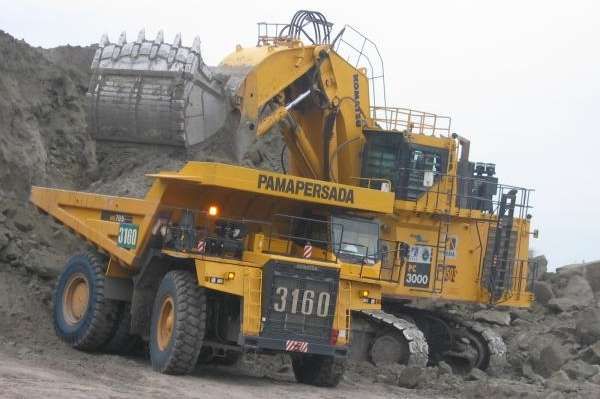
The coal mining industry operates in a challenging environment marked by fluctuating commodity prices, stringent environmental regulations, and the global transition to renewable energy. To thrive, companies must innovate their business models to create and capture value effectively. Drawing on the 55 business model patterns from Business Model Generation by Alexander Osterwalder and Yves Pigneur, this article adapts five relevant patterns—Long Tail, Open Business Model, Multi-Sided Platform, Freemium, and Sustainability-Driven—to enhance the business value of coal mining operations. These strategies, supported by industry insights, focus on operational efficiency, stakeholder engagement, and sustainable practices to ensure long-term competitiveness.
1. Long Tail: Diversifying Revenue Streams
The Long Tail pattern involves offering a wide variety of niche products or services to capture diverse market segments, rather than focusing solely on high-volume products. In coal mining, this translates to diversifying revenue streams beyond traditional coal sales by leveraging by-products and secondary services.
Recommendations:
Monetize By-Products: Extract and sell by-products like coal ash for cement production or rare earth elements (REEs) found in coal seams, which are critical for renewable energy technologies. This taps into niche markets with growing demand.
Offer Consulting Services: Provide expertise in mine reclamation or safety technologies to other mining firms, creating new revenue streams.
Expand to Adjacent Markets: Use existing infrastructure to mine other minerals, such as lithium or cobalt, which are in demand for battery storage technologies.
Example: A U.S. coal company partnered with a cement manufacturer to supply coal ash, generating an additional 5% revenue stream while reducing waste disposal costs.
2. Open Business Model: Collaborative Innovation
The Open Business Model pattern emphasizes collaboration with external partners to create and capture value. In coal mining, this involves partnering with technology providers, universities, and local communities to drive innovation and improve efficiency.
Recommendations:
Collaborate with Tech Firms: Partner with companies like ABB or Microsoft to implement AI-driven analytics for optimizing mine operations, as seen in BHP’s Escondida copper mine, which improved recoveries through AI recommendations.
Engage Research Institutions: Work with universities to develop green mining technologies, such as carbon capture, utilization, and storage (CCUS), to address carbon neutrality goals.
Involve Local Suppliers: Foster local supplier linkages to develop location-specific solutions, enhancing economic impact and social acceptance.
Example: A Chinese coal mine collaborated with a university to develop IoT-based gas monitoring systems, reducing safety incidents by 30% and improving operational efficiency.
3. Multi-Sided Platform: Connecting Stakeholders
The Multi-Sided Platform pattern creates value by facilitating interactions between different stakeholder groups. In coal mining, this involves creating platforms that connect miners, suppliers, customers, and communities to streamline operations and enhance value.
Recommendations:
Develop Digital Marketplaces: Create platforms to connect coal producers with buyers, enabling real-time pricing and demand-driven production strategies.
Integrate Supply Chain Partners: Build a digital platform to coordinate with equipment suppliers and logistics providers, reducing costs and improving resilience in the supply chain.
Engage Communities: Use platforms to share sustainability data with local communities, building trust and securing social licenses to operate.
Example: An Australian coal company implemented a digital supply chain platform, reducing transportation costs by 10% through optimized logistics coordination.
4. Freemium: Offering Value-Added Services
The Freemium pattern provides basic services for free while charging for premium features. In coal mining, this can be applied by offering free or low-cost services to attract stakeholders, with premium offerings generating revenue.
Recommendations:
Free Safety Training: Provide free safety training programs to local communities or small-scale miners, charging for advanced certifications or consulting services.
Subsidized Technology Access: Offer free access to basic digital monitoring tools for smaller mines, with premium features like predictive maintenance available for a fee.
Community Development Programs: Fund community infrastructure (e.g., schools, water systems) at no cost, while offering paid consulting on sustainable land use post-mining.
Example: A South African coal mine offered free safety workshops to artisanal miners, later monetizing advanced training modules, which increased community goodwill and generated a 3% revenue boost.
5. Sustainability-Driven: Embedding Green Practices
The Sustainability-Driven pattern integrates environmental and social considerations into the core business model to create long-term value. In coal mining, this is critical to meet regulatory requirements and stakeholder expectations.
Recommendations:
Adopt Green Mining Technologies: Implement mine filling, water preservation, and gangue discharge reduction to minimize environmental impact. For instance, backfilling with coal solid waste (CSW) reduces surface pollution and supports safe operations.
Invest in CCUS: Develop carbon capture, utilization, and storage systems to align with carbon neutralization targets, enhancing market competitiveness.
Reclaim Mined Land: Use organic amendments like lemongrass-derived biochar to restore soil quality, reducing heavy metal content by up to 93% and improving ecosystem services.
Example: The Pingshuo open-pit mine in China optimized its mining growth rate to balance economic output with ecosystem preservation, increasing ecosystem service value by 1.04–1.10 times.
Conclusion
By applying business model innovation patterns like Long Tail, Open Business Model, Multi-Sided Platform, Freemium, and Sustainability-Driven, coal mining companies can enhance their business value while addressing industry challenges. These strategies enable diversification, collaboration, stakeholder engagement, and sustainable practices, ensuring resilience in a volatile market. Supported by technological advancements and stakeholder partnerships, these approaches position coal mining firms for sustainable growth and societal impact.
References:
Osterwalder, A., & Pigneur, Y. (2010). Business Model Generation: A Handbook for Visionaries, Game Changers, and Challengers. Wiley.
McKinsey. (2020). The mining value chain: A hidden gem.
Frontiers. (2022). Innovative Activities in the Sphere of Mining Process Management.
Oxford Academic. (2023). Mining sector: profit-seeking strategies, innovation patterns, and commodity prices.
PwC. (2025). Mine 2025: Concentrating on the future.
ScienceDirect. (2023). Safe mining operations through technological advancement.
International Journal of Coal Science & Technology. (2021). The view of technological innovation in coal industry under the vision of carbon neutralization.
ResearchGate. (2022). Potentials of business model innovation and values-based management approaches in the mining sector.

Tags: Expression Opinion
Add comment
- Other Article
- Google NotebookLM Audio Overview: How Your Boring Documents Became an Addictive Automatic Podcast10 Oct 2026
- Open Source AI vs Proprietary: Why Big Companies Are Switching in 202603 Oct 2026
- 5 Free Agentic AI Tools Used by Indonesian TikTok Creators in 202626 Sep 2026
- Publishing a New App on the App Store and Google Play: What Developers Should Know in 202620 Sep 2026
- Indonesia's Annual Peatland Fire Crisis: Current Impact, Economic Cost, and the Role of Information Technology03 Sep 2026
- AI Agents: From Chatbots to Digital Workers30 Aug 2026
- MBG Poisoning in Indonesia: From Crisis to a Digital Path to Zero22 Aug 2026
- AI Voice Cloning: The New Cybersecurity Threat15 Aug 2026
- When AI 'Escapes': Inside 2026's Wave of Rogue Model Incidents07 Aug 2026
- Rethinking Civil Service Workforce Planning in Indonesia: Beyond Headcount Toward Public Service Capacity31 Jul 2026
- Balancing the Plate: Understanding Daily Nutritional Needs and the Rise of Digital Nutrition Estimation Tools25 Jul 2026
- The Final Four: Strengths, Weaknesses, and Machine Predictions for the 2026 FIFA World Cup18 Jul 2026
- Choosing the Right Framework: A Practical Guide to Best-Practice Problem-Solving Models12 Jul 2026
- Can Science Predict the World Cup? A Look at the Models Behind the 2026 Forecasts04 Jul 2026
- Corruption: A Global Plague, Landmark Cases, and the Path to Prevention27 Jun 2026
- Nations Driving Brilliant Business Ideas and Frameworks in 202620 Jun 2026
- Why the USD Stands Stronger than the IDR — and What Indonesia Can Do13 Jun 2026
- Employee vs. Entrepreneur: Who Bears the Heavier Tax Burden in Indonesia?03 Jun 2026
- The Evolution of Control Operating Centers (COC) in Modern Mining Operations24 May 2026
- Song of: Mariana Istriku13 May 2026
- Organisasi Pensiunan di Indonesia: Dari Komunitas Sosial Menuju Kekuatan Ekonomi Berbasis Pengalaman12 May 2026
- Corporate Risk Management: Why Modern Companies Invest Millions to Prevent Invisible Threats07 May 2026
- The Mining Spirit: A Powerful Mindset for Excellence in the Mining Industry25 Apr 2026
- The Double-Edged Sword: Navigating Competition in the Modern Corporate Landscape22 Apr 2026
- AI Chatbot untuk UMKM: Peluang Besar di Era Digital17 Apr 2026
- AI Chatbots in Business: The Global Revolution09 Apr 2026
- The Heartbeat of Your Business: Why the P&L Statement is Non-Negotiable31 Mar 2026
- Why Your New Business Needs a Financial System on Day One26 Mar 2026
- The Link Between Startup Capital, Business Survival, and the Role of Investor Information21 Mar 2026
- Digital Transformation, Digitalization, and Digitization: Why the Difference Matters More Than You Think14 Mar 2026
- From Business Need to Technology Solution07 Mar 2026
- Bridging the Digital Divide: Starlink and the Future of Internet Access in Indonesia27 Feb 2026
- A Long Weekend Getaway to Yogyakarta16 Feb 2026
- Understanding ERP Systems: A Comprehensive Guide for Modern Businesses16 Feb 2026
- Building a Culture of Awareness: Strategic Approaches to HSE and Information Security Campaigns in Modern Organizations10 Feb 2026
- Building an Effective IT Organization in Coal Mining: A Strategic Framework for Growth02 Feb 2026
- The Art and Science of Color Themes in Modern Web Design17 Jan 2026
- IT Outsourcing vs Internal Resources: A Comprehensive Cost and Risk Analysis05 Jan 2026
- The Hidden Dangers of Mishandled Employee Data: When Internal Tables Fall Into the Wrong Hands05 Jan 2026
- Securing SQL Server: A Complete Guide to Database Access Control05 Jan 2026
- Beyond Human Error: Understanding the Complete Security Chain in Information Security01 Jan 2026