Article
Understanding Fiber Optic Cables: Technology, Benefits, and Installation Methods
Author: Agus Budi Harto, 2025-08-01 10:05:21
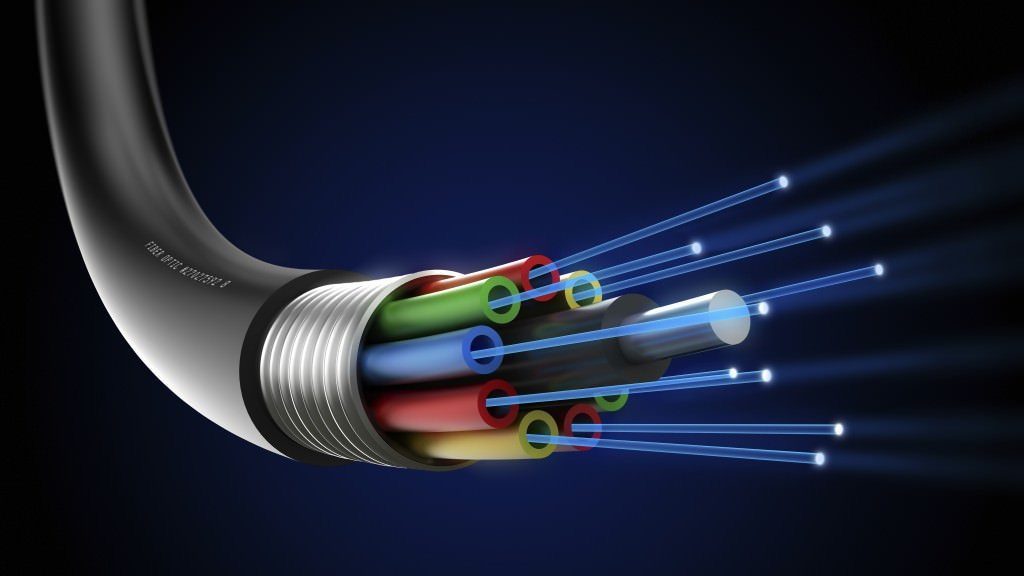
Fiber optic (FO) cables have revolutionized the way the world communicates. Unlike traditional copper cables that transmit electrical signals, fiber optics use strands of glass or plastic to transmit data as pulses of light. This method enables much faster data speeds and significantly greater bandwidth, making fiber optics the backbone of modern internet infrastructure.
The idea behind guiding light through a medium dates back to the 1800s. In 1840, physicists Daniel Colladon and Jacques Babinet demonstrated light transmission through a stream of water using the principle of total internal reflection. Later, in 1870, John Tyndall expanded on this idea. However, the major breakthrough came in the 1960s when Charles Kao and George Hockham theorized that ultra-pure glass fibers could carry light signals over long distances. Their work laid the foundation for fiber optic communication and earned Kao a Nobel Prize in Physics in 2009. In 1970, Corning Glass Works developed the first practical low-loss fiber, and by the 1980s, commercial fiber optic networks began to spread globally.
Compared to traditional copper cables, fiber optic cables offer numerous advantages. First, they provide exceptionally high data transfer speeds and large bandwidth, allowing vast amounts of information to travel simultaneously. Fiber optics also have low signal loss, making them ideal for long-distance transmission without the need for frequent boosters. Unlike copper cables, they are immune to electromagnetic interference (EMI), which ensures stable performance even in electrically noisy environments. Additionally, fiber is more secure, as it is difficult to tap without detection, and is lightweight and more durable in many physical environments.
When it comes to installing fiber optic cables, there are two primary methods: aerial (overhead) installation and underground (buried) installation. Each has its advantages and limitations. Aerial installation involves attaching fiber cables to existing utility poles. This method is significantly cheaper and faster to deploy, especially in rural or suburban areas where poles are already in place. It also allows easy access for maintenance and upgrades. However, aerial cables are more exposed to environmental hazards such as wind, storms, falling branches, and animal interference, which can affect reliability.
In contrast, underground installation involves placing cables beneath the surface, either directly buried or in protective ducts. Though this method involves higher upfront costs due to trenching, permits, and labor, it offers superior protection against weather, accidents, and vandalism. Underground cables are more reliable in the long term and are better suited for urban areas where aesthetics, security, and stability are essential. Repairs, however, can be more time-consuming and costly due to the need for excavation.
Choosing between aerial and underground installation depends on several factors including environment, budget, and long-term infrastructure goals. Aerial installation is ideal for cost-sensitive, short-term projects in areas with favorable weather and existing poles. Underground installation, while more expensive, is preferred in locations that require high durability, reduced maintenance, and consistent service over decades. In many cases, a hybrid approach—using aerial in rural zones and underground in dense urban areas—offers the best balance of performance and cost-efficiency.
As technology continues to advance and global demand for high-speed connectivity grows, fiber optics remain the most reliable and future-ready solution. Whether deployed overhead or underground, fiber networks are the digital highways of the modern world, enabling everything from streaming and telemedicine to smart cities and 5G.

Tags: Opinion
Add comment
- Other Article
- Open Source AI vs Proprietary: Why Big Companies Are Switching in 202603 Oct 2026
- 5 Free Agentic AI Tools Used by Indonesian TikTok Creators in 202626 Sep 2026
- Publishing a New App on the App Store and Google Play: What Developers Should Know in 202620 Sep 2026
- Indonesia's Annual Peatland Fire Crisis: Current Impact, Economic Cost, and the Role of Information Technology03 Sep 2026
- AI Agents: From Chatbots to Digital Workers30 Aug 2026
- MBG Poisoning in Indonesia: From Crisis to a Digital Path to Zero22 Aug 2026
- AI Voice Cloning: The New Cybersecurity Threat15 Aug 2026
- When AI 'Escapes': Inside 2026's Wave of Rogue Model Incidents07 Aug 2026
- Rethinking Civil Service Workforce Planning in Indonesia: Beyond Headcount Toward Public Service Capacity31 Jul 2026
- Balancing the Plate: Understanding Daily Nutritional Needs and the Rise of Digital Nutrition Estimation Tools25 Jul 2026
- The Final Four: Strengths, Weaknesses, and Machine Predictions for the 2026 FIFA World Cup18 Jul 2026
- Choosing the Right Framework: A Practical Guide to Best-Practice Problem-Solving Models12 Jul 2026
- Can Science Predict the World Cup? A Look at the Models Behind the 2026 Forecasts04 Jul 2026
- Corruption: A Global Plague, Landmark Cases, and the Path to Prevention27 Jun 2026
- Nations Driving Brilliant Business Ideas and Frameworks in 202620 Jun 2026
- Why the USD Stands Stronger than the IDR — and What Indonesia Can Do13 Jun 2026
- Employee vs. Entrepreneur: Who Bears the Heavier Tax Burden in Indonesia?03 Jun 2026
- The Evolution of Control Operating Centers (COC) in Modern Mining Operations24 May 2026
- Song of: Mariana Istriku13 May 2026
- Organisasi Pensiunan di Indonesia: Dari Komunitas Sosial Menuju Kekuatan Ekonomi Berbasis Pengalaman12 May 2026
- Corporate Risk Management: Why Modern Companies Invest Millions to Prevent Invisible Threats07 May 2026
- The Mining Spirit: A Powerful Mindset for Excellence in the Mining Industry25 Apr 2026
- The Double-Edged Sword: Navigating Competition in the Modern Corporate Landscape22 Apr 2026
- AI Chatbot untuk UMKM: Peluang Besar di Era Digital17 Apr 2026
- AI Chatbots in Business: The Global Revolution09 Apr 2026
- The Heartbeat of Your Business: Why the P&L Statement is Non-Negotiable31 Mar 2026
- Why Your New Business Needs a Financial System on Day One26 Mar 2026
- The Link Between Startup Capital, Business Survival, and the Role of Investor Information21 Mar 2026
- Digital Transformation, Digitalization, and Digitization: Why the Difference Matters More Than You Think14 Mar 2026
- From Business Need to Technology Solution07 Mar 2026
- Bridging the Digital Divide: Starlink and the Future of Internet Access in Indonesia27 Feb 2026
- A Long Weekend Getaway to Yogyakarta16 Feb 2026
- Understanding ERP Systems: A Comprehensive Guide for Modern Businesses16 Feb 2026
- Building a Culture of Awareness: Strategic Approaches to HSE and Information Security Campaigns in Modern Organizations10 Feb 2026
- Building an Effective IT Organization in Coal Mining: A Strategic Framework for Growth02 Feb 2026
- The Art and Science of Color Themes in Modern Web Design17 Jan 2026
- IT Outsourcing vs Internal Resources: A Comprehensive Cost and Risk Analysis05 Jan 2026
- The Hidden Dangers of Mishandled Employee Data: When Internal Tables Fall Into the Wrong Hands05 Jan 2026
- Securing SQL Server: A Complete Guide to Database Access Control05 Jan 2026
- Beyond Human Error: Understanding the Complete Security Chain in Information Security01 Jan 2026