Article
Cloning SLAs More Easily in ServiceNow
Author: Agus Budi Harto, 2025-08-11 15:15:06
One of the key responsibilities in IT Service Management (ITSM) is identifying which services have exceeded their agreed resolution times. This is exactly where ServiceNow proves its value—by helping organizations detect overdue services quickly and take immediate corrective action. Monitoring and managing service deadlines is one of the platform’s most crucial functions.
These deadlines are defined within a module called Service Level Agreement (SLA). In ServiceNow, you can access it through:
All > Service Level Management > SLA > SLA Definitions.

From there, creating a new SLA involves clicking New and filling in several required fields. Although the process is fairly straightforward, it still demands a few minutes of focused work for each SLA.
That’s just one scenario. In reality, organizations often need different SLA configurations for remote offices or branch locations, especially if each location operates under different working hours. With dozens or even hundreds of branches, and each branch potentially requiring multiple SLAs, the total number of SLAs to manage can be overwhelming.
From my experience, one way to clone SLAs is by using the Import Set feature in ServiceNow. I exported 41 SLAs from one remote office into an Excel file, imported the data into a staging table, and used Transform Maps to transfer the records to the main SLA table: contract_sla. While the import itself was successful, several key fields such as duration and conditions (start, pause, stop, reset, etc.) failed to copy correctly. Fixing this required adding scripts for each individual field, which turned out to be a complex and time-consuming process.

Eventually, I found a much simpler and more effective solution: using a Script Include. By writing a custom Script Include and executing it through a Background Script, I was able to clone all 41 SLAs in a single click. This method not only saved time but also eliminated the need for manual correction and field-specific scripting.
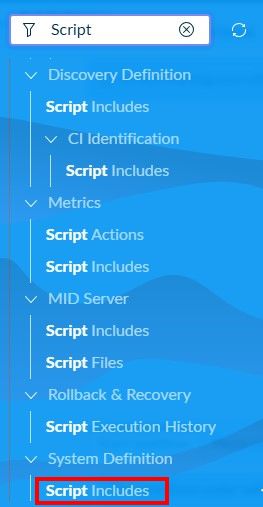

Script:
Background script:
var helper = new PM_CloningSLA();
helper.cloneSLA();
In conclusion, while Import Sets offer a way to clone SLAs, they come with limitations that can complicate the process. Leveraging Script Includes provides a far more efficient and scalable solution, especially when dealing with a large number of SLAs across multiple business units.

Tags: Opinion Servicenow
Add comment
- Other Article
- Google NotebookLM Audio Overview: How Your Boring Documents Became an Addictive Automatic Podcast10 Oct 2026
- Open Source AI vs Proprietary: Why Big Companies Are Switching in 202603 Oct 2026
- 5 Free Agentic AI Tools Used by Indonesian TikTok Creators in 202626 Sep 2026
- Publishing a New App on the App Store and Google Play: What Developers Should Know in 202620 Sep 2026
- Indonesia's Annual Peatland Fire Crisis: Current Impact, Economic Cost, and the Role of Information Technology03 Sep 2026
- AI Agents: From Chatbots to Digital Workers30 Aug 2026
- MBG Poisoning in Indonesia: From Crisis to a Digital Path to Zero22 Aug 2026
- AI Voice Cloning: The New Cybersecurity Threat15 Aug 2026
- When AI 'Escapes': Inside 2026's Wave of Rogue Model Incidents07 Aug 2026
- Rethinking Civil Service Workforce Planning in Indonesia: Beyond Headcount Toward Public Service Capacity31 Jul 2026
- Balancing the Plate: Understanding Daily Nutritional Needs and the Rise of Digital Nutrition Estimation Tools25 Jul 2026
- The Final Four: Strengths, Weaknesses, and Machine Predictions for the 2026 FIFA World Cup18 Jul 2026
- Choosing the Right Framework: A Practical Guide to Best-Practice Problem-Solving Models12 Jul 2026
- Can Science Predict the World Cup? A Look at the Models Behind the 2026 Forecasts04 Jul 2026
- Corruption: A Global Plague, Landmark Cases, and the Path to Prevention27 Jun 2026
- Nations Driving Brilliant Business Ideas and Frameworks in 202620 Jun 2026
- Why the USD Stands Stronger than the IDR — and What Indonesia Can Do13 Jun 2026
- Employee vs. Entrepreneur: Who Bears the Heavier Tax Burden in Indonesia?03 Jun 2026
- The Evolution of Control Operating Centers (COC) in Modern Mining Operations24 May 2026
- Song of: Mariana Istriku13 May 2026
- Organisasi Pensiunan di Indonesia: Dari Komunitas Sosial Menuju Kekuatan Ekonomi Berbasis Pengalaman12 May 2026
- Corporate Risk Management: Why Modern Companies Invest Millions to Prevent Invisible Threats07 May 2026
- The Mining Spirit: A Powerful Mindset for Excellence in the Mining Industry25 Apr 2026
- The Double-Edged Sword: Navigating Competition in the Modern Corporate Landscape22 Apr 2026
- AI Chatbot untuk UMKM: Peluang Besar di Era Digital17 Apr 2026
- AI Chatbots in Business: The Global Revolution09 Apr 2026
- The Heartbeat of Your Business: Why the P&L Statement is Non-Negotiable31 Mar 2026
- Why Your New Business Needs a Financial System on Day One26 Mar 2026
- The Link Between Startup Capital, Business Survival, and the Role of Investor Information21 Mar 2026
- Digital Transformation, Digitalization, and Digitization: Why the Difference Matters More Than You Think14 Mar 2026
- From Business Need to Technology Solution07 Mar 2026
- Bridging the Digital Divide: Starlink and the Future of Internet Access in Indonesia27 Feb 2026
- A Long Weekend Getaway to Yogyakarta16 Feb 2026
- Understanding ERP Systems: A Comprehensive Guide for Modern Businesses16 Feb 2026
- Building a Culture of Awareness: Strategic Approaches to HSE and Information Security Campaigns in Modern Organizations10 Feb 2026
- Building an Effective IT Organization in Coal Mining: A Strategic Framework for Growth02 Feb 2026
- The Art and Science of Color Themes in Modern Web Design17 Jan 2026
- IT Outsourcing vs Internal Resources: A Comprehensive Cost and Risk Analysis05 Jan 2026
- The Hidden Dangers of Mishandled Employee Data: When Internal Tables Fall Into the Wrong Hands05 Jan 2026
- Securing SQL Server: A Complete Guide to Database Access Control05 Jan 2026
- Beyond Human Error: Understanding the Complete Security Chain in Information Security01 Jan 2026