Article
How to Ground a Mobile CCTV Tower on a Hilltop for Lightning Protection in Mining Sites
Author: Agus Budi Harto, 2025-09-02 11:37:58
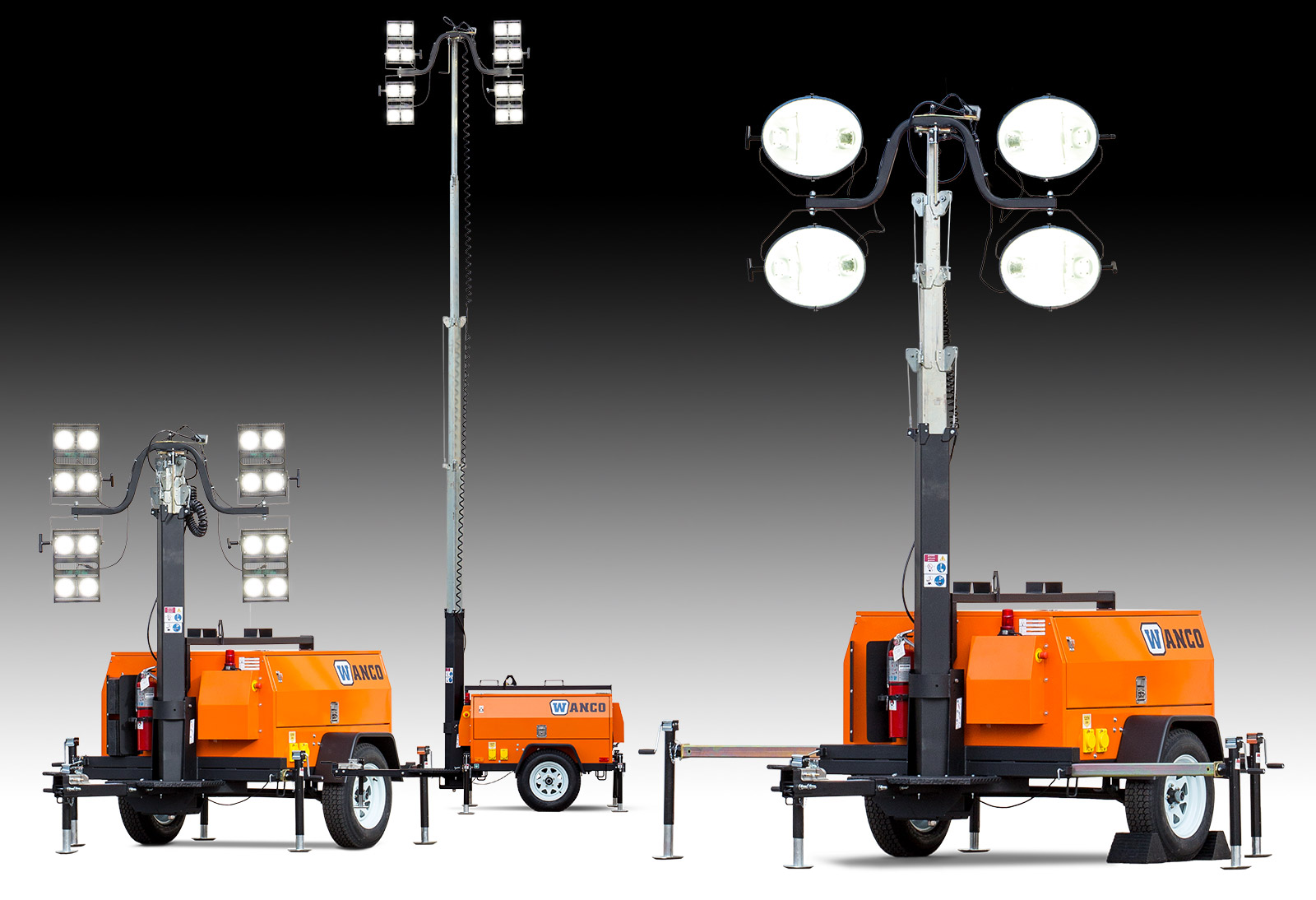
Lightning is one of the most unpredictable and dangerous natural forces, especially in elevated areas like hilltops, where mobile equipment such as CCTV towers are often deployed for mining operations. These temporary installations are critical for surveillance and communication but are also prime targets for lightning due to their height and isolation. Without proper lightning protection, a single strike could destroy sensitive electronics, cause fires, or endanger human life.
Contrary to common belief, grounding systems do not prevent lightning from happening. Instead, they provide a safe path for the electrical energy to dissipate into the earth, protecting the system from catastrophic damage. A properly designed lightning protection system that includes grounding can reach up to 98–99% effectiveness in minimizing damage caused by direct or nearby lightning strikes. This makes grounding a crucial part of any mobile infrastructure deployed in storm-prone areas.
However, the challenge arises when the tower needs to be moved frequently. In mining sites, the monitoring location often changes as excavation progresses, requiring the equipment to be mobile, lightweight, and easy to reassemble. Traditional deep-earth grounding systems are not practical in such cases. This is where portable or temporary grounding systems come in.
To ground a mobile CCTV tower effectively on a hilltop, a few key components are essential. First are temporary ground rods, typically copper-bonded steel, around 1.2 to 2.4 meters long. These can be driven into the ground at the deployment site and removed during relocation. Ideally, two or more rods are used in parallel, spaced a minimum of 1.5 meters apart to reduce ground resistance. In areas with rocky or dry soil, chemical ground rods or ground plates may be needed instead.
Next, a grounding ring—a loop of bare copper wire—is laid around the base of the tower. This wire connects all the ground rods and provides an even distribution path for the electrical current. It also serves to equalize potential between various grounded components. Every metal part of the system, including the tower frame, camera mounts, and equipment enclosures, must be bonded to this ring to ensure they are at the same electrical potential. This bonding prevents dangerous voltage differences that can occur during a strike.
In addition to grounding, surge protection devices (SPDs) must be installed on all inputs and outputs—particularly power lines, network cables, and antenna connections. These devices absorb or deflect voltage spikes caused by lightning-induced transients, preventing them from damaging connected equipment. Without surge protection, even a well-grounded system may still suffer electronic failure.
To further reduce the risk, a small lightning rod, also known as an air terminal, can be installed at the top of the tower. This rod helps guide the lightning strike toward itself and into the ground path, rather than allowing the discharge to jump unpredictably to equipment. The rod must be directly connected to the grounding network to be effective.
Here is a simple visualization of how such a setup might look in the field:
This setup shows how the tower’s components are connected to multiple ground rods, forming a complete loop for energy dissipation. The rods can be pulled and reinstalled at each new site, making the system both safe and mobile.
An important part of grounding is measuring its resistance to earth. Using a clamp meter or earth resistance tester, teams should aim for less than 10 ohms, with under 5 ohms being ideal in lightning-prone regions. If resistance is too high, additional rods or soil enhancement compounds can be added to improve conductivity. Regular measurements should be taken at each relocation.
To streamline deployment, field teams can use a portable grounding kit. These kits often include several ground rods, flexible copper cables, clamps, surge protectors, and testing tools. Designed for durability and weather resistance, they are ideal for mining operations where conditions may be harsh, and speed is critical.
Before activating the CCTV system, a thorough safety check is required. All rods must be driven firmly into the ground. Connections should be checked for continuity. Surge protectors must be securely grounded. All exposed metal components must be bonded. Finally, resistance should be tested and logged to ensure safety compliance.
In conclusion, you cannot stop lightning, but with the right approach, you can control its consequences. A mobile CCTV tower on a hilltop at a mining site faces elevated risk, but a properly implemented portable grounding system—combined with surge protection and smart layout—can drastically reduce vulnerability. By treating grounding as a critical part of field operations and not an afterthought, teams can avoid costly damage and ensure uninterrupted monitoring.
This approach offers the best of both worlds: high mobility and high safety. For engineers, field techs, and safety officers in the mining industry, mastering mobile lightning protection is a practical necessity, not just a technical detail.
Tags: Opinion
Add comment
- Other Article
- Open Source AI vs Proprietary: Why Big Companies Are Switching in 202603 Oct 2026
- 5 Free Agentic AI Tools Used by Indonesian TikTok Creators in 202626 Sep 2026
- Publishing a New App on the App Store and Google Play: What Developers Should Know in 202620 Sep 2026
- Indonesia's Annual Peatland Fire Crisis: Current Impact, Economic Cost, and the Role of Information Technology03 Sep 2026
- AI Agents: From Chatbots to Digital Workers30 Aug 2026
- MBG Poisoning in Indonesia: From Crisis to a Digital Path to Zero22 Aug 2026
- AI Voice Cloning: The New Cybersecurity Threat15 Aug 2026
- When AI 'Escapes': Inside 2026's Wave of Rogue Model Incidents07 Aug 2026
- Rethinking Civil Service Workforce Planning in Indonesia: Beyond Headcount Toward Public Service Capacity31 Jul 2026
- Balancing the Plate: Understanding Daily Nutritional Needs and the Rise of Digital Nutrition Estimation Tools25 Jul 2026
- The Final Four: Strengths, Weaknesses, and Machine Predictions for the 2026 FIFA World Cup18 Jul 2026
- Choosing the Right Framework: A Practical Guide to Best-Practice Problem-Solving Models12 Jul 2026
- Can Science Predict the World Cup? A Look at the Models Behind the 2026 Forecasts04 Jul 2026
- Corruption: A Global Plague, Landmark Cases, and the Path to Prevention27 Jun 2026
- Nations Driving Brilliant Business Ideas and Frameworks in 202620 Jun 2026
- Why the USD Stands Stronger than the IDR — and What Indonesia Can Do13 Jun 2026
- Employee vs. Entrepreneur: Who Bears the Heavier Tax Burden in Indonesia?03 Jun 2026
- The Evolution of Control Operating Centers (COC) in Modern Mining Operations24 May 2026
- Song of: Mariana Istriku13 May 2026
- Organisasi Pensiunan di Indonesia: Dari Komunitas Sosial Menuju Kekuatan Ekonomi Berbasis Pengalaman12 May 2026
- Corporate Risk Management: Why Modern Companies Invest Millions to Prevent Invisible Threats07 May 2026
- The Mining Spirit: A Powerful Mindset for Excellence in the Mining Industry25 Apr 2026
- The Double-Edged Sword: Navigating Competition in the Modern Corporate Landscape22 Apr 2026
- AI Chatbot untuk UMKM: Peluang Besar di Era Digital17 Apr 2026
- AI Chatbots in Business: The Global Revolution09 Apr 2026
- The Heartbeat of Your Business: Why the P&L Statement is Non-Negotiable31 Mar 2026
- Why Your New Business Needs a Financial System on Day One26 Mar 2026
- The Link Between Startup Capital, Business Survival, and the Role of Investor Information21 Mar 2026
- Digital Transformation, Digitalization, and Digitization: Why the Difference Matters More Than You Think14 Mar 2026
- From Business Need to Technology Solution07 Mar 2026
- Bridging the Digital Divide: Starlink and the Future of Internet Access in Indonesia27 Feb 2026
- A Long Weekend Getaway to Yogyakarta16 Feb 2026
- Understanding ERP Systems: A Comprehensive Guide for Modern Businesses16 Feb 2026
- Building a Culture of Awareness: Strategic Approaches to HSE and Information Security Campaigns in Modern Organizations10 Feb 2026
- Building an Effective IT Organization in Coal Mining: A Strategic Framework for Growth02 Feb 2026
- The Art and Science of Color Themes in Modern Web Design17 Jan 2026
- IT Outsourcing vs Internal Resources: A Comprehensive Cost and Risk Analysis05 Jan 2026
- The Hidden Dangers of Mishandled Employee Data: When Internal Tables Fall Into the Wrong Hands05 Jan 2026
- Securing SQL Server: A Complete Guide to Database Access Control05 Jan 2026
- Beyond Human Error: Understanding the Complete Security Chain in Information Security01 Jan 2026