Article
Corruption: A Global Plague, Landmark Cases, and the Path to Prevention
Author: Agus Budi Harto, 2026-06-27 18:36:24
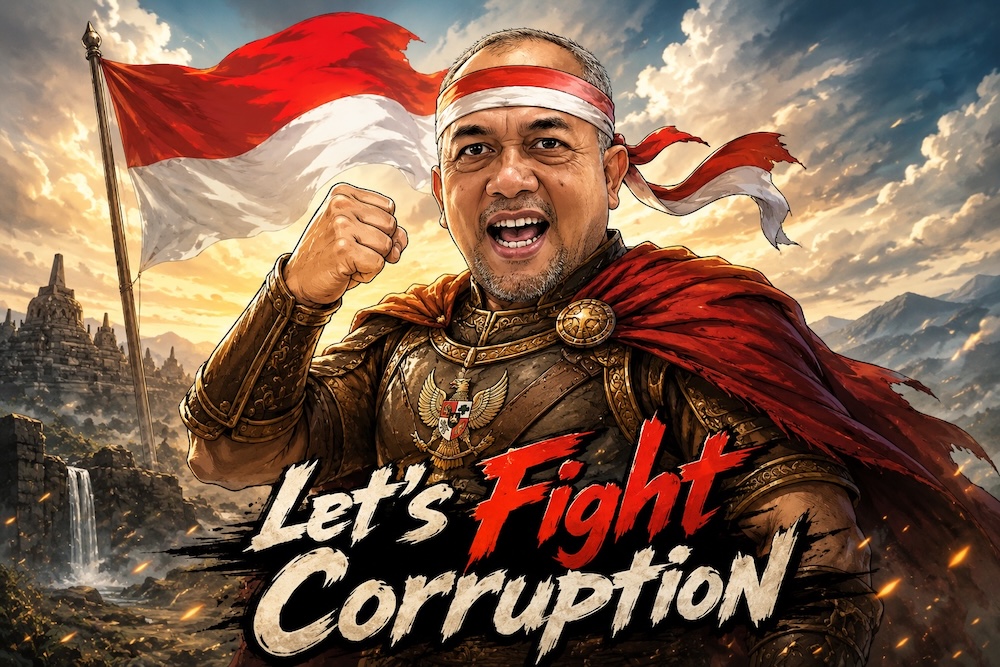
A Comprehensive Analysis of Corruption Worldwide and in Indonesia
Abstract
Corruption remains one of the most destructive forces undermining human development, democratic governance, and economic prosperity across the globe. From the halls of power in Europe to the extractive industries of Southeast Asia, corruption corrodes public trust, diverts public resources, and entrenches inequality. This article provides a comprehensive examination of the nature and definition of corruption, documents the most significant corruption scandals in world history and in Indonesia, surveys the major international frameworks established to combat it — with particular focus on the United Nations Convention Against Corruption (UNCAC) — and assesses Indonesia's progress and shortcomings in implementing these global standards. The discussion concludes with a critical analysis of the structural conditions necessary for meaningful anti-corruption reform.
1. Understanding Corruption: Definitions and Typologies
Corruption, at its core, is the abuse of entrusted power for private gain. While this definition, widely used by Transparency International, captures the essence of the phenomenon, the practical manifestations of corruption are extraordinarily diverse. At the institutional level, corruption encompasses bribery — the offering or receiving of inducements to influence a decision — embezzlement, which involves the misappropriation of assets entrusted to one's care, nepotism, collusion, extortion, and money laundering. Each of these forms operates differently within political, corporate, and social systems, making a unified response inherently complex.
Grand corruption refers to acts committed at the highest levels of government that distort policies or the functioning of the state and enable leaders to benefit at the expense of the public good. It is distinguished from petty corruption — the everyday abuse of entrusted power by low- and mid-level public officials in their interactions with ordinary citizens — as well as from political corruption, in which power is abused in ways that undermine democratic processes. All three forms are interrelated: systemic petty corruption often reflects and reinforces grand corruption at the top.
From an economic standpoint, corruption functions as an invisible tax on investment, entrepreneurship, and public service delivery. It drives up the cost of doing business, distorts market competition, and channels resources away from productive uses into private hands. The World Bank has long identified corruption as one of the greatest obstacles to economic and social development, noting that countries that effectively control corruption tend to enjoy higher income levels, better human development outcomes, and stronger rule of law.
Transparency International's annual Corruption Perceptions Index (CPI), which has been published since 1995, provides the most widely referenced benchmark for measuring perceived corruption levels across nations. The 2024 CPI ranked Denmark at the top with a score of 90 out of 100, followed by Finland at 88 and Singapore at 84, while Somalia and South Sudan scored just 8, representing the most corrupt-perceived environments in the world. Indonesia ranked 115th with a score of 34, placing it in the lower half of the global table — a persistent challenge that this article will examine in detail.
2. The World's Most Significant Corruption Scandals
2.1 Operation Car Wash (Lava Jato) — Brazil (2014–ongoing)
What began in 2014 as a modest investigation into money laundering at a gas station in Brasília grew into one of the most far-reaching corruption scandals in modern history. Operation Car Wash — known in Portuguese as Lava Jato — exposed a vast criminal network involving more than 20 major corporations, including Brazilian oil giant Petrobras and the construction conglomerate Odebrecht. The scheme involved nearly US$1 billion in bribes, kickbacks funnelled to political parties, and fraudulent contracts in public infrastructure. Total fines levied exceeded US$6.5 billion.
The investigation extended across at least 12 countries in Latin America and Africa, resulting in the conviction of more than 150 politicians and business figures, including former Brazilian President Luiz Inácio Lula da Silva. The scandal fundamentally destabilized governments in Brazil, Peru, and Ecuador, and created a deep crisis of legitimacy in Brazilian democracy. According to Transparency International, no other corruption scandal in recent decades has so dramatically illustrated the systemic nature of corporate-political collusion on a continental scale.
2.2 The 1MDB Scandal — Malaysia (2009–2016)
Malaysia's 1Malaysia Development Berhad (1MDB) scandal stands as one of the largest cases of sovereign fund misappropriation in history. Established ostensibly as a state investment vehicle to drive economic development, 1MDB became instead the vehicle for an elaborate scheme of embezzlement and money laundering that drained more than US$4 billion from state coffers. Through a web of shell companies and layered financial transactions, the stolen funds were allegedly spent on luxury real estate in New York City, high-value artworks, and gifts to celebrities, while more than US$700 million was believed to have been deposited directly into the personal bank account of then-Prime Minister Najib Razak.
The scandal implicated the investment bank Goldman Sachs, which paid approximately US$3.9 billion in settlements to the United States, Malaysian, and other governments, and triggered investigations in more than a dozen countries. Najib Razak was ultimately convicted of corruption charges in 2020 and sentenced to 12 years in prison. The 1MDB scandal exposed critical weaknesses in sovereign wealth fund oversight, cross-border financial regulation, and international anti-money laundering frameworks.
2.3 The Siemens Bribery Scandal — Germany (2006–2008)
The Siemens AG bribery scandal shocked the global business community when it was revealed that one of the world's largest engineering companies had operated a systematic and institutionalized bribery apparatus across dozens of countries. Siemens executives maintained slush funds and used external consultants to channel approximately US$1.4 billion in corrupt payments to foreign government officials between 2001 and 2007, in exchange for contracts in telecommunications, power generation, transportation, and healthcare. The company eventually agreed to pay approximately US$1.6 billion in fines — at the time the largest ever under the U.S. Foreign Corrupt Practices Act (FCPA) — to U.S. and European authorities. The case became a landmark in the global enforcement of anti-bribery laws and demonstrated that corporate corruption could flourish even within advanced, rule-of-law economies.
2.4 The Panama Papers (2016)
In April 2016, an unprecedented leak of 11.5 million confidential documents from the Panamanian law firm Mossack Fonseca revealed how wealthy individuals, corporations, and political figures around the world had systematically used offshore shell companies to conceal assets, evade taxes, and launder the proceeds of corruption. The Panama Papers exposed financial secrets of 12 current or former heads of state and government, and implicated more than 140 politicians from over 50 countries. The fallout was immediate and global: within weeks, several heads of government had resigned or faced prosecution, and at least 82 countries launched formal investigations. According to Transparency International, approximately 23 countries subsequently recovered at least US$1.2 billion in taxes and corrupt assets.
2.5 The Gürtel Case — Spain (2009–2018)
The Gürtel affair grew over a decade into the most damaging corruption scandal in Spain's democratic history. Named after the German translation of the surname of the scheme's ringleader, Francisco Correa (gürtel means "belt" in German), the scandal centred on a systematic network of illegal party financing and contract rigging within Spain's then-ruling People's Party (Partido Popular). Correa and his associates received bribes from businesses in exchange for preferential government contracts, and funnelled the proceeds back to party coffers and private accounts. Correa was ultimately sentenced to 51 years in prison, while a close ally and former party treasurer was fined nearly US$50 million. The scandal contributed directly to the collapse of Prime Minister Mariano Rajoy's government in June 2018, when the PP lost a parliamentary vote of no confidence — the first in Spain's democratic history.
2.6 The Unaoil / Bribe, Inc. Scandal — Iraq and Global
The Unaoil scandal, documented in the investigative documentary Bribe, Inc., revealed how a small Monaco-based intermediary company operated for more than a decade as a global fixer, securing multi-million dollar contracts for some of the world's largest oil and gas companies — including Rolls-Royce, Halliburton, and Leighton Holdings — through systematic bribery of government officials, particularly in Iraq. The scale and brazenness of the scheme, which the Daily Mail described as "the greatest exposé of bribery and corruption in modern history," highlighted the structural corruption that pervades resource extraction in fragile states and the willingness of major Western corporations to participate in corrupt markets.
2.7 Corporate Bribery: Mercedes-Benz and BAE Systems
Corporate corruption is not limited to a single industry or region. Mercedes-Benz paid US$185 million to the United States in 2010 to settle charges that it had paid bribes and provided gifts to foreign officials in at least 22 countries between 1998 and 2008 to secure government vehicle contracts. BAE Systems, one of the world's largest defence contractors, paid US$400 million to U.S. authorities and £30 million to the UK in 2010 to settle bribery charges related to arms sales to countries including Saudi Arabia, Tanzania, and South Africa. These cases illustrate how the systemic corruption of procurement and contracting processes spans industries from automotive to defence.
3. Corruption in Indonesia: A Chronicle of Colossal Losses
3.1 Historical Context: The Suharto Era
No examination of corruption in Indonesia would be complete without a frank accounting of the New Order regime of President Suharto (1967–1998). Transparency International estimates that Suharto may have embezzled between US$15 and US$35 billion over his 32-year rule — placing him at the top of its list of the world's most corrupt leaders. Suharto built a system in which economic rents from natural resources, infrastructure, and regulatory favours were systematically redirected to his family, inner circle, and political allies. The culture of corruption normalised during this era left deep institutional scars that Indonesia continues to grapple with decades after the regime's collapse.
3.2 The BLBI Scandal — Banking Crisis Era (1997–1998)
The Asian financial crisis of 1997–1998 precipitated Indonesia's most consequential institutional corruption scandal of the post-Suharto era. In an effort to prevent the banking system from collapsing under the weight of a currency crisis, Bank Indonesia extended emergency liquidity assistance — known as Bantuan Likuiditas Bank Indonesia (BLBI) — amounting to Rp 147.7 trillion to 48 troubled banks. A large proportion of these funds were never repaid. The National Audit Board (BPK) determined in 2000 that the state had suffered losses of approximately Rp 138.44 trillion. Despite KPK investigations and the establishment of a special BLBI task force by President Joko Widodo in 2021, full recovery of these funds has never been achieved, making it one of the longest-running unresolved corruption cases in Indonesian history.
3.3 The Tin Trading Scandal — PT Timah Tbk (2015–2022)
The most financially staggering corruption case in Indonesian history involves the mismanagement of tin mining concessions in the Bangka Belitung archipelago. The case, which came to light through a Kejaksaan Agung (Attorney General) investigation in 2023 and 2024, involved the systematic manipulation of mining licensing, illegal extraction, and falsification of export data by PT Timah Tbk, one of Indonesia's largest state-owned mining companies, in collusion with private businesspeople and regional officials. The total estimated state loss — when environmental degradation is included — reaches approximately Rp 300 trillion, of which Rp 271 trillion represents ecological damage calculated under the Ministry of Environment's own regulations. High-profile arrests, including that of Harvey Moeis, the husband of actress Sandra Dewi, and socialite Helena Lim, brought the case to massive public attention. The scandal exposed the catastrophic consequences of corruption in the extractive sector: thousands of hectares of land destroyed, marine ecosystems devastated, and local communities stripped of their livelihoods.
3.4 Pertamina Oil Management Corruption (2018–2023)
In 2025, the Attorney General's office unveiled allegations of systematic corruption in the management of crude oil and refined products at state energy company PT Pertamina over the period 2018–2023. The estimated state loss — Rp 193 trillion — makes this the second largest corruption case in Indonesian history. Nine suspects were named, including the President Director of PT Pertamina Patra Niaga and several directors of related subsidiaries and private companies. The case revealed structural vulnerabilities in the governance of state-owned enterprises and the enormous scope for corruption in the energy sector.
3.5 PT Asabri and PT Jiwasraya — Insurance Fund Scandals
The cases of PT Asabri (the military and police insurance fund) and PT Jiwasraya (a state insurance company) represent Indonesia's most significant financial sector corruption scandals. PT Asabri executives and private partners manipulated stock and mutual fund transactions between 2012 and 2019, causing state losses of Rp 22.7 trillion from funds belonging to soldiers, police officers, and civil servants. PT Jiwasraya's scandal, which surfaced publicly in 2019 when the company failed to pay out Rp 12.4 trillion in policyholder claims, was traced to irresponsible investment practices and deliberate manipulation of asset values, resulting in total state losses of Rp 16.8 trillion. Six executives were convicted, and one defendant, Benny Tjokrosaputro, received a life sentence.
3.6 The e-KTP Procurement Scandal (2011–2012)
The Electronic National Identity Card (e-KTP) project, valued at Rp 5.9 trillion, became emblematic of political corruption at the heart of Indonesia's legislative process. KPK investigations revealed that approximately Rp 2.3 trillion was siphoned from the project budget through rigged procurement and kickbacks distributed to members of parliament across multiple parties. The case implicated Setya Novanto, then chairman of the Golkar Party and Speaker of the House of Representatives, who was eventually convicted and sentenced to 15 years in prison. The e-KTP case was significant not only for its scale but for the breadth of its political reach — approximately 280 witnesses were examined, and the web of complicity extended across party lines, suggesting a systemic rather than individual failure of legislative integrity.
4. International Frameworks for Anti-Corruption
4.1 The United Nations Convention Against Corruption (UNCAC)
The most comprehensive international anti-corruption instrument in existence, UNCAC was adopted by the UN General Assembly on 31 October 2003 and entered into force on 14 December 2005. As of 2024, it has been ratified by more than 189 states, making it one of the most universally endorsed international legal instruments. UNCAC covers five main pillars: preventive measures, criminalization and law enforcement, international cooperation, asset recovery, and technical assistance and information exchange. Its asset recovery chapter, Chapter V, is particularly significant as the first binding framework requiring countries to cooperate in the return of stolen assets to their countries of origin.
The UN Department of Economic and Social Affairs identifies four foundational institutional principles that undergird UNCAC's effectiveness: accountability, transparency, participation, and inclusion. Together, these principles are intended to serve as the architecture of good governance that makes corruption structurally less likely to occur and more likely to be detected and sanctioned when it does.
4.2 The OECD Anti-Bribery Convention
The OECD Convention on Combating Bribery of Foreign Public Officials in International Business Transactions, adopted in 1997, was the first binding international instrument focused specifically on the supply side of bribery — the companies and individuals who offer bribes, rather than the officials who receive them. The Convention has been ratified by OECD member states and several major non-OECD economies. The OECD's broader integrity framework emphasises a risk-based and results-oriented approach to anti-corruption, arguing that integrity is a strategic asset for governments and businesses, protecting democracies from fraud and waste while supporting economic growth and fair competition.
4.3 The IMF Governance Framework (2018)
The International Monetary Fund's Framework for Enhanced Engagement on Governance, adopted in 2018, established a structured approach for the IMF to engage more systematically and evenly with member countries on governance vulnerabilities, including corruption, that are critical to macroeconomic performance. The framework focuses on six state functions most relevant to economic activity: fiscal governance, financial sector oversight, central bank governance and operations, market regulation, rule of law, and anti-money laundering and combating the financing of terrorism (AML/CFT). The IMF's framework reflects a growing consensus among international financial institutions that corruption is not merely a governance problem but a macroeconomic one, with direct implications for investment, growth, and financial stability.
4.4 ISO 37001 — Anti-Bribery Management Systems
At the organisational level, ISO 37001, developed by the International Organization for Standardization, provides a systematic framework for institutions in both the public and private sectors to prevent, detect, and respond to bribery. The standard requires organisations to establish clear anti-bribery policies, conduct due diligence on business partners, provide training, implement financial controls, and create mechanisms for reporting suspected bribery without fear of retaliation. ISO 37001 certification has become increasingly relevant as governments and international bodies demand higher standards of corporate integrity from companies seeking public contracts.
4.5 The World Bank Framework: Monopoly, Discretion, and Accountability
The World Bank's influential anti-corruption framework, built on the conceptual model developed by Robert Klitgaard in 1988, articulates a deceptively simple but powerful equation: Corruption = Monopoly + Discretion ? Accountability. This formula holds that corruption is most likely to flourish where a single entity controls access to a good or service (monopoly), officials have wide latitude to make decisions without constraint (discretion), and there are insufficient mechanisms to hold actors accountable for their decisions. The policy implication is equally direct: reducing monopoly through competitive markets and open procurement, constraining discretion through clear rules and procedures, and strengthening accountability through transparency, audit, and independent oversight all simultaneously reduce the structural conditions in which corruption thrives. The World Bank has operationalised these principles through procurement reform, financial management standards, and institutional capacity-building programmes in client countries.
4.6 The UN Sustainable Development Goals (SDGs)
The 2030 Agenda for Sustainable Development embedded anti-corruption commitments within its broader development framework, most explicitly through Sustainable Development Goal 16, which calls for the promotion of peaceful and inclusive societies, access to justice for all, and the building of effective, accountable, and inclusive institutions at all levels. Target 16.5 specifically commits to substantially reducing corruption and bribery in all their forms. The SDGs provide a useful accountability framework for governments to situate their anti-corruption efforts within national development planning, and have been used by international civil society organisations to demand measurable progress on governance reform.
5. Indonesia and UNCAC: Implementation, Progress, and Persistent Gaps
5.1 Ratification and Legal Framework
Indonesia ratified UNCAC on 18 April 2006 through Law No. 7 of 2006, making it one of the earliest Southeast Asian nations to formally commit to the Convention's standards. The ratification came with a reservation on Article 66(2) concerning the settlement of disputes through arbitration — a reservation that Indonesia has not withdrawn. UNCAC's foundational principle of pacta sunt servanda — the binding obligation to honour treaty commitments — places Indonesia under continuing legal obligation to align its national legislation, institutions, and practices with the Convention's requirements.
5.2 Legislative Progress: An 80% Adoption Rate
A review of UNCAC implementation conducted by a KPK-led team found that Indonesia's regulatory framework has adopted approximately 80% of UNCAC's provisions. The primary legislative instruments include Law No. 31 of 1999 on Corruption Eradication, as amended by Law No. 20 of 2001; Law No. 28 of 1999 on State Administration Clean of Corruption, Collusion, and Nepotism; Law No. 30 of 2002 establishing the KPK; and Law No. 8 of 2010 on Money Laundering Prevention. According to KPK officials, the adoption rate could reach 90% if amendments to the Criminal Procedure Code (KUHAP) are finalised, as the revised KUHAP incorporates additional UNCAC provisions related to evidence, seizure, and asset recovery.
5.3 The KPK: Indonesia's Anti-Corruption Commission
Established in 2002, the Komisi Pemberantasan Korupsi (KPK) represents Indonesia's most significant institutional response to UNCAC's requirement for an independent anti-corruption body. The KPK has broad powers to investigate, prosecute, and coordinate with other law enforcement agencies on corruption cases. Its track record includes the conviction of hundreds of public officials, legislators, judges, and business executives. Between 2020 and 2024 alone, the KPK recovered more than Rp 2.5 trillion in state assets, including Rp 731 billion in 2024. The cumulative asset recovery rate since 2014 stands at approximately 74.60%, totalling Rp 4.6 trillion.
However, the KPK has faced mounting institutional pressures. The 2019 revision of the KPK Law — Law No. 19 of 2019 — was widely criticised by civil society, legal scholars, and international partners as substantially weakening the KPK's independence. Key changes included the establishment of a supervisory council with authority to approve investigative actions such as wiretapping, the transfer of KPK employees to civil servant status under the executive branch, and restrictions on the KPK's powers to issue travel bans. Critics argued these changes fundamentally compromised the institutional independence that UNCAC requires of anti-corruption bodies under Article 36.
5.4 Stranas PK: The National Anti-Corruption Strategy
Presidential Regulation No. 54 of 2018 established the Strategi Nasional Pencegahan Korupsi (Stranas PK) — the National Anti-Corruption Prevention Strategy — as Indonesia's primary coordinating framework for anti-corruption action across ministries, agencies, and regional governments. Stranas PK operates through a National Anti-Corruption Prevention Team (Timnas PK) coordinated by the KPK and focuses on three areas: licensing and trade governance, state financial management, and law enforcement and bureaucratic reform.
For the 2023–2024 cycle, Stranas PK launched 15 concrete action plans involving 76 ministries and agencies, 34 provincial governments, and 68 district and municipal governments. By end of 2024, the overall achievement rate of Stranas PK action plans had reached 81.78%, a substantial improvement from 31.49% at the end of 2023, suggesting accelerated implementation momentum. The Indonesian government has proposed revisions to strengthen Stranas PK further, including expanding the National Team's membership, extending the planning horizon to five-year outcome-based cycles, and establishing direct reporting lines to the President through the Presidential Staff Office.
5.5 UNCAC's Four Key Articles in Indonesian Practice
KPK and UNODC collaborations have identified four UNCAC articles as particularly critical to Indonesia's implementation agenda. Article 14, which requires states to establish comprehensive anti-money laundering frameworks, has been partially addressed through Indonesia's AML legislation, though enforcement gaps remain. Article 31, on seizure and confiscation of proceeds of crime, has been operationalised through KPK prosecutions, though cross-border asset recovery remains limited by capacity and diplomatic constraints. Article 36, requiring independent anti-corruption authorities, is represented by the KPK, whose independence has been questioned following the 2019 legislative changes. Article 38, calling for inter-agency cooperation, has been institutionalised through Stranas PK's coordination mechanisms, though sectoral silos continue to impede effective information sharing.
5.6 Persistent Gaps: Legal Vacuums and Political Corruption
Despite measurable progress, Indonesia's UNCAC implementation contains significant structural gaps. The most consequential is the absence of legislation criminalising corruption in the private sector — bribery in the private sector and trading in influence — both of which UNCAC requires parties to consider criminalising. Indonesia's existing anti-corruption legislation, rooted in the 1999 and 2001 Tipikor laws, focuses primarily on public officials, leaving the private sector's role in corruption insufficiently addressed.
Research by Transparency International Indonesia found that Stranas PK's action plans, while well-structured, have been most effective at addressing petty corruption and administrative inefficiency, but have failed to reach grand corruption and political corruption — the forms of abuse that cause the greatest damage to public welfare. This gap reflects a deeper political economy problem: elected officials and party structures that benefit from corruption have limited incentive to enact reforms that would threaten their own networks of patronage.
The Corruption Perceptions Index confirms the scale of the challenge. Indonesia's score has stagnated in the low-to-mid 30s over much of the past decade, with a CPI score of 34 in 2024. The Integrity Assessment Survey (SPI) conducted by the KPK in 2024 recorded a score of 71.53 on a scale indicating heightened vulnerability, while the Anti-Corruption Behaviour Index (IPAK) declined from a peak of 3.93 in 2022 to 3.85 in 2024, suggesting that public anti-corruption norms are not consistently improving.
6. Structural Conditions for Meaningful Reform
The evidence from global corruption scandals and from Indonesia's experience with UNCAC implementation converges on a set of structural conditions that appear necessary — though not individually sufficient — for meaningful and sustained reduction in corruption.
Independent institutions with genuine autonomy are indispensable. The KPK's effectiveness has tracked closely with its institutional independence. Where anti-corruption bodies are subject to political interference, as seen with the 2019 KPK revisions, their capacity to investigate grand corruption is compromised. Countries with consistently low CPI scores — Denmark, Finland, New Zealand — share exceptionally independent judiciaries, audit institutions, and anti-corruption bodies.
Transparency and open government systematically reduce the space for corruption by raising the probability of detection. Open public procurement systems, beneficial ownership registries, public financial management information systems, and freedom of information legislation each independently reduce corruption risk. Indonesia's rollout of e-procurement (LPSE) and e-catalogues has been credited with tangible reductions in procurement-related corruption in some sectors.
Civil society and media freedom serve as indispensable accountability mechanisms. The Panama Papers, the exposure of the Petrobras scandal, and Indonesia's own major revelations — including the e-KTP case — all depended critically on the work of investigative journalists, whistleblowers, and NGOs. Systems that protect these actors and enable them to function freely create powerful deterrents to corruption.
Political will at the highest levels ultimately determines whether anti-corruption frameworks translate from paper commitments to practical reality. As the Transparency International Indonesia research on Stranas PK makes clear, when reform targets are set by the very actors who benefit from corruption, they will predictably fall short of addressing the structural roots of the problem. Lasting reform requires political leadership that is both credibly committed to accountability and structurally insulated from the networks it is asked to dismantle.
Cultural norm change, while slower to achieve than legislative or institutional reform, is ultimately decisive in sustaining anti-corruption gains over time. Countries where citizens actively reject corruption — treating it not as a practical necessity but as a moral violation — maintain lower corruption levels even through periods of institutional stress. Indonesia's IPAK data suggest that public anti-corruption norms, while broadly positive, are not yet sufficiently deep or consistent to generate strong social pressure against corruption in everyday contexts.
7. Conclusion
Corruption is a systemic problem that defies simple solutions. The global experience reviewed in this article — from Brazil's Lava Jato to Malaysia's 1MDB to Spain's Gürtel affair — confirms that corruption can take root and flourish in advanced democracies and developing economies alike, within corporations and governments, in resource sectors and financial markets. What distinguishes societies that successfully contain corruption from those that do not is not primarily the letter of their laws — most countries have adequate anti-corruption legislation — but the depth and consistency of their institutional, political, and social commitments to enforcing those laws impartially and transparently.
Indonesia's experience with UNCAC offers a nuanced picture: meaningful institutional architecture has been built over two decades, including the KPK, Stranas PK, and a substantial body of anti-corruption legislation. Asset recovery has accelerated, and procurement digitisation has yielded measurable gains. Yet the systemic corruption that produces losses measured in hundreds of trillions of rupiah — in tin, oil, banking, and insurance — persists, sustained by political networks of patronage that existing frameworks have proven unable or unwilling to reach.
The path forward requires not merely better regulation but a fundamental realignment of political incentives — one in which the costs of corruption, to leaders and to institutions, consistently outweigh its benefits. International frameworks like UNCAC provide indispensable tools and standards. But as Indonesia's story makes clear, the tools are only as powerful as the hands that wield them.
References
International Sources
- Transparency International (2024). Corruption Perceptions Index 2024: Global Report. Berlin: TI Publishing. Available at: https://www.transparency.org/en/cpi
- Transparency International (2023). 25 Corruption Scandals That Shook the World. Available at: https://www.transparency.org/en/news/25-corruption-scandals
- United Nations Office on Drugs and Crime (UNODC) (2004). United Nations Convention Against Corruption. Vienna: UNODC. Available at: https://www.unodc.org/unodc/en/treaties/CAC
- UN Department of Economic and Social Affairs (UNDESA) (2025). International Frameworks for Integrity and Anti-Corruption. Available at: https://capacity.desa.un.org/article/international-frameworks-integrity-and-anti-corruption
- International Monetary Fund (IMF) (2018). Framework for Enhanced Engagement on Governance. Washington, D.C.: IMF. Available at: https://www.imf.org/en/topics/governance-and-anti-corruption
- OECD (2025). Governments' Assessments of Corporate Anti-Corruption Compliance. Paris: OECD Publishing. Available at: https://www.oecd.org/en/topics/policy-issues/anti-corruption-and-integrity.html
- World Bank (1997). Anti-Corruption Policies and Programs: A Framework for Evaluation. Washington, D.C.: World Bank. Available at: https://openknowledge.worldbank.org
- Klitgaard, R. (1988). Controlling Corruption. Berkeley: University of California Press.
- Global Reporting Centre (2025). The Biggest Bribery Scandal in Modern History. Vancouver: GRC. Available at: https://globalreportingcentre.org
- United States Department of State (2024). Combating Corruption and Promoting Good Governance. Bureau of International Narcotics and Law Enforcement Affairs. Available at: https://2021-2025.state.gov/combating-corruption-and-promoting-good-governance
- Atmasasmita, R. (2010). Globalisasi dan Kejahatan Bisnis. Jakarta: Kencana Prenada Media Group.
- ISO (2016). ISO 37001: Anti-Bribery Management Systems — Requirements with Guidance for Use. Geneva: International Organization for Standardization.
Brazil — Operation Car Wash
- Mongabay (2025, March). Brazil's Lava Jato Investigation: The Biggest Corruption Scandal of the Last Decade. Available at: https://news.mongabay.com/2025/03/brazils-lava-jato-investigation
- The Business Standard / TBS News (2019). Corruption Scandals That Shook the World. Available at: https://www.tbsnews.net/international/corruption-scandals-shook-world
Indonesia — Cases and Institutions
- CNN Indonesia (2025, February). Daftar Kasus Korupsi Terbesar di Indonesia. Available at: https://www.cnnindonesia.com/nasional/20250228132517-12-1203509
- CNBC Indonesia (2024, March). 10 Skandal Korupsi Terbesar: Kasus Timah Harvey Moeis-Helena Lim No.1? Available at: https://www.cnbcindonesia.com/research/20240329091021-128-526547
- BeritaSatu (2025, December). 8 Kasus Korupsi Terbesar di Indonesia yang Mengguncang Keuangan Negara. Available at: https://www.beritasatu.com/nasional/2947806
- IDN Times (2024). 11 Kasus Korupsi Terbesar di Indonesia, Rugi Ratusan Triliun. Available at: https://www.idntimes.com/news/indonesia
- Katadata (2022). 8 Kasus Korupsi di Indonesia Berdasarkan Total Kerugian Negara. Available at: https://katadata.co.id
- Fakultas Hukum UMSU (2024). Kasus Korupsi Terbesar di Indonesia. Available at: https://fahum.umsu.ac.id/kasus-korupsi-terbesar-di-indonesia
- GRC Indonesia (2025). 10 Kasus Korupsi Terbesar di Indonesia dan Solusi ISO 37001 Anti-Penyuapan. Available at: https://grc-indonesia.com
Indonesia — UNCAC Implementation and Stranas PK
- Hukumonline (2011, April). Rapor Biru Implementasi UNCAC Indonesia. Available at: https://www.hukumonline.com/berita/a/rapor-biru-implementasi-uncac-indonesia-lt4daeb43d3eee3
- KPK RI (2022, December). Stranas PK Luncurkan 15 Aksi Pencegahan Korupsi Tahun 2023–2024. Available at: https://www.kpk.go.id/id/ruang-informasi/berita/stranas-pk-luncurkan-15-aksi-pencegahan-korupsi-tahun-2023-2024
- KPK RI (2025). KPK-UNODC Gelar Pelatihan, Perkuat Investigasi Korupsi Lintas Negara. Available at: https://kpk.go.id/id/ruang-informasi/berita/kpk-unodc-gelar-pelatihan-perkuat-investigasi-korupsi-lintas-negara
- KPK RI (2025). Peraturan KPK Nomor 2 Tahun 2025 tentang Renstra KPK Tahun 2025–2029. Available at: https://cms.kpk.go.id
- KPK RI (2025, February). Timnas PK Perkuat Pencegahan Korupsi Guna Optimalkan Program Prioritas Nasional. Available at: https://www.kpk.go.id
- Transparency International Indonesia (TII) (2023). Kajian Dampak Stranas PK. Jakarta: TII. Available at: https://ti.or.id/wp-content/uploads/2023/12/Kajian-Dampak-Stranas-PK.pdf
- Transparency International Indonesia (TII) (2023). Evaluasi Stranas PK: Kelembagaan dan Partisipasi Masyarakat Sipil. Jakarta: TII. Available at: https://ti.or.id
- Sekretariat Negara RI (2022). G20 dan Pemberantasan Korupsi. Jakarta: Setneg. Available at: https://www.setneg.go.id/baca/index/g20_dan_pemberantasan_korupsi
- Wiguna, Y., Mangku, D.G.S., & Yuliartini, N.P.R. (2026). Implikasi Hukum Ratifikasi UNCAC bagi Indonesia. Jurnal Ilmu Hukum, Humaniora dan Politik, 6(3), 2480–2489. https://doi.org/10.38035/jihhp.v6i3.8271
- CIB Institute (2024). Analisis Implementasi United Nations Convention Against Corruption di Indonesia. Triwikrama Journal, (496). Available at: https://cibinstitute.id/index.php/triwikrama
- UNDIP Eprints (2024). Implementasi Konvensi Anti Korupsi UNCAC, Proses Revisi UU KPK. Semarang: Universitas Diponegoro. Available at: https://eprints2.undip.ac.id
- KSAP (2018). Strategi Nasional Pencegahan dan Pemberantasan Korupsi. Jakarta: KSAP. Available at: https://www.ksap.org/sap/strategi-nasional-pencegahan-dan-pemberantasan-korupsi
- BPK Riau (2022). Tulisan Hukum: Stranas PK Perkebunan pada Provinsi Riau. Pekanbaru: BPK. Available at: https://riau.bpk.go.id

Tags: Opinion
Add comment
- Other Article
- Open Source AI vs Proprietary: Why Big Companies Are Switching in 202603 Oct 2026
- 5 Free Agentic AI Tools Used by Indonesian TikTok Creators in 202626 Sep 2026
- Publishing a New App on the App Store and Google Play: What Developers Should Know in 202620 Sep 2026
- Indonesia's Annual Peatland Fire Crisis: Current Impact, Economic Cost, and the Role of Information Technology03 Sep 2026
- AI Agents: From Chatbots to Digital Workers30 Aug 2026
- MBG Poisoning in Indonesia: From Crisis to a Digital Path to Zero22 Aug 2026
- AI Voice Cloning: The New Cybersecurity Threat15 Aug 2026
- When AI 'Escapes': Inside 2026's Wave of Rogue Model Incidents07 Aug 2026
- Rethinking Civil Service Workforce Planning in Indonesia: Beyond Headcount Toward Public Service Capacity31 Jul 2026
- Balancing the Plate: Understanding Daily Nutritional Needs and the Rise of Digital Nutrition Estimation Tools25 Jul 2026
- The Final Four: Strengths, Weaknesses, and Machine Predictions for the 2026 FIFA World Cup18 Jul 2026
- Choosing the Right Framework: A Practical Guide to Best-Practice Problem-Solving Models12 Jul 2026
- Can Science Predict the World Cup? A Look at the Models Behind the 2026 Forecasts04 Jul 2026
- Corruption: A Global Plague, Landmark Cases, and the Path to Prevention27 Jun 2026
- Nations Driving Brilliant Business Ideas and Frameworks in 202620 Jun 2026
- Why the USD Stands Stronger than the IDR — and What Indonesia Can Do13 Jun 2026
- Employee vs. Entrepreneur: Who Bears the Heavier Tax Burden in Indonesia?03 Jun 2026
- The Evolution of Control Operating Centers (COC) in Modern Mining Operations24 May 2026
- Song of: Mariana Istriku13 May 2026
- Organisasi Pensiunan di Indonesia: Dari Komunitas Sosial Menuju Kekuatan Ekonomi Berbasis Pengalaman12 May 2026
- Corporate Risk Management: Why Modern Companies Invest Millions to Prevent Invisible Threats07 May 2026
- The Mining Spirit: A Powerful Mindset for Excellence in the Mining Industry25 Apr 2026
- The Double-Edged Sword: Navigating Competition in the Modern Corporate Landscape22 Apr 2026
- AI Chatbot untuk UMKM: Peluang Besar di Era Digital17 Apr 2026
- AI Chatbots in Business: The Global Revolution09 Apr 2026
- The Heartbeat of Your Business: Why the P&L Statement is Non-Negotiable31 Mar 2026
- Why Your New Business Needs a Financial System on Day One26 Mar 2026
- The Link Between Startup Capital, Business Survival, and the Role of Investor Information21 Mar 2026
- Digital Transformation, Digitalization, and Digitization: Why the Difference Matters More Than You Think14 Mar 2026
- From Business Need to Technology Solution07 Mar 2026
- Bridging the Digital Divide: Starlink and the Future of Internet Access in Indonesia27 Feb 2026
- A Long Weekend Getaway to Yogyakarta16 Feb 2026
- Understanding ERP Systems: A Comprehensive Guide for Modern Businesses16 Feb 2026
- Building a Culture of Awareness: Strategic Approaches to HSE and Information Security Campaigns in Modern Organizations10 Feb 2026
- Building an Effective IT Organization in Coal Mining: A Strategic Framework for Growth02 Feb 2026
- The Art and Science of Color Themes in Modern Web Design17 Jan 2026
- IT Outsourcing vs Internal Resources: A Comprehensive Cost and Risk Analysis05 Jan 2026
- The Hidden Dangers of Mishandled Employee Data: When Internal Tables Fall Into the Wrong Hands05 Jan 2026
- Securing SQL Server: A Complete Guide to Database Access Control05 Jan 2026
- Beyond Human Error: Understanding the Complete Security Chain in Information Security01 Jan 2026