Article
Balancing the Plate: Understanding Daily Nutritional Needs and the Rise of Digital Nutrition Estimation Tools
Author: Agus Budi Harto, 2026-07-25 10:54:50
Introduction
Maintaining a healthy body weight—avoiding both undernutrition and excessive weight gain—is one of the most persistent challenges in modern life. As diets become more varied, portion sizes more inconsistent, and food increasingly consumed away from home, many adults struggle to answer a deceptively simple question: how much should I actually be eating? This article explores two interconnected topics. First, it examines the scientific basis for daily nutritional requirements in adults, drawing on established guidelines such as Indonesia's Angka Kecukupan Gizi (AKG) and international standards from the World Health Organization (WHO) and the Food and Agriculture Organization (FAO). Second, it surveys the growing ecosystem of digital tools—particularly AI-powered food recognition apps—that promise to make nutrition tracking more accessible, and critically evaluates how well these tools actually help people manage their dietary intake.
Understanding Daily Caloric Requirements
Caloric needs are not a fixed number but a function of several interacting variables: age, sex, body weight, height, and physical activity level. As a general reference point, adult men between 19 and 49 years old with moderate activity levels typically require between 2,150 and 2,650 kilocalories per day, while adult women in the same age range typically need between 1,750 and 2,250 kilocalories per day. These figures, however, are population averages, and individual needs can deviate substantially based on body composition, metabolic rate, and lifestyle.
For a more personalized estimate, nutrition professionals commonly use the Mifflin-St Jeor equation to calculate Basal Metabolic Rate (BMR)—the number of calories the body burns at complete rest to sustain basic physiological functions. For men, BMR is calculated as (10 × weight in kg) + (6.25 × height in cm) ? (5 × age) + 5. For women, the formula subtracts 161 instead of adding 5. Once BMR is established, it is multiplied by an activity factor to estimate Total Daily Energy Expenditure (TDEE): 1.2 for a sedentary lifestyle, 1.375 for light activity (exercising one to three times per week), 1.55 for moderate activity (three to five times per week), and 1.725 for a highly active lifestyle (six to seven times per week). This calculation provides a far more accurate picture than generic averages, since two individuals of the same age and sex can have meaningfully different energy requirements depending on muscle mass and daily movement patterns.
Macronutrient Balance: Carbohydrates, Protein, and Fat
Beyond total caloric intake, the composition of those calories matters significantly for long-term health. Established dietary guidelines recommend that carbohydrates make up 50 to 65 percent of total daily calories, protein 10 to 20 percent (or alternatively, 0.8 to 1.2 grams per kilogram of body weight), and fat 20 to 30 percent. For a 2,000-calorie diet, this translates to roughly 275 to 325 grams of carbohydrates, 50 to 100 grams of protein, and 44 to 67 grams of fat, alongside a fiber intake of 25 to 38 grams.
Protein requirements deserve particular attention because they vary considerably depending on lifestyle and goals. Sedentary adults may comfortably meet their needs at the lower end of the recommended range, but individuals engaged in regular resistance training or seeking to build or preserve lean muscle mass often benefit from higher intakes, ranging from 1.2 to 2 grams per kilogram of body weight. This is one of the clearest examples of why generic recommendations must be adapted to individual circumstances rather than applied uniformly.
Micronutrients and Hydration
Macronutrients dominate discussions of weight management, but micronutrients and hydration are equally essential to overall health and often overlooked. Indonesia's Ministry of Health, through Permenkes No. 28/2019, establishes specific reference values: adults should consume approximately 2 to 2.5 liters of water daily (roughly 8 to 10 glasses), limit sodium intake to a maximum of 2,000 milligrams (equivalent to about 5 grams of salt), and ensure adequate intake of calcium (1,000 to 1,200 milligrams), iron (8 to 9 milligrams for men, and a higher 18 milligrams for women of reproductive age due to menstrual blood loss), vitamin C (75 to 90 milligrams), and vitamin D (15 micrograms). Deficiencies in these micronutrients often develop silently over long periods, making regular dietary variety—rather than reliance on a narrow range of foods—an important preventive strategy.
The Root Causes of Underweight and Overweight
Understanding why people become underweight or overweight is essential to designing sustainable solutions. Chronic undernutrition typically results from a persistent caloric deficit, inadequate protein intake, or insufficient dietary variety leading to micronutrient deficiencies—even when the food consumed appears sufficient in volume. Overweight and obesity, conversely, usually stem from a sustained caloric surplus, a phenomenon that can occur even when individuals believe they are eating "healthy" foods, since portion size and caloric density are frequently underestimated. The core principle for maintaining a healthy weight is therefore energy balance: caloric intake should approximately match caloric expenditure over time, combined with dietary variety that ensures adequate micronutrient coverage. Indonesia's "Isi Piringku" (Fill My Plate) guideline operationalizes this principle visually, recommending that half of each plate consist of vegetables and fruit, one quarter carbohydrates, and one quarter protein sources.
Practical Methods for Estimating Portion Sizes Without Technology
Before turning to digital solutions, it is worth noting that several low-tech, highly practical methods exist for estimating nutritional content without any tools at all. The "hand portion" method uses parts of one's own hand as measurement references, which conveniently scales proportionally with body size: a closed fist approximates one serving of carbohydrates (around 200 kilocalories), an open palm without fingers approximates one serving of protein (20 to 25 grams), two cupped hands approximate one serving of vegetables, and the tip of the thumb approximates one serving of fat such as cooking oil. Comparing food to familiar objects offers another accessible heuristic—100 grams of rice resembles a clenched fist or half a tennis ball, while 100 grams of meat resembles a deck of playing cards. These methods, while imprecise, are valuable because they require no equipment and can be applied consistently in everyday settings, including when dining out.
The Emergence of AI-Powered Food Recognition Tools
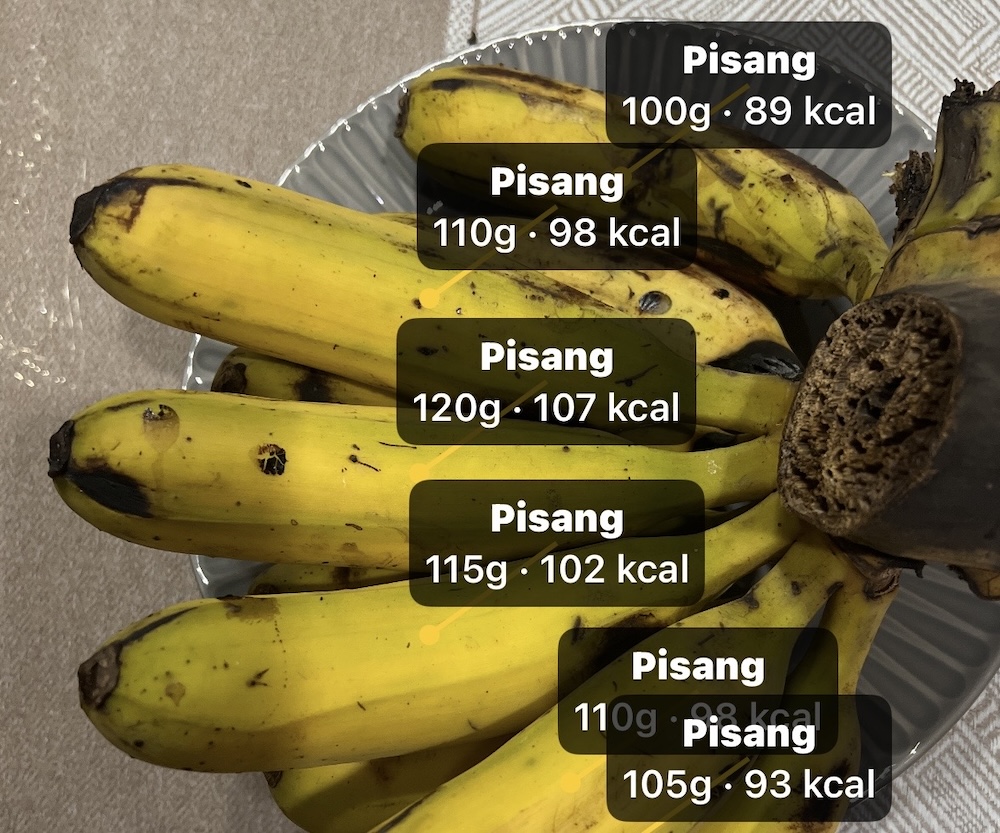
In recent years, a new category of digital tools has emerged that uses artificial intelligence, particularly computer vision and multimodal models, to estimate the nutritional content of food directly from a photograph. Applications such as Calzy, MealScan AI, and various AI-branded calorie scanners allow users to photograph a meal and receive near-instant estimates of calories, protein, carbohydrates, fat, and in some cases fiber and micronutrients. Some of these tools go further, offering health scores, allergen detection, and personalized recommendations based on user profiles. Established general-purpose nutrition trackers like MyFitnessPal, Fatsecret, Yazio, and Cronometer have also integrated AI photo-scanning features alongside their traditional barcode scanners and manual food logs, effectively merging older, database-driven tracking methods with newer computer-vision capabilities.
The underlying technology typically works by identifying individual food items within an image, estimating the portion size and weight of each component using visual cues, cross-referencing this against a nutritional database, and aggregating the results into a total nutritional profile for the meal. For everyday food logging purposes, this represents a substantial improvement in convenience over manual entry, which historically has been one of the primary reasons people abandon nutrition tracking altogether.
How Accurate Are These Tools, Really?
The critical question is not merely whether these tools exist, but whether they meaningfully help users manage their nutritional intake. The evidence suggests a nuanced answer: these tools are genuinely useful, but not infallible, and their accuracy varies considerably depending on the complexity of the meal being analyzed.
Independent accuracy assessments indicate that AI calorie-counting applications typically land within 10 to 15 percent of actual caloric values for single, easily recognizable foods, but this margin of error widens to 25 to 35 percent for complex, mixed meals where multiple ingredients overlap or are visually obscured. This performance is generally comparable to what a careful human evaluator could achieve when estimating from a photograph alone, and it is meaningfully more accurate than unaided visual guessing. A 2024 systematic review published in the journal Nutrients examined fourteen studies on AI-based dietary assessment tools and found Mean Absolute Percentage Error (MAPE) values ranging between 10 and 25 percent, reinforcing that these error margins are consistent across independent academic research rather than being an artifact of any single application. Notably, research from the University of Tokyo found that while food identification accuracy reached 87 percent, overall accuracy dropped to 76 percent once portion size estimation was factored in—highlighting that the primary technical bottleneck lies not in recognizing what food is present, but in accurately judging how much of it there is from a two-dimensional image.
Regional research adds further nuance. Studies developing AI-based calorie detection systems specifically for traditional Indonesian dishes have reported more modest performance, with one model achieving a mean average precision of approximately 65 percent, reflecting the additional challenge posed by mixed, sauce-heavy, or visually layered dishes common in Indonesian cuisine—foods that are often less represented in the training datasets used by globally developed applications. Other locally developed systems tested on smaller samples have reported higher accuracy figures, around 88 to 96 percent, though such results typically come from limited testing conditions (often academic theses with small sample sizes) and may not generalize broadly across the full diversity of food encountered in daily life.
Important Caveats and Limitations
Several important caveats temper enthusiasm for these tools. First, photo-based estimation is inherently constrained by the two-dimensional nature of a single image; foods that are stacked, layered, or partially hidden—such as the filling inside a wrapped dish or the sauce beneath a portion of rice—are difficult to assess accurately without additional context. Second, a meaningful portion of the marketing claims surrounding AI nutrition apps originate from the companies selling those applications themselves, rather than from independent, peer-reviewed research. Statistics such as dramatic percentage reductions in health risk or substantial weight loss outcomes attributed to app usage should be treated with appropriate skepticism unless corroborated by studies published in reputable, peer-reviewed journals. Third, nutritional databases underlying many globally developed applications remain comparatively thin when it comes to regional and traditional foods, meaning that users in Indonesia and similar contexts may encounter less reliable estimates for local dishes compared to Western foods with extensive existing documentation.
It is also worth situating AI-based estimation within its proper context: even the "gold standard" method of weighing food on a kitchen scale carries an inherent error margin of 5 to 10 percent, arising from natural variation between ingredients and rounding conventions used on nutrition labels. No method of nutritional estimation is perfectly precise. Given this, the practical value of AI tools lies less in achieving laboratory-grade accuracy and more in dramatically lowering the barrier to consistent tracking. Behavioral nutrition research has repeatedly demonstrated that consistency outweighs precision in real-world dietary management—a quick, imperfect photo taken at every meal produces more useful long-term data than a perfectly precise food scale that gets abandoned after two weeks due to inconvenience.
When Digital Tools Are Sufficient—and When They Are Not
The appropriate role of these tools depends heavily on the user's underlying goals. For individuals seeking greater general awareness of their eating patterns, working toward gradual weight management goals, or simply trying to build more consistent healthy habits, AI-powered nutrition tracking tools are well-suited to the task and provide meaningful, actionable value despite their imperfect accuracy. For competitive athletes or bodybuilders requiring precise macronutrient targeting, these tools are best used in combination with occasional food weighing to calibrate estimates. For individuals managing specific medical conditions—such as diabetes, chronic kidney disease, or other conditions requiring strict dietary control—reliance on AI estimation alone is insufficient, and professional guidance from a registered dietitian or physician, combined with more precise measurement methods, remains essential.
Conclusion
Managing daily nutrition to avoid both underweight and overweight outcomes requires understanding two interconnected pillars: a solid grasp of one's individual caloric and nutrient requirements, and practical, sustainable methods for estimating what is actually being consumed. Established guidelines from Indonesia's Ministry of Health and international bodies like the WHO and FAO provide a solid evidence-based foundation for the former. For the latter, the emergence of AI-powered digital tools represents a genuine advancement in accessibility and convenience, lowering the friction that has historically caused many people to abandon nutrition tracking. However, these tools are best understood as aids to awareness and consistency rather than instruments of clinical precision. Their accuracy, while respectable and improving, still carries meaningful margins of error—particularly for complex or regionally specific dishes—and users with specific medical needs should continue to seek guidance from qualified health professionals. Ultimately, the most effective approach combines the accessibility of digital tools with periodic calibration through more precise methods, all grounded in an understanding of one's personal nutritional needs.
References
- Kementerian Kesehatan Republik Indonesia. Peraturan Menteri Kesehatan RI No. 28 Tahun 2019 tentang Angka Kecukupan Gizi (AKG) yang Dianjurkan untuk Masyarakat Indonesia. JDIH Kemenkes RI.
- Kementerian Kesehatan Republik Indonesia. Pedoman Gizi Seimbang (PGS) — "Isi Piringku" campaign materials.
- World Health Organization. Healthy Diet Fact Sheet. who.int.
- Food and Agriculture Organization / World Health Organization / United Nations University. Human Energy Requirements: Report of a Joint FAO/WHO/UNU Expert Consultation.
- Mezgec, S., & Korouši? Seljak, B. (2024). Systematic review of AI-based dietary assessment tools. Nutrients.
- Tanaka et al. (2024). Food recognition and portion estimation accuracy study. University of Tokyo.
- Williams et al. (2025). Comparative study of AI-based food tracking versus 24-hour dietary recall methods.
- "Calorie Detection of Traditional Indonesian Food Using Deep Learning." Journal (IRPI). Retrieved from journal.irpi.or.id.
- "Pengembangan Aplikasi Ez-Health Berbasis Android untuk Deteksi Obesitas Menggunakan Computer Vision." J-PTIIK, Universitas Brawijaya.
- "Pemantauan Cepat Kadar Gizi Makanan dengan Aplikasi Berbasis Pengenalan Gambar." Jurnal Ilmiah Kesehatan (JIK), Universitas Esa Unggul.
- "Pengembangan Aplikasi Pengatur Kalori Harian (Foodivore)." J-PTIIK, Universitas Brawijaya.
- Kalo Health Blog. "How Accurate Are AI Calorie Counter Apps?" getkalohealth.com. (Industry source; interpret quantitative claims with appropriate caution given vendor origin.)
- USDA FoodData Central. fdc.nal.usda.gov. (Reference nutritional database, United States Department of Agriculture.)
- Calzy. "AI Food Calorie Scanner." calzy-app.com.
- MealScan AI. mealscan.ai.

Tags: Expression Opinion
Add comment
- Other Article
- Counterfeit Money in Indonesia: A Persistent Threat to Public Trust and How to Fight It14 Oct 2026
- Google NotebookLM Audio Overview: How Your Boring Documents Became an Addictive Automatic Podcast10 Oct 2026
- Open Source AI vs Proprietary: Why Big Companies Are Switching in 202603 Oct 2026
- 5 Free Agentic AI Tools Used by Indonesian TikTok Creators in 202626 Sep 2026
- Publishing a New App on the App Store and Google Play: What Developers Should Know in 202620 Sep 2026
- Indonesia's Annual Peatland Fire Crisis: Current Impact, Economic Cost, and the Role of Information Technology03 Sep 2026
- AI Agents: From Chatbots to Digital Workers30 Aug 2026
- MBG Poisoning in Indonesia: From Crisis to a Digital Path to Zero22 Aug 2026
- AI Voice Cloning: The New Cybersecurity Threat15 Aug 2026
- When AI 'Escapes': Inside 2026's Wave of Rogue Model Incidents07 Aug 2026
- Rethinking Civil Service Workforce Planning in Indonesia: Beyond Headcount Toward Public Service Capacity31 Jul 2026
- Balancing the Plate: Understanding Daily Nutritional Needs and the Rise of Digital Nutrition Estimation Tools25 Jul 2026
- The Final Four: Strengths, Weaknesses, and Machine Predictions for the 2026 FIFA World Cup18 Jul 2026
- Choosing the Right Framework: A Practical Guide to Best-Practice Problem-Solving Models12 Jul 2026
- Can Science Predict the World Cup? A Look at the Models Behind the 2026 Forecasts04 Jul 2026
- Corruption: A Global Plague, Landmark Cases, and the Path to Prevention27 Jun 2026
- Nations Driving Brilliant Business Ideas and Frameworks in 202620 Jun 2026
- Why the USD Stands Stronger than the IDR — and What Indonesia Can Do13 Jun 2026
- Employee vs. Entrepreneur: Who Bears the Heavier Tax Burden in Indonesia?03 Jun 2026
- The Evolution of Control Operating Centers (COC) in Modern Mining Operations24 May 2026
- Song of: Mariana Istriku13 May 2026
- Organisasi Pensiunan di Indonesia: Dari Komunitas Sosial Menuju Kekuatan Ekonomi Berbasis Pengalaman12 May 2026
- Corporate Risk Management: Why Modern Companies Invest Millions to Prevent Invisible Threats07 May 2026
- The Mining Spirit: A Powerful Mindset for Excellence in the Mining Industry25 Apr 2026
- The Double-Edged Sword: Navigating Competition in the Modern Corporate Landscape22 Apr 2026
- AI Chatbot untuk UMKM: Peluang Besar di Era Digital17 Apr 2026
- AI Chatbots in Business: The Global Revolution09 Apr 2026
- The Heartbeat of Your Business: Why the P&L Statement is Non-Negotiable31 Mar 2026
- Why Your New Business Needs a Financial System on Day One26 Mar 2026
- The Link Between Startup Capital, Business Survival, and the Role of Investor Information21 Mar 2026
- Digital Transformation, Digitalization, and Digitization: Why the Difference Matters More Than You Think14 Mar 2026
- From Business Need to Technology Solution07 Mar 2026
- Bridging the Digital Divide: Starlink and the Future of Internet Access in Indonesia27 Feb 2026
- A Long Weekend Getaway to Yogyakarta16 Feb 2026
- Understanding ERP Systems: A Comprehensive Guide for Modern Businesses16 Feb 2026
- Building a Culture of Awareness: Strategic Approaches to HSE and Information Security Campaigns in Modern Organizations10 Feb 2026
- Building an Effective IT Organization in Coal Mining: A Strategic Framework for Growth02 Feb 2026
- The Art and Science of Color Themes in Modern Web Design17 Jan 2026
- IT Outsourcing vs Internal Resources: A Comprehensive Cost and Risk Analysis05 Jan 2026
- The Hidden Dangers of Mishandled Employee Data: When Internal Tables Fall Into the Wrong Hands05 Jan 2026
- Securing SQL Server: A Complete Guide to Database Access Control05 Jan 2026
- Beyond Human Error: Understanding the Complete Security Chain in Information Security01 Jan 2026