Article
AI in Healthcare: Can Artificial Intelligence Become Your Doctor?
Author: Agus Budi Harto, 2026-10-30 20:12:18
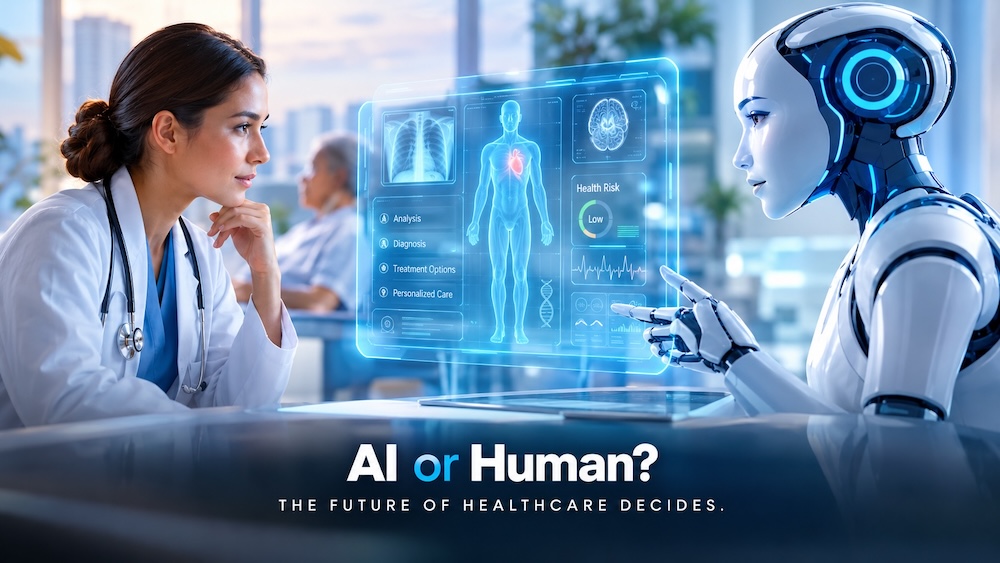
How Artificial Intelligence Is Transforming Medical Diagnosis, Patient Care, and the Future of Medicine
Introduction
Imagine waking up one morning with an unusual headache, persistent fatigue, and an irregular heartbeat. Instead of immediately searching for a hospital or waiting several days for a doctor's appointment, you open an application on your smartphone, describe your symptoms, upload your recent laboratory results, and receive an AI-generated health assessment within seconds. The system analyzes your medical history, compares your symptoms with millions of medical records and scientific publications, identifies possible health conditions, and recommends whether you should seek immediate medical attention or schedule a consultation with a healthcare professional.
A few years ago, this scenario might have sounded like science fiction. Today, advances in Artificial Intelligence (AI), Machine Learning, medical imaging, and Generative AI are making many aspects of this experience increasingly possible. AI is no longer limited to answering general questions or automating administrative tasks. It is becoming capable of analyzing complex medical information, recognizing patterns that may be difficult for humans to detect, supporting clinical decisions, and helping healthcare professionals deliver more personalized services.
The development raises a fascinating question that could fundamentally change our understanding of modern medicine: can Artificial Intelligence eventually become your doctor? More importantly, if an intelligent machine can analyze symptoms, interpret medical test results, identify potential diseases, and suggest treatment options, what role will human doctors play in the healthcare system of the future?
The answer requires looking beyond technological capabilities. Healthcare is not simply an information-processing activity. It involves human judgment, ethical responsibility, clinical experience, emotional understanding, and decisions that can have life-changing consequences. To understand whether AI can become a trusted medical professional, we need to examine the challenges facing healthcare today, the opportunities offered by artificial intelligence, and the potential transformation of medical services over the coming years.
BACKGROUND: The Emergence of Artificial Intelligence in Modern Healthcare
Healthcare systems around the world are facing increasingly complex challenges. Population growth, aging societies, rising treatment costs, shortages of medical specialists, and unequal access to medical facilities are putting enormous pressure on hospitals and healthcare providers. In many countries, patients must wait weeks or even months to consult specialists, while medical professionals spend considerable time reviewing patient records, documenting examinations, interpreting diagnostic results, and completing administrative responsibilities. These conditions create an environment in which technology is becoming increasingly important for improving the efficiency and accessibility of healthcare services.
Traditional medical practice depends heavily on the knowledge and experience of healthcare professionals. A doctor must understand a patient's symptoms, examine their physical condition, review their medical history, interpret laboratory results, and consider multiple possible diagnoses before determining an appropriate treatment. Although this approach remains fundamental to modern medicine, the growing volume of medical information makes the decision-making process increasingly demanding. A single patient may have years of medical records, numerous laboratory examinations, imaging results, medication histories, and other clinical information that must be considered together. AI offers a new way to process and interpret these enormous amounts of information more efficiently.
Recent developments in Machine Learning and Deep Learning have enabled computers to identify complex patterns from medical datasets. In medical imaging, AI systems can assist radiologists in examining X-rays, CT scans, MRI images, and mammograms to identify abnormalities that may indicate serious diseases. In laboratory medicine, algorithms can analyze combinations of test results to identify patterns associated with particular health conditions. Meanwhile, Natural Language Processing allows AI applications to interpret medical documentation, summarize patient histories, and convert complex clinical terminology into explanations that ordinary patients can understand.
The emergence of Generative AI and Large Language Models has expanded these capabilities even further. Unlike conventional systems designed to perform a single analytical task, modern AI models can interact with users through natural language, understand questions, summarize information, and generate explanations based on large collections of knowledge. This creates opportunities for conversational healthcare assistants that can help patients understand symptoms, prepare for medical consultations, and navigate healthcare information without requiring advanced medical knowledge.
AI is also becoming increasingly connected to wearable devices and digital health platforms. Smartwatches, fitness trackers, and other connected medical devices can continuously collect information about heart rate, physical activity, sleep patterns, and other physiological indicators. When this information is analyzed by AI systems, it may help identify unusual changes and provide early warnings that encourage users to seek medical attention. The combination of connected devices, cloud computing, predictive analytics, and AI could eventually create a healthcare environment in which patient monitoring becomes more continuous rather than limited to occasional hospital visits.
The growing adoption of AI in healthcare is also reflected in regulatory developments. The United States Food and Drug Administration (FDA) maintains a public list of AI-enabled medical devices authorized for marketing in the United States. These technologies demonstrate that AI has already moved beyond theoretical research and is becoming part of real-world medical applications. However, the increasing presence of AI in clinical environments also raises important questions about the reliability, safety, and accountability of systems that are being trusted with human health.
PROBLEM: Can We Really Trust Artificial Intelligence With Human Health?
Despite its remarkable potential, the integration of AI into healthcare introduces challenges that cannot be ignored. Medical decisions are fundamentally different from ordinary business or administrative decisions because errors can directly affect human lives. An incorrect recommendation from a digital assistant may be inconvenient, but an incorrect medical assessment could delay critical treatment, lead to unnecessary medication, or create a false sense of security when a patient actually needs emergency care. The central challenge is therefore not simply whether AI can generate medical answers, but whether those answers are sufficiently accurate, reliable, explainable, and safe to influence clinical decisions.
One of the most significant concerns is the possibility of incorrect diagnosis. AI systems learn from existing datasets and use statistical relationships to generate predictions. However, medical conditions are extremely complex, and patients do not always exhibit the typical symptoms described in medical textbooks. Two people with the same disease may have completely different symptoms because of their age, genetics, lifestyle, underlying conditions, and other individual circumstances. An AI model may identify a familiar pattern and generate a confident recommendation while overlooking an unusual symptom that would immediately attract the attention of an experienced physician.
A systematic review and meta-analysis published in npj Digital Medicine in 2025 examined 83 studies comparing the diagnostic performance of generative AI with that of physicians. The research reported an overall diagnostic accuracy of approximately 52.1%, highlighting the limitations of relying on generative AI for medical diagnosis. Although AI performance continues to improve, this finding demonstrates that the ability to generate convincing medical explanations should not be confused with the ability to make consistently reliable clinical decisions. In healthcare, an answer that sounds professional is not necessarily an answer that is medically correct.
Another serious challenge concerns the protection of patient information. Medical records contain highly sensitive personal data, including medical histories, laboratory results, prescriptions, genetic information, and diagnostic images. As hospitals and healthcare organizations increasingly adopt cloud-based AI platforms, the amount of medical information being processed by interconnected systems continues to grow. Without appropriate security controls, these systems may become targets for cyberattacks, unauthorized access, data theft, or misuse of personal information. Patients may also unknowingly expose sensitive medical records when uploading documents to public AI applications without understanding how their information is processed, stored, or potentially reused. Consequently, the future of AI-powered healthcare depends not only on intelligent algorithms but also on strong cybersecurity, data governance, privacy protection, and responsible information management.
Algorithmic bias presents another important concern, particularly for countries with diverse populations and unequal healthcare infrastructure. AI models are developed using data collected from particular hospitals, geographical regions, and patient populations. If the training data predominantly represents certain demographic groups, the resulting models may perform differently when applied to people with different backgrounds or medical characteristics. A system trained primarily on patient data from developed countries, for example, may not automatically produce equally reliable results in developing countries where disease patterns, environmental conditions, healthcare practices, and population characteristics may be different. If such limitations are not identified and addressed, AI could unintentionally reinforce existing healthcare inequalities instead of helping to eliminate them.
Beyond technical accuracy and data protection, there is also the difficult question of medical accountability. When an AI system recommends an incorrect diagnosis and a doctor follows that recommendation, who should be responsible for the consequences? Should accountability belong to the physician, the hospital, the software developer, or the organization that approved the technology for clinical use? Unlike conventional software applications, AI-powered medical systems may produce recommendations through complex models that are difficult to interpret. Healthcare organizations therefore need clear policies defining how AI recommendations should be evaluated, when human intervention is mandatory, and who remains professionally responsible for the final decision.
Perhaps the most important challenge, however, is the human dimension of healthcare. Being a doctor involves much more than identifying diseases and recommending medications. Doctors communicate with patients who may be frightened, confused, or emotionally vulnerable. They must understand individual circumstances, recognize subtle changes in behavior, explain difficult treatment decisions, and provide reassurance during moments of uncertainty. An AI system can generate empathetic-sounding responses, but the ability to imitate human conversation does not necessarily mean that it possesses genuine human understanding or professional medical responsibility. The relationship between a doctor and a patient is built on trust, experience, communication, and accountability, elements that cannot simply be measured through diagnostic accuracy.
SOLUTION: Building a Healthcare Ecosystem Where Humans and AI Work Together
Rather than attempting to replace doctors entirely, a more realistic and beneficial approach is to develop an AI-augmented healthcare ecosystem in which artificial intelligence works alongside medical professionals. The objective should not be to create machines that independently make every medical decision, but to use AI to improve the speed, accuracy, accessibility, and efficiency of healthcare services while maintaining appropriate human supervision. This approach recognizes that AI is particularly powerful at processing large amounts of information and identifying patterns, whereas medical professionals contribute clinical experience, contextual understanding, ethical judgment, and direct responsibility for patient care.
One of the most promising applications is the use of AI as a diagnostic assistant. When a patient visits a hospital, an AI-powered clinical support system could analyze the patient's symptoms, medical history, laboratory results, and diagnostic images to identify possible conditions that deserve further investigation. Instead of replacing the doctor's judgment, the system could present relevant medical patterns, highlight unusual findings, and suggest additional examinations based on available clinical information. The physician would then evaluate these findings, conduct further assessments when necessary, and determine the most appropriate course of action. This collaboration could reduce the time required to review complex medical records while helping doctors consider information that might otherwise be overlooked.
AI could also support a transition from reactive healthcare toward preventive and personalized medicine. Traditional healthcare often focuses on treating patients after symptoms have become noticeable or a disease has already developed. However, many serious medical conditions are associated with changes in physiological indicators that may occur before a patient recognizes a problem. By combining medical histories, laboratory results, lifestyle information, and data from wearable devices, AI models may help identify patterns associated with potential health risks. For example, an intelligent monitoring platform could detect unusual changes in cardiovascular indicators, recognize patterns that warrant further investigation, or identify a deterioration in health measurements over time. Such information could encourage earlier consultations and allow healthcare professionals to investigate potential problems before they become more serious. Nevertheless, predictive results must be clinically validated and should never be treated as definitive diagnoses without appropriate medical assessment.
Another important opportunity is the development of AI-powered healthcare assistants accessible through smartphones. In many communities, particularly in rural and underserved areas, access to medical specialists remains limited because of geographical distance, infrastructure constraints, and the unequal distribution of healthcare professionals. A properly designed digital health assistant could provide an initial point of access by allowing patients to describe symptoms through text or voice, upload laboratory reports, receive explanations of medical terminology, and obtain guidance about the appropriate next steps. Patients could also use such applications to organize their medical histories, track health indicators, and prepare questions before meeting a doctor. In countries with large populations and significant geographical challenges, including Indonesia, these applications could complement existing healthcare services and help connect patients with qualified medical professionals through telemedicine. However, such systems must clearly communicate their limitations, protect personal information, and recognize situations that require urgent medical attention.
The successful implementation of these solutions requires a strong framework for human oversight and AI governance. Healthcare organizations must ensure that AI systems are tested against appropriate clinical standards before being introduced into real medical environments. Their performance should be continuously monitored because an algorithm that works well with one patient population or hospital dataset may not perform equally well in another environment. Developers and healthcare providers must also evaluate potential algorithmic bias, protect patient information, establish cybersecurity controls, and maintain transparent documentation about how AI-generated recommendations are used. The World Health Organization has emphasized the importance of safety, transparency, accountability, inclusiveness, and human rights in its guidance on the ethics and governance of large multimodal AI models. These principles should become fundamental requirements for the development of future healthcare technologies.
Integration with existing hospital information systems will also determine how valuable AI becomes in practical healthcare operations. Hospitals already depend on multiple digital platforms, including Electronic Health Records, Laboratory Information Systems, Radiology Information Systems, pharmacy applications, and patient management systems. When these platforms operate independently, medical professionals may need to access information from several different sources before obtaining a complete understanding of a patient's condition. AI could help connect and analyze information across these systems, provided that appropriate interoperability, privacy, and security standards are maintained. This could reduce administrative workloads, improve information accessibility, support coordinated treatment, and enable healthcare professionals to make better-informed decisions. For technology developers, this transformation also creates opportunities to develop specialized solutions for medical documentation, clinical decision support, patient monitoring, hospital management, and healthcare analytics.
Ultimately, the most effective solution is not an independent AI doctor operating without supervision, but an integrated healthcare ecosystem in which intelligent systems continuously support patients and medical professionals. AI can handle large-scale information processing, detect patterns, and provide analytical assistance, while doctors remain responsible for clinical interpretation, treatment decisions, and the human relationship at the center of healthcare.
RESULT: What Will Healthcare Look Like in the Future?
If AI is implemented responsibly and supported by sufficient clinical evidence, the healthcare industry could experience a fundamental transformation in how medical services are delivered. One of the earliest benefits may be improved operational efficiency. Doctors and nurses currently spend considerable time reviewing documentation, organizing patient records, preparing reports, and performing repetitive administrative activities. AI-powered systems could automate or simplify many of these processes, allowing healthcare professionals to devote more time to examining patients, discussing treatment options, and providing direct medical care. This would be particularly valuable for hospitals experiencing high patient volumes and shortages of medical personnel.
Another important result could be broader access to healthcare information and preliminary medical guidance. Patients may increasingly use AI-powered applications to understand laboratory results, learn about medical conditions, monitor health indicators, and prepare for consultations. This does not mean that patients will no longer need doctors. Instead, they may become better informed and more actively involved in managing their own health. When combined with telemedicine and appropriate referral mechanisms, AI could help extend healthcare support to communities that previously had limited access to medical expertise.
The potential impact on early disease detection is also significant. Continuous health monitoring through connected devices, combined with predictive analytics, could help identify changes that deserve medical attention before a patient develops severe symptoms. For example, an AI system might recognize unusual patterns in heart rate measurements or detect changes in health indicators over time. These findings could encourage patients to seek professional assessment earlier, potentially improving opportunities for timely intervention. However, the effectiveness of these applications will depend on their ability to distinguish meaningful medical signals from ordinary variations and avoid generating unnecessary alarms.
AI could also contribute to more personalized treatment planning. Medical decisions are often influenced by a combination of factors, including age, medical history, genetic characteristics, lifestyle, existing conditions, and previous responses to treatment. AI systems may help physicians analyze these factors together and evaluate potential treatment options more efficiently. Rather than relying exclusively on generalized patterns, healthcare professionals could use AI-generated insights to support decisions that better reflect each patient's individual circumstances. This could become an important step toward precision medicine, in which prevention, diagnosis, and treatment are increasingly tailored to the needs of individual patients.
For healthcare organizations and governments, the broader implications extend beyond hospitals and medical consultations. AI could support better resource planning, help identify patterns in public health data, improve hospital capacity management, and assist policymakers in understanding healthcare demand. In developing countries, where medical infrastructure and specialist availability may be unevenly distributed, carefully implemented AI solutions could help extend the reach of existing healthcare resources. However, these benefits will not happen automatically. They require investment in digital infrastructure, qualified professionals, reliable data, appropriate regulation, and long-term institutional commitment.
Perhaps the most significant long-term result will be the evolution of the medical profession itself. Doctors of the future may increasingly work alongside intelligent digital assistants that can review medical information, summarize patient histories, identify potential risks, and provide clinical recommendations in real time. Medical professionals will still need to understand the patient's overall condition, interpret complex clinical circumstances, communicate with families, perform medical procedures, and accept responsibility for their decisions. Their role may become less focused on manually processing information and more focused on applying professional judgment, managing complex cases, and delivering personalized patient care.
This transformation will also require healthcare professionals to develop new competencies. Understanding how AI systems work, recognizing their limitations, interpreting algorithmic recommendations, and evaluating the quality of digital medical information will become increasingly important. Medical education may therefore need to incorporate digital literacy, AI governance, data interpretation, and human-machine collaboration as essential components of professional training.
CONCLUSION: Can Artificial Intelligence Become Your Doctor?
Artificial Intelligence has the potential to become one of the most influential technologies in the history of modern medicine. Its ability to process enormous volumes of information, recognize complex patterns, analyze medical images, support clinical reasoning, and improve access to healthcare information creates opportunities that were difficult to imagine only a decade ago. As AI technology continues to evolve, the boundaries between digital healthcare assistance and traditional medical services will become increasingly sophisticated.
Nevertheless, becoming a doctor requires much more than the ability to recognize diseases or generate treatment recommendations. It requires clinical competence, ethical judgment, professional accountability, empathy, and an understanding of the individual behind the medical record. An AI system may be able to analyze thousands of medical studies within seconds, but the decision to treat a patient must consider the full clinical situation, the potential consequences, and the patient's individual needs.
The future of healthcare should therefore not be defined by a competition between humans and machines. Instead, it should be defined by how effectively humans and AI can collaborate to improve patient outcomes. Artificial Intelligence may become a highly capable medical assistant, an intelligent diagnostic partner, and an important component of preventive healthcare. It may even become the first point of contact for many people seeking preliminary medical guidance. However, the responsibility for safe and ethical medical care must remain firmly grounded in qualified healthcare professionals and accountable healthcare institutions.
Perhaps the most important question is not whether AI can replace your doctor, but whether your doctor will become more capable, more efficient, and better informed with AI.
The healthcare revolution is already underway. The real challenge is ensuring that technological progress translates into safer, more accessible, more affordable, and more human-centered healthcare for everyone.
REFERENCES
- World Health Organization (WHO). (2025). Ethics and Governance of Artificial Intelligence for Health: Guidance on Large Multi-Modal Models.
- U.S. Food and Drug Administration (FDA). Artificial Intelligence-Enabled Medical Devices.
- A Systematic Review and Meta-Analysis of Diagnostic Performance Comparison Between Generative AI and Physicians. (2025). npj Digital Medicine.
- GPT-4 Assistance for Improvement of Physician Performance on Patient Care Tasks: A Randomized Controlled Trial. Nature Medicine (2025).
- Bias Recognition and Mitigation Strategies in Artificial Intelligence Healthcare Applications. (2025). npj Digital Medicine.
- World Health Organization (WHO). (2024). WHO Releases AI Ethics and Governance Guidance for Large Multi-Modal Models.
- AI-Enabled Clinical Decision Support Systems: Challenges and Opportunities. (2025).
Add comment
- Other Article
- AI in Healthcare: Can Artificial Intelligence Become Your Doctor?30 Oct 2026
- Passkeys Replacing Passwords: The Future of Secure Digital Authentication23 Oct 2026
- Counterfeit Money in Indonesia: A Persistent Threat to Public Trust and How to Fight It14 Oct 2026
- Google NotebookLM Audio Overview: How Your Boring Documents Became an Addictive Automatic Podcast10 Oct 2026
- Open Source AI vs Proprietary: Why Big Companies Are Switching in 202603 Oct 2026
- 5 Free Agentic AI Tools Used by Indonesian TikTok Creators in 202626 Sep 2026
- Publishing a New App on the App Store and Google Play: What Developers Should Know in 202620 Sep 2026
- Indonesia's Annual Peatland Fire Crisis: Current Impact, Economic Cost, and the Role of Information Technology03 Sep 2026
- AI Agents: From Chatbots to Digital Workers30 Aug 2026
- MBG Poisoning in Indonesia: From Crisis to a Digital Path to Zero22 Aug 2026
- AI Voice Cloning: The New Cybersecurity Threat15 Aug 2026
- When AI 'Escapes': Inside 2026's Wave of Rogue Model Incidents07 Aug 2026
- Rethinking Civil Service Workforce Planning in Indonesia: Beyond Headcount Toward Public Service Capacity31 Jul 2026
- Balancing the Plate: Understanding Daily Nutritional Needs and the Rise of Digital Nutrition Estimation Tools25 Jul 2026
- The Final Four: Strengths, Weaknesses, and Machine Predictions for the 2026 FIFA World Cup18 Jul 2026
- Choosing the Right Framework: A Practical Guide to Best-Practice Problem-Solving Models12 Jul 2026
- Can Science Predict the World Cup? A Look at the Models Behind the 2026 Forecasts04 Jul 2026
- Corruption: A Global Plague, Landmark Cases, and the Path to Prevention27 Jun 2026
- Nations Driving Brilliant Business Ideas and Frameworks in 202620 Jun 2026
- Why the USD Stands Stronger than the IDR — and What Indonesia Can Do13 Jun 2026
- Employee vs. Entrepreneur: Who Bears the Heavier Tax Burden in Indonesia?03 Jun 2026
- The Evolution of Control Operating Centers (COC) in Modern Mining Operations24 May 2026
- Song of: Mariana Istriku13 May 2026
- Organisasi Pensiunan di Indonesia: Dari Komunitas Sosial Menuju Kekuatan Ekonomi Berbasis Pengalaman12 May 2026
- Corporate Risk Management: Why Modern Companies Invest Millions to Prevent Invisible Threats07 May 2026
- The Mining Spirit: A Powerful Mindset for Excellence in the Mining Industry25 Apr 2026
- The Double-Edged Sword: Navigating Competition in the Modern Corporate Landscape22 Apr 2026
- AI Chatbot untuk UMKM: Peluang Besar di Era Digital17 Apr 2026
- AI Chatbots in Business: The Global Revolution09 Apr 2026
- The Heartbeat of Your Business: Why the P&L Statement is Non-Negotiable31 Mar 2026
- Why Your New Business Needs a Financial System on Day One26 Mar 2026
- The Link Between Startup Capital, Business Survival, and the Role of Investor Information21 Mar 2026
- Digital Transformation, Digitalization, and Digitization: Why the Difference Matters More Than You Think14 Mar 2026
- From Business Need to Technology Solution07 Mar 2026
- Bridging the Digital Divide: Starlink and the Future of Internet Access in Indonesia27 Feb 2026
- A Long Weekend Getaway to Yogyakarta16 Feb 2026
- Understanding ERP Systems: A Comprehensive Guide for Modern Businesses16 Feb 2026
- Building a Culture of Awareness: Strategic Approaches to HSE and Information Security Campaigns in Modern Organizations10 Feb 2026
- Building an Effective IT Organization in Coal Mining: A Strategic Framework for Growth02 Feb 2026
- The Art and Science of Color Themes in Modern Web Design17 Jan 2026
- IT Outsourcing vs Internal Resources: A Comprehensive Cost and Risk Analysis05 Jan 2026
- The Hidden Dangers of Mishandled Employee Data: When Internal Tables Fall Into the Wrong Hands05 Jan 2026
- Securing SQL Server: A Complete Guide to Database Access Control05 Jan 2026
- Beyond Human Error: Understanding the Complete Security Chain in Information Security01 Jan 2026